Beneath the first letter was another envelope, written in blue ink and dated decades earlier.
There were photographs inside.
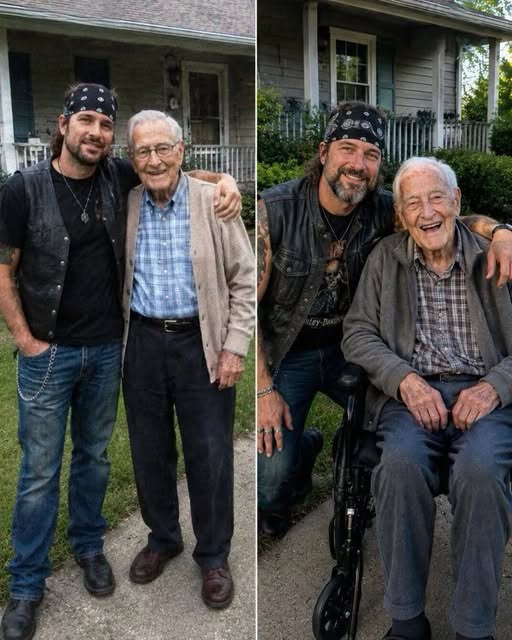
One showed Ezra standing beside a man Anthony did not recognize.
On the back, Ezra had written a short note identifying the man as his brother, Daniel, along with a reference to someone who had once helped Daniel during a difficult period.
Anthony continued searching.
There were additional photographs, old documents, and a newspaper clipping.
The article described a young employee named Daniel Harrison who had helped several coworkers during a serious workplace accident. Daniel was injured during the incident and later experienced financial difficulties that prevented him from immediately returning to his previous career.
The article also mentioned a local business owner who had helped Daniel find employment and supported him while he recovered.
The business owner was Anthony’s father.
A Connection Anthony Never Knew About
The discovery left Anthony with more questions.
Why had Ezra never mentioned Daniel?
Why had he kept the connection to Anthony’s father private?
The answer appeared in the remaining pages of Ezra’s letter.
Years earlier, Ezra had learned that Anthony’s father had helped Daniel during one of the most difficult periods of his life. He had offered Daniel work when other opportunities were unavailable.
But Ezra had deliberately chosen not to tell Anthony.
He did not want Anthony to feel that his friendship with Ezra was connected to an old family obligation.
The Sunday visits had become meaningful for an entirely different reason.
Anthony was helping Ezra because they had become friends.
The Final Envelope
At the bottom of the suitcase was one final envelope.
It carried a simple instruction:
Open only after you’ve read everything else.
Inside, Ezra explained what he had ultimately wanted Anthony to understand.
People often measure a life by possessions, financial achievements, or material accomplishments. Ezra had come to believe that something else mattered more: knowing that your presence made a difference in another person’s life.
The suitcase contained photographs and documents, but there was also one practical request.
Ezra had arranged for his lawyer to make a modest donation in Anthony’s name to a local program supporting older adults who lived alone.
The donation came from part of Ezra’s savings.
He did not ask Anthony to continue his exact routine or take responsibility for everyone in need. He simply hoped that the kindness Anthony had shown him could reach another person.
A Small Gesture With a Wider Meaning
The story highlights something easy to overlook in everyday life.
For many older adults, practical assistance can be valuable, but regular human connection can matter just as much. A grocery delivery, a conversation, or a brief visit can help someone feel remembered and included.
Local programs supporting older residents often rely on volunteers, donations, and community involvement. Their work can provide both practical assistance and opportunities for social connection.
Ezra had experienced that difference personally.
Now he wanted Anthony to help pass it forward.
Anthony Returned the Following Sunday
The following Sunday, Anthony went to the grocery store as usual.
As he walked through the aisles, he remembered some of the things Ezra had always kept in his kitchen.
For a moment, the routine felt strange.
Ezra was no longer waiting at home.
Instead of returning to the old routine, Anthony drove to the community center mentioned in Ezra’s instructions.
A volunteer there was preparing food packages for older residents.
Anthony explained that he had brought a donation made in Ezra’s memory.
It was a simple gesture, but it gave Anthony a sense that something meaningful from their friendship could continue.
The Lesson Anthony Took From Ezra
Weeks later, Anthony returned to Ezra’s former home.
He stood outside for a while, remembering the Sunday afternoons they had spent together.
He remembered Ezra sitting with his coffee and insisting that he could carry his own groceries, even when Anthony knew otherwise.
The suitcase had not contained a fortune or a dramatic secret.
Instead, it contained memories, family history, and evidence of how one ordinary act of kindness had connected two families across generations.
Anthony continued helping people when he could.
Sometimes that meant picking up groceries. Sometimes it meant sitting with someone who wanted company. Other times, it simply meant noticing when someone needed a little assistance.
Ezra had left him with a lesson that Anthony had never expected to learn from an old suitcase:
We may never fully know how much a small act of kindness means to another person.
A few grocery bags, a short conversation, and a regular Sunday visit had seemed ordinary at the time.
But for Ezra, those moments had become an important part of his life.
And after his passing, Anthony discovered that their friendship had left behind something that could continue beyond them both.