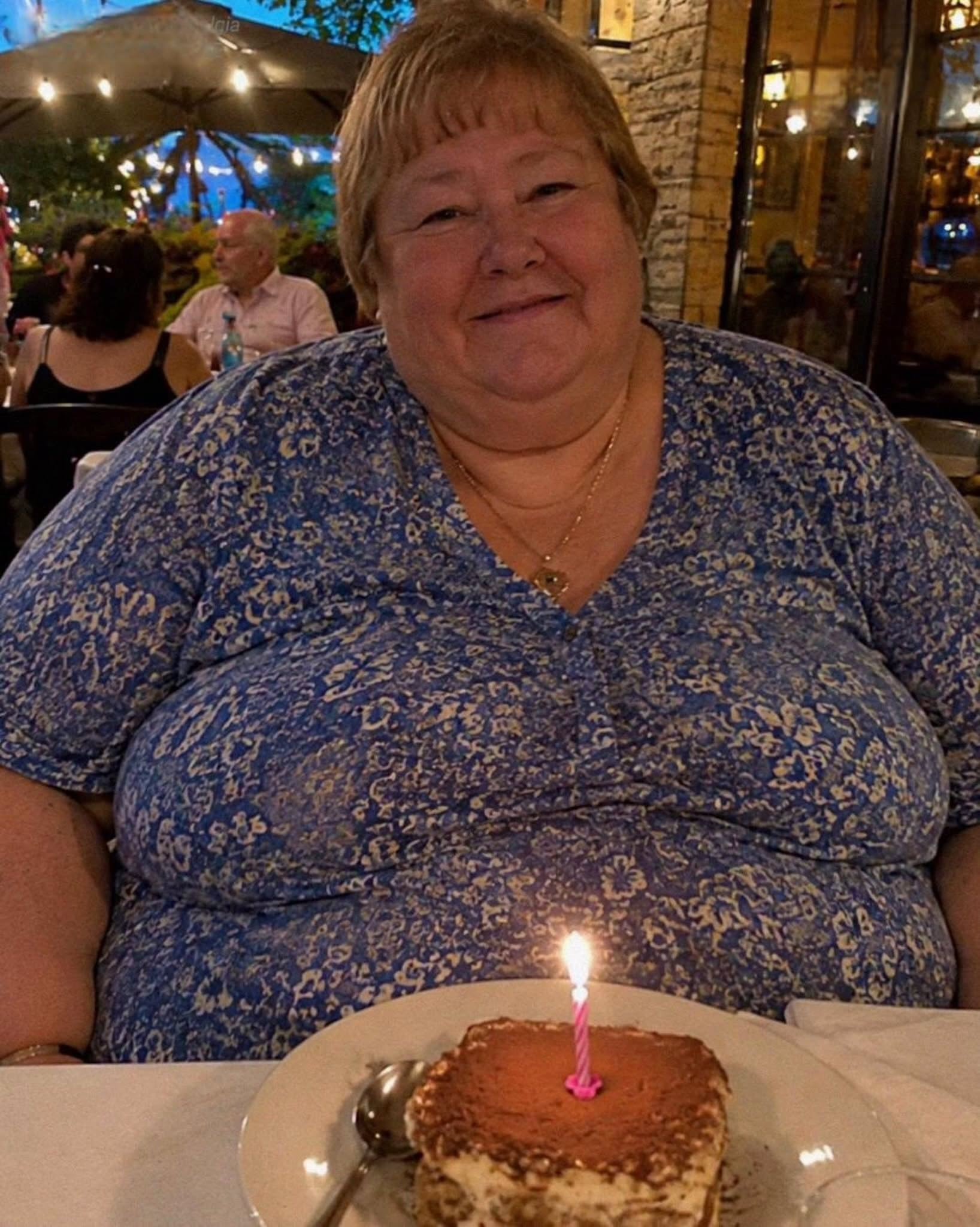
And the woman at the next table finally stopped smiling.
“Excuse me?” she said. “Are you seriously throwing me out because I made a comment?”
The chef remained beside my mother.
“Yes,” he said calmly. “You’re leaving because you deliberately humiliated another customer.”
The woman scoffed.
“I was only making a joke.”
My mother lowered her eyes.
That sentence hit me harder than anything else she had said.
A joke.
That was what people always called it after hurting someone.
A joke.
A comment.
Just being honest.
Just trying to help.
My mother had heard every version of it.
She had learned to laugh along whenever someone made a remark about her size because showing that it hurt seemed to make people even more uncomfortable.
But tonight was supposed to be different.
It was her sixty-fifth birthday.
And for the first time in months, she had actually wanted to go somewhere.
She had spent nearly an hour getting ready.
She’d changed her blouse twice.
She’d stood in front of the mirror and asked me if the dress made her look “too noticeable.”
I had told her she looked beautiful.
She had smiled.
Then, after we arrived at the restaurant, she seemed to forget all of those worries.
She laughed at my terrible stories.
She stole a piece of bread from my plate.
She ordered tiramisu before we’d even finished our main course.
And then that woman had reduced the entire evening to one cruel sentence.
My mother reached for my hand under the table.
“Please,” she whispered. “Don’t make this worse.”
I squeezed her fingers.
The chef heard her.
He looked down at my mother, and something about his expression changed.
“Mrs. Carter,” he said quietly.
My mother looked up.
The chef smiled.
“You don’t remember me, do you?”
My mother frowned.
“No.”
The restaurant had become so quiet that everyone could hear them.
The chef pulled out the chair beside her.
“May I?”
My mother nodded slowly.
He sat down.
Then he looked at me.
“Your mother used to come here every Thursday.”
I stared at him.
“What?”
My mother looked confused.
“I did?”
“Twenty years ago,” he said.
He smiled.
“You came with your husband.”
My mother’s face changed.
I knew immediately.
Dad.
She hadn’t expected that name to enter the conversation.
Dad had passed away eight years earlier.
The chef continued.
“You always ordered the same thing. Chicken marsala. Extra mushrooms. And you insisted that the kitchen make your husband’s pasta exactly the way he liked it.”
My mother stared at him.
Then she whispered:
“Marco?”
The chef smiled.
“Now you remember.”
Her eyes filled with tears.
I looked at the chef.
“You knew my parents?”
He nodded.
“Your father was one of the first people to encourage me when I was just starting out.”
The woman at the neighboring table suddenly spoke again.
“This is ridiculous. I didn’t know any of that.”
The chef turned toward her.
“You didn’t need to.”
She went silent.
“You didn’t need to know her history to treat her like a human being.”
Nobody moved.
The chef continued.
“You saw a woman enjoying dinner with her daughter. You decided her body gave you permission to comment on what she ate.”
The woman crossed her arms.
“I didn’t mean anything by it.”
The chef shook his head.
“That doesn’t erase what you did.”
The restaurant remained silent.
Then my mother surprised all of us.
She looked directly at the woman.
“I’ve spent years believing that I had to apologize for eating in public.”
The woman stared at her.
My mother continued.
“I’ve skipped birthdays. I’ve avoided restaurants. I’ve pretended I wasn’t hungry when I was. I’ve stood in front of mirrors and convinced myself I didn’t deserve nice clothes.”
My throat tightened.
I’d heard some of this before.
But never like this.
My mother took a breath.
“And tonight, for one hour, I forgot all of that.”
She glanced at her half-finished dessert.
“I was happy.”
The woman looked down.
My mother wasn’t yelling.
She wasn’t insulting her.
She wasn’t even angry.
That somehow made it more powerful.
“You didn’t ruin my birthday,” Mom said. “But you reminded me why I stopped going out.”
The woman finally looked uncomfortable.
The chef stood.
“That’s enough.”
She grabbed her purse.
“You’re actually kicking me out?”
“Yes.”
“Over one comment?”
“No,” he replied. “Over the fact that you made someone feel unwelcome in my restaurant.”
She stood up.
Then she pointed toward my mother.
“She should be grateful someone is trying to help her.”
I nearly lost my temper.
But before I could say anything, the chef raised one hand.
“Don’t.”
He looked at the woman.
“Leave.”
She stormed toward the entrance.
The waiter unlocked the door.
She walked outside.
The door closed behind her.
For several seconds, nobody spoke.
Then someone at the back of the restaurant started clapping.
One person.
Then another.
Then another.
Soon the entire dining room was applauding.
My mother immediately shook her head.
“No, no. Please don’t.”
But the applause continued.
The chef looked embarrassed.
“Everyone, please,” he said.
The room quieted.
Then he walked back toward the kitchen.
My mother wiped her eyes.
“I can’t believe that happened.”
I put my arm around her.
“I’m sorry.”
She shook her head.
“Don’t be.”
Then the kitchen doors opened again.
The chef returned.
This time, he was carrying something.
A small plate.
On it was a slice of tiramisu with a candle in the center.
My mother’s eyes widened.
The chef placed it in front of her.
“Happy birthday.”
Mom laughed through her tears.
“I already ordered dessert.”
“I know.”
“Then why is this here?”
“Because,” he said, “the first one is dinner.”
He pointed at the new plate.
“This one is on the house.”
My mother smiled.
The chef turned toward the dining room.
“And tonight, nobody is allowed to comment on what she eats.”
The restaurant erupted in laughter.
Even my mother.
For the first time since that woman had spoken, Mom’s shoulders relaxed.
She leaned toward me.
“I’m having the whole thing.”
I laughed.
“You absolutely are.”
But then the chef wasn’t finished.
He reached into his jacket and pulled out a small envelope.
He handed it to my mother.
She looked at it.
“What is this?”
“Open it.”
Mom carefully unfolded the envelope.
Inside was an old photograph.
She stared at it.
Her mouth fell open.
It was a picture of my parents standing outside the restaurant decades earlier.
My father had one arm around her.
Mom was laughing.
And in her hand was a plate of tiramisu.
She covered her mouth.
“Oh my goodness.”
I looked at the photograph.
I’d never seen it before.
The chef smiled.
“Your father gave me that picture years ago.”
My mother looked up.
“Why did you keep it?”
“Because he told me something.”
She waited.
“He said that this woman”—he pointed at my mother—“was the reason he believed good food could make a bad day better.”
Mom started crying again.
This time, she didn’t try to hide it.
The chef pulled up a chair.
“After he passed, you stopped coming.”
Mom nodded.
“I couldn’t.”
“I know.”
“How?”
“Because I noticed.”
That sentence broke her.
She lowered her head and cried.
I wrapped my arms around her.
The chef waited patiently.
Then he said something I don’t think any of us expected.
“Your husband used to tell me that you were the bravest person he’d ever met.”
Mom looked at him.
“He said that?”
“Many times.”
She laughed softly.
“He never told me that.”
“He probably thought you already knew.”
Mom looked down at the photograph.
Then she smiled.
A real smile.
Not the polite one she’d been wearing when the woman made her comment.
Not the nervous one she used whenever she felt judged.
A genuine smile.
The chef stood.
“Now, if you’ll excuse me, I have a kitchen to run.”
My mother called after him.
“Marco?”
He turned.
“Thank you.”
He nodded.
“Come back next Thursday.”
Mom smiled.
“I might.”
Then she looked at me.
“Actually…”
I knew what she was about to say.
“Every Thursday?”
She nodded.
“Every Thursday.”
I nearly cried.
Because I knew what that meant.
For years, my mother had allowed other people’s opinions to determine where she could go, what she could wear, and whether she deserved to enjoy herself.
And tonight, something had changed.
Not because a chef had defended her.
Not because a rude customer had been removed.
But because my mother had finally realized something she’d forgotten for years.
She didn’t need anyone’s permission to enjoy her own life.
She finished the tiramisu.
Every last bite.
Then she looked at the empty plate and laughed.
“Do you think they have another one?”
I laughed.
“Mom.”
“What?”
“You just ate an entire slice.”
She raised an eyebrow.
“And?”
I smiled.
“Nothing.”
She picked up the menu.
“Good. Then I’m ordering another.”
And from behind the kitchen doors, we heard the chef shout:
“Make it two!”
The whole restaurant laughed.
My mother laughed hardest of all.
And as we sat there celebrating her sixty-fifth birthday, I realized the woman who had tried to embarrass my mom had accidentally given her something much more valuable than an apology.
She had reminded my mother that her life didn’t have to become smaller just because other people were uncomfortable with the space she took up.
That night, Mom went home with the old photograph tucked safely inside her purse.
The next Thursday, she went back.
And the Thursday after that.
Eventually, the staff stopped asking what she wanted.
They already knew.
Chicken marsala.
Extra mushrooms.
And tiramisu.
Every single time.