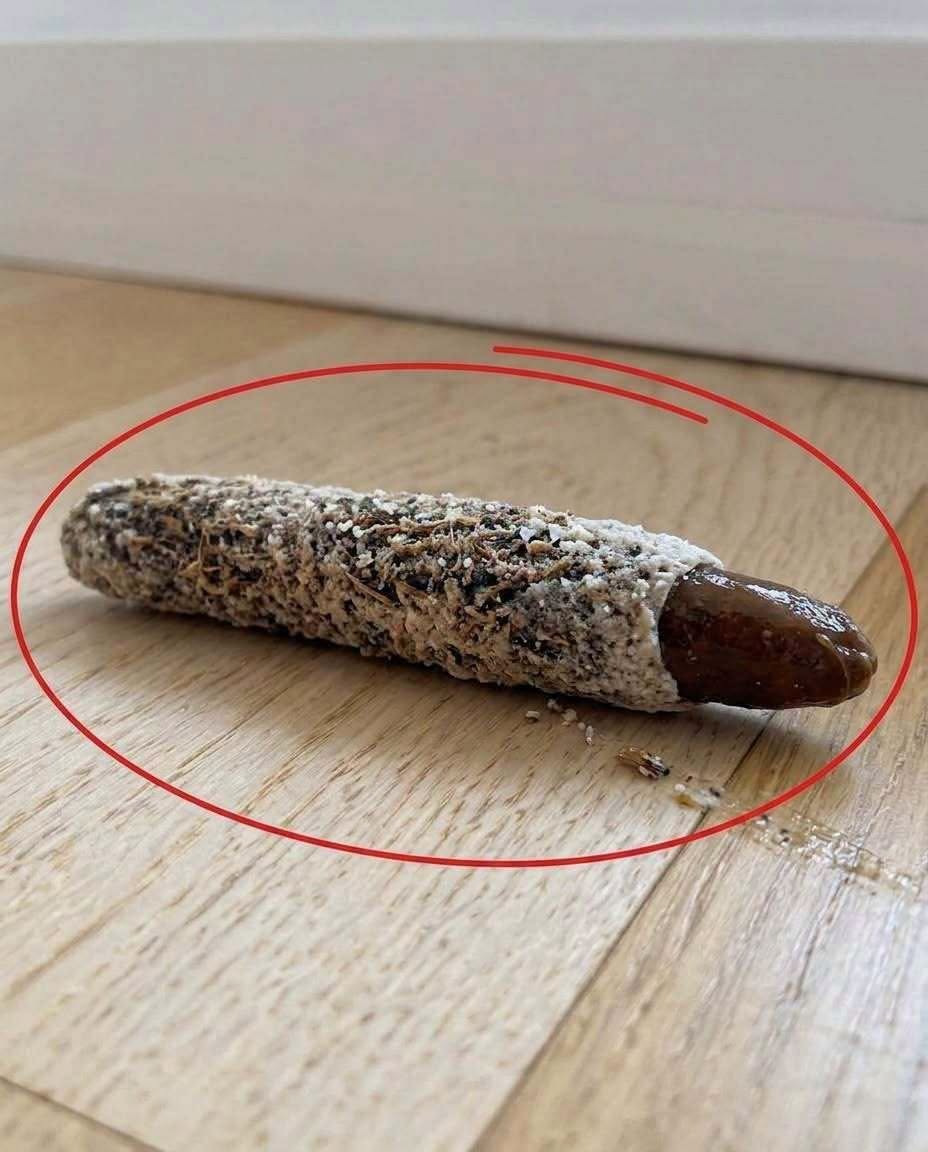
That simple observation led to an unexpected discovery.
It Wasn’t Ordinary Dust
After looking more closely and researching similar objects, the mystery was solved.
The object was most likely the protective case of a case-bearing moth larva, commonly known as a plaster bagworm in some regions.
These tiny larvae are remarkable builders. Instead of remaining exposed as they move around, they create a portable protective case from silk and materials they find in their surroundings.
That can include dust, lint, hair, small fibers, dead insects, and other bits of organic material.
The result can look surprisingly similar to a tiny piece of debris.
A Tiny Creature Carrying Its Own Shelter
The larva lives inside the case it constructs.
An opening allows it to extend part of its body outward when it needs to move or search for food. When disturbed, it can retreat into the protective covering.
In other words, what appears to be an abandoned fragment on the floor may actually be a tiny animal carrying its shelter with it.
The case also provides camouflage, allowing the larva to blend into dusty corners and other areas where it might otherwise be noticed.
Where They May Appear
These larvae can sometimes be found in quiet areas around homes, particularly along baseboards, walls, closets, beneath furniture, and in corners where dust and spiderwebs accumulate.
Warm and humid conditions can make indoor environments more suitable for them.
Because the cases can resemble lint or dirt, homeowners may not notice them immediately.
Finding one does not necessarily mean there is a major insect problem, however. A single case can simply be an isolated discovery.
Why Would They Be Inside a Home?
Like many small household insects, case-bearing larvae take advantage of materials that are already available.
Their food sources can include spiderwebs, dead insects, hair, and other organic debris. Depending on the species and circumstances, they may also interact with natural fibers and fabrics.
That is one reason regular cleaning can be helpful.
Vacuuming along baseboards, underneath furniture, inside closets, and around corners removes both potential food sources and the materials these larvae can use when constructing their cases.
Removing accumulated spiderwebs and reducing excessive indoor humidity can also make the environment less favorable.
Should You Be Concerned?
Usually, there is no reason to panic simply because one unusual case has been discovered.
The creature is tiny and is not the kind of household pest most people need to fear. The more useful approach is simply to identify what has been found and inspect the surrounding area if additional cases appear.
If several cases continue to show up, it may be worth paying closer attention to dusty corners, closets, stored textiles, and areas that are rarely disturbed.
Keeping those spaces clean can help reduce the conditions that attract or support them.
The Fascinating Part Is How the Case Is Made
Perhaps the most interesting thing about the discovery isn’t the insect itself.
It’s the construction.
A creature small enough to go unnoticed can gather scattered material from its environment and transform it into a functional shelter.
The case isn’t necessarily identical from one location to another. Its appearance depends partly on what materials are available where the larva happens to live.
Dust that normally seems meaningless becomes building material.
Tiny fibers become part of the structure.
Particles that would otherwise be swept away can become protection for a developing insect.
A Small Discovery Can Reveal a Hidden World
Most homes feel familiar because we see the same rooms every day. Yet countless tiny organisms can occupy spaces that humans rarely examine closely.
Behind furniture, along walls, underneath shelves, and around baseboards, small insects may find food and shelter without attracting much attention.
That’s why an unusual object on the floor can sometimes be more interesting than it first appears.
What looks like a piece of dirt may actually be part of a carefully constructed shelter.
And what initially seems mysterious can turn out to be a fascinating example of adaptation.
What to Do If You Find One
If you discover a small case like this in your home, there is no need for an immediate dramatic response.
A practical approach is to:
- Remove the case and clean the surrounding area.
- Vacuum corners, baseboards, closets, and spaces beneath furniture.
- Remove accumulated spiderwebs and lint.
- Keep stored clothing and natural-fiber materials clean and properly stored.
- Pay attention to indoor humidity.
- Check for additional cases if you continue finding them.
If the number of insects or cases increases substantially or you notice damage to household materials, professional pest advice can help identify the species and determine the appropriate response.
What began as a strange little object on the floor can therefore become an unexpected lesson in the hidden life of a home.
The next time you notice a tiny tube made from dust and fibers, don’t immediately assume it’s meaningless debris. It may be a miniature shelter built by a surprisingly resourceful creature—and a reminder that even the quietest corners of our homes can contain fascinating natural activity.