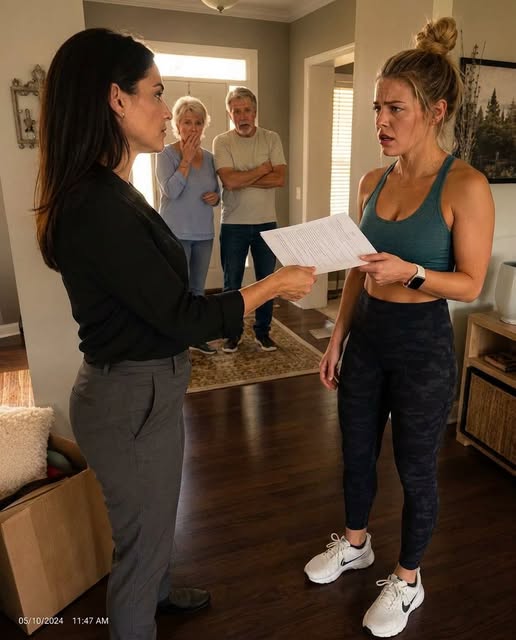
Grandpa had left it to me.
This Time, the Records Did the Talking
My parents returned shortly afterward to formal notice from legal counsel.
The attempted deed transfer was challenged. My ownership was asserted based on the already-completed probate process and the estate records.
From that point forward, I stepped away from the emotional arguments.
There were no more family meetings.
No more explanations.
No more attempts to convince people who had already decided that my sacrifices were simply available for them to use.
The attorneys handled the dispute.
The records were reviewed.
And the attempted transfer did not survive the ownership challenge.
My right to the property was ultimately recognized.
My parents moved into a rental.
Emily returned to California.
And I ended the arrangement that had allowed three adults to treat my income, my time, my work, and even my inheritance as resources they could redistribute whenever it suited them.
Walking Into an Empty House
The first time I walked through the house alone again, I expected to feel lonely.
Instead, I felt something else.
Possibility.
For years, every room had carried someone else’s expectations.
Someone else’s needs.
Someone else’s demands.
Now, for the first time, I could decide what the house would become.
I repainted the rooms.
I sold furniture connected to years I no longer wanted to relive.
Then I bought something completely impractical by my family’s standards.
A bright yellow sofa.
I loved it immediately.
I added a small dining table chosen for the life I wanted—not for the number of people I was expected to feed.
The house slowly stopped feeling like a place where I had spent years working for everyone else.
It finally began to feel like home.
Keeping What Grandpa Left Behind
There was one thing I refused to change.
Grandpa’s roses.
For years, I had pruned them because maintaining the property had become another responsibility on my endless list.
Now, I cared for them because I wanted to.
That difference mattered more than I expected.
Eventually, I wrote my family one final letter.
I explained that ending contact was not about revenge.
It was about boundaries.
The deepest betrayal had never been the money. It wasn’t even the attempted transfer of a home that legally belonged to me.
It was discovering that people I trusted had allowed me to sacrifice years of my life for something I had already owned.
They watched me pay.
They watched me work.
They watched me give up time, money, and opportunities.
And they never told me the truth.
Finally Understanding What “Home” Meant
Grandpa had understood what he was doing when he said the house would always be mine.
For a long time, I thought he meant the building.
Years later, standing in his garden with my own key in my pocket, I finally understood that he had given me something much bigger.
A place where I belonged.
And, eventually, the freedom to stop asking anyone else for permission to belong there.
Do you think family boundaries become necessary when trust has been broken? Share your thoughts in the comments.