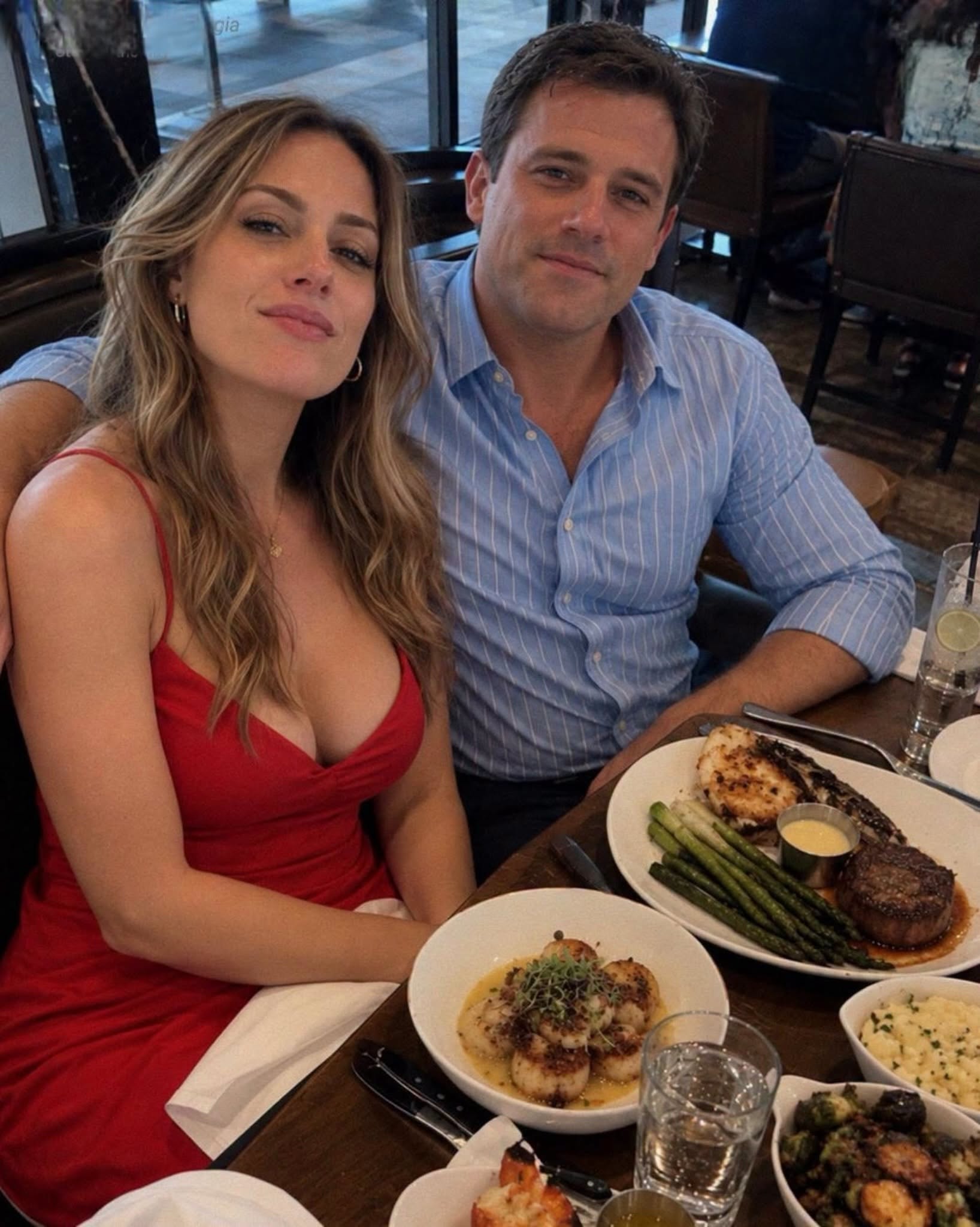
At first, Jett tried to make it sound ordinary. Her name was on her receipt pad, he pointed out. Maybe the couple had seen it there and copied it down. But when Nora opened the envelope, the explanation no longer felt simple.
Inside was a folded note and a small black key.
The note said: I’m sorry about the bill. Please don’t blame the girl.
The Envelope Behind the Booth
Then Jett noticed there was something else tucked inside.
It was a photograph of the same couple sitting in the restaurant. The woman looked like the customer Nora had served. The man beside her looked familiar too. But the picture did not look recent. It was faded, worn at the edges, and damaged in a way that made it seem much older than a snapshot from the previous night.
That was not the strangest part.
The photograph showed the restaurant’s current dining room, including the old brass light fixture above the bar. According to what everyone knew, the restaurant had only been remodeled into that design eight years earlier.
But the date on the photograph placed it fifteen years before that renovation.
Jett took the photo seriously enough to leave the counter and search through old files. When he returned, he was carrying a binder filled with records from the building’s past.
“This building used to belong to someone else,” he told Nora.
The name he found was Mercer. The Mercers had owned the restaurant before the current owners bought the property. Tucked into the file was an old newspaper clipping with a headline that had faded but was still readable: LOCAL BUSINESSMAN DISAPPEARS WITH WIFE AFTER FINANCIAL TROUBLE.
The article said the couple had vanished more than two decades earlier, leaving behind unpaid debts and confused business partners.
For a restaurant, an unpaid tab is usually a business problem. It affects inventory, labor costs, and the nightly numbers managers have to explain. But this was no longer just about a lost payment. The people in that booth seemed connected to a disappearance tied to the building itself.
Nora studied the photograph again. There was a tiny scar near the woman’s eyebrow. She remembered seeing the same scar the night before.
The possibility was difficult to say out loud: the couple who had walked out on the $400 dinner appeared to be the same people connected to the old disappearance.
A Second Visitor Changes Everything
Nora kept returning to the wording in the note.
Please don’t blame the girl.
At first, she assumed it meant her. But then another thought unsettled her.
What if the girl was someone else?
Before she could make sense of it, the front door opened. A woman came directly to the counter and introduced another piece of the mystery. Her name was Margaret, and she had another photograph.
This one showed a young woman standing outside the restaurant. Like the first picture, it was dated fifteen years earlier.
Margaret looked toward the booth where the couple had been seated and said the couple had returned because they could not stay away forever.
Then she added something Nora was not prepared to hear: the restaurant was not the only thing they had left behind.
Margaret placed a second envelope on the counter. This one did not have Nora’s name on the outside.
Jett looked as confused as Nora felt. When Nora asked what it meant, Margaret would not explain everything for her.
“That’s something you need to discover yourself,” she said.
Inside was a letter. Its first line stopped Nora cold.
Nora, if you’re reading this, then your mother never told you the truth about your father.
Nora’s mother had died six years earlier. She had always refused to talk about Nora’s father, and Nora had grown up believing he had simply abandoned them.
The letter suggested a different story.
According to what Nora read, the man from the restaurant had known her mother years ago. Something had forced them apart. The woman at the table, the one believed to have vanished decades earlier, was his sister.
She had come back because she had finally learned where Nora was.
That made the unanswered question even harder to avoid: why would Nora’s father walk into the restaurant, order a $400 meal, and leave without paying?
The letter gave a painful answer. He had not been trying to cheat the restaurant. He had wanted to confirm that Nora still worked there before approaching her. He was afraid that if he simply walked up and said he was her father, she would reject him.
The Bigger Picture
Stories like this hold attention because they begin with something practical and frustrating: an unpaid restaurant bill. Anyone who has worked in food service knows how quickly a dine-and-dash can turn into a stressful workplace issue.
But beneath that ordinary problem was something much more personal. A forgotten envelope became a doorway into family history, old property records, and the kind of truth that can reshape a person’s understanding of childhood.
After Nora finished reading, Jett pointed toward the front window.
A man was standing across the street, watching the restaurant. He was older than the man in the photograph, but Nora knew who he was supposed to be.
For several seconds, no one said anything.
Then Nora asked the only question she could manage.
When the man opened his eyes, they were full of tears.
“I’ve been waiting twenty-three years for you to ask me that,” he said.
Nora did not know whether to hug him, yell at him, or walk away. Before she could decide, he reached into his coat and pulled out a small photograph.
It showed Nora’s mother holding her as a baby.
On the back, in her mother’s handwriting, were six words.
In that moment, the $400 bill no longer mattered. The real thing left behind was not money. It was a truth Nora had been missing her entire life, and the chance to decide what to do with it.
Sometimes the smallest item left on a table is the one that changes everything.