A Whale in the Amazon Mangroves: The Real Story Behind a Baffling Jungle Discovery
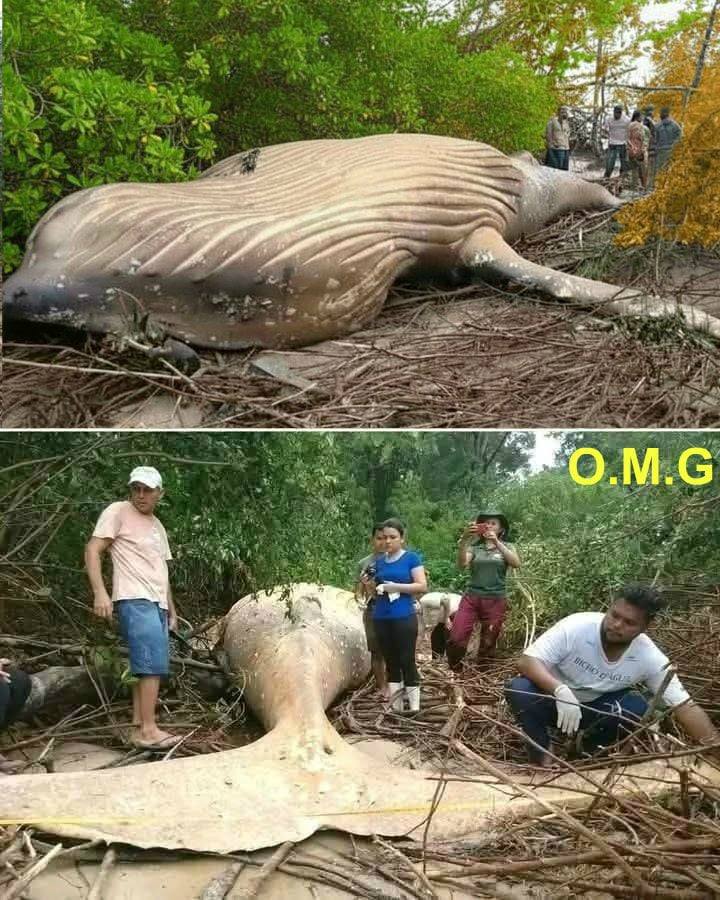
On Brazil’s remote Marajó Island—where the Amazon River meets the Atlantic—residents recently encountered a scene so unbelievable it sounded like a myth. Deep inside thick mangroves, far from open water and pounding surf, a young humpback whale was found lying among tangled roots and heavy mud.
It wasn’t a small animal, either. The calf measured about eight meters long, its dark, smooth body stark against the bright greens and browns of the rainforest floor. What made the moment even stranger was the setting: there was no obvious trail from the coastline, no damaged vegetation suggesting it had been dragged, and no clear reason a multi-ton marine mammal would be stranded hundreds of meters inland.
Rumors Spread—Then the Experts Arrived
As word traveled across the island, speculation took off. Some locals floated theories ranging from bad omens to unexplained phenomena. But municipal officials and marine specialists moved quickly, organizing a team of biologists, veterinarians, and environmental technicians to investigate. Their goal was straightforward: replace fear and guesswork with evidence.
When the team reached the site, the situation was as striking as it was sad. The whale was identified as a humpback (Megaptera novaeangliae), likely around a year old—still young enough that it would normally remain close to its mother while learning to navigate coastal waters.