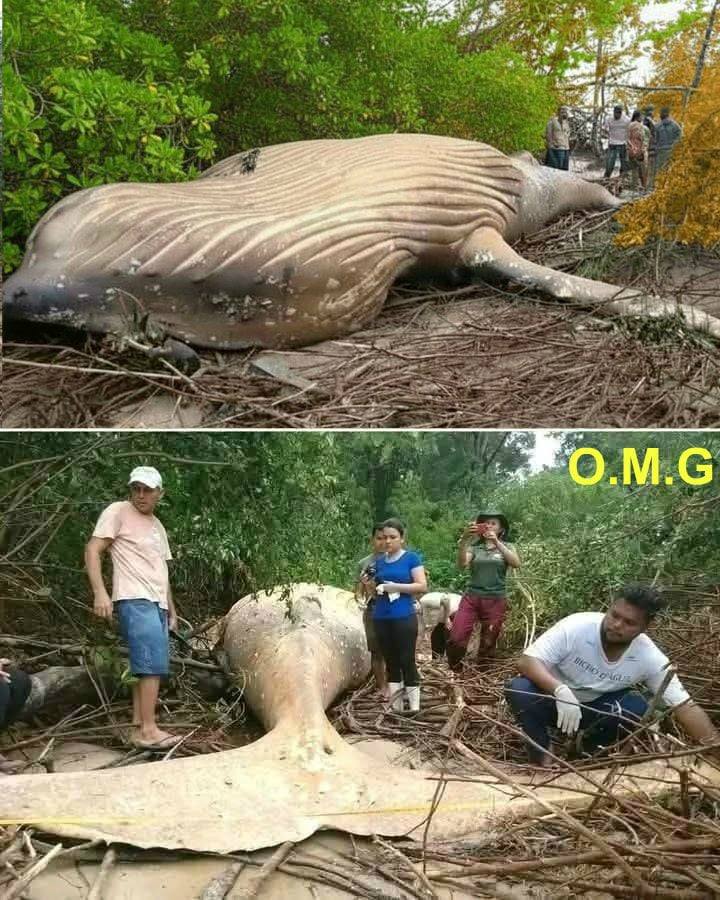
No Injuries, No Ship Strikes—So What Happened?
The first step was a careful visual assessment. Investigators looked for the most common causes of whale strandings near busy waters: propeller wounds, blunt-force trauma, deep cuts, or signs of entanglement. They also checked for evidence of predator attacks.
Surprisingly, the calf showed no major external injuries. No gashes. No propeller marks. No bite patterns suggesting a struggle. That eliminated several popular theories and pushed the team toward a more plausible explanation—one that can be just as dramatic as any legend.
The Likely Cause: Extreme Tides and Powerful Coastal Surges
Marajó Island is known for intense tidal shifts, especially when seasonal changes amplify the clash between the Amazon’s massive outflow and strong Atlantic tides. Under the right conditions, water can surge into mangrove systems with remarkable force, temporarily flooding areas that are normally dry or only lightly submerged.
Researchers believe the calf may have been separated from its mother during rough conditions offshore. Disoriented and fighting currents, it was likely swept into a high-water surge that pushed far into the mangroves. When the water rapidly receded, the whale was left behind—trapped in thick vegetation and deep mud, too far inland to reach the sea again.
Why Stranded Whales Don’t Survive Long
In the ocean, a whale’s body is supported by buoyancy. On land—or in a drained mangrove basin—its own weight becomes dangerous. Without water to help distribute that mass, internal pressure can compromise organs and breathing. Add tropical heat and dehydration, and survival time becomes short.
Based on the conditions at the site, specialists concluded the calf most likely died soon after the tide fell, overwhelmed by environmental stress and the physical effects of being stranded.
Nature Takes Over: An Unexpected Boost to the Ecosystem
Recovering a whale from dense mangrove terrain is extremely challenging and can cause serious damage to fragile habitat. For that reason, environmental authorities opted to leave the carcass in place.
While tragic, the whale’s presence becomes part of the rainforest’s natural cycle. As decomposition progresses, it provides a rare and nutrient-rich food source for insects and scavengers, enriching the soil and creating a unique micro-habitat—an unusual transfer of ocean life into a forest ecosystem.
What Happens Next: Science, Education, and Preservation
Researchers plan to monitor the site over time, with the long-term goal of recovering the skeleton once nature has done its work. The bones can be cleaned, reconstructed, and preserved for scientific research and museum display—helping students, visitors, and wildlife experts better understand marine behavior, coastal dynamics, and the real-world consequences of extreme environmental events.
A Powerful Reminder at the Edge of Sea and Forest
A humpback whale resting beneath a mangrove canopy is an unforgettable image—one that proves how quickly nature can blur boundaries we assume are fixed. What first looked like an impossible mystery appears to be the result of tidal power, shifting waters, and a young animal caught in the wrong place at the wrong time.
Want more real-world wildlife mysteries explained with facts—not rumors? Share your thoughts in the comments and let us know which strange nature story you want covered next.