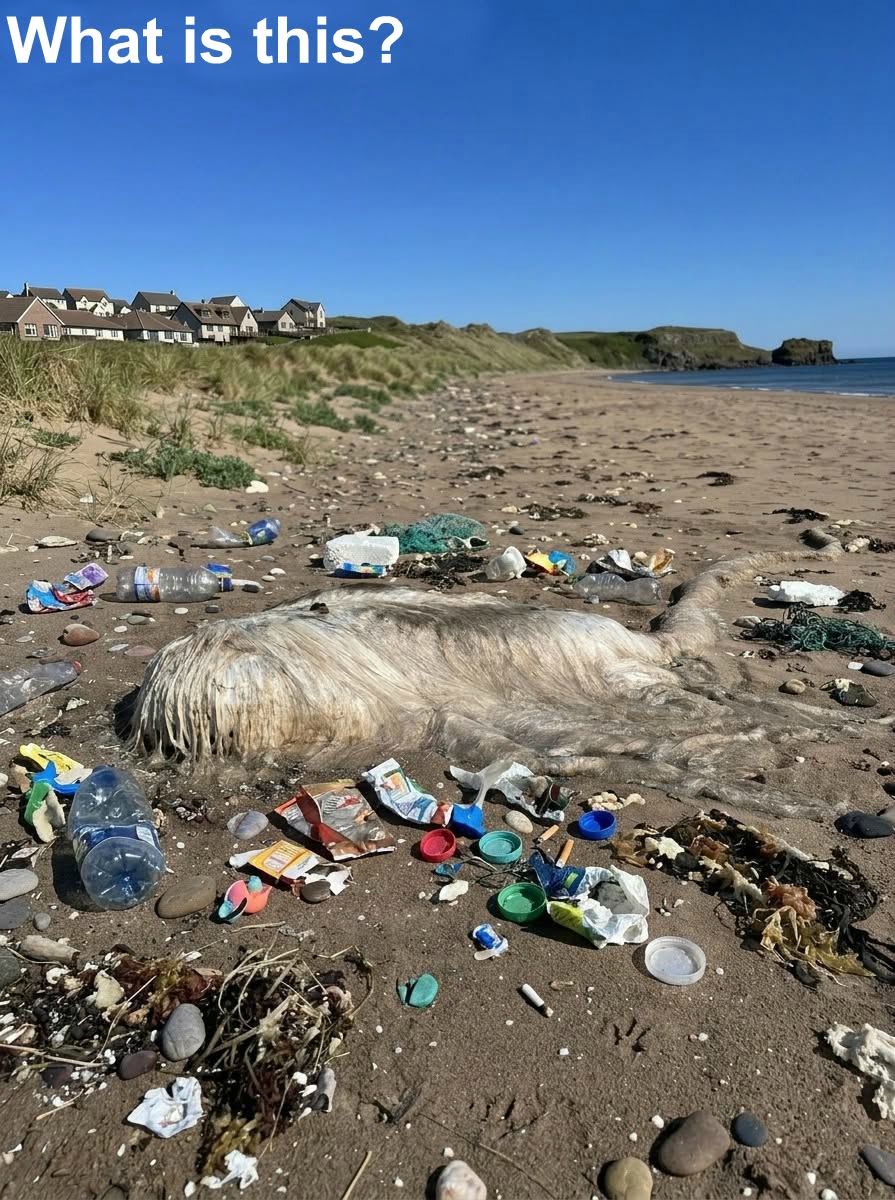
Its size and strange appearance can be fascinating, but the most important detail is its tentacles. Lion’s Mane Jellyfish are known for stings that can be painful, and their tentacles may still sting even after the animal has washed ashore.
That detail changed the entire moment. What first looked like a strange object on the beach was a reminder that marine life does not become harmless just because it is out of the water.
What Readers Should Know
If you see an unfamiliar jellyfish or sea creature on the sand, it is best not to touch it. Keeping pets away is especially important, since dogs may sniff, lick, or step on something before their owner can react.
For beachgoers, coastal walks and family trips are more enjoyable when safety is part of the plan. Checking local beach notices, watching where children and pets wander, and knowing that some washed-up marine animals can still sting are simple precautions that can prevent a painful encounter.
This is also a useful reminder for travelers planning coastal holidays. Beaches can change quickly with tides, storms, and seasonal marine life, so a familiar shoreline may look very different from one morning to the next.
The Bigger Picture
There was relief in learning what it was, but also a kind of respect. The sea can turn an ordinary walk into a close look at a world most people only glimpse from the shore.
That morning did not change the beach itself. It changed the way every wave looked afterward, carrying the quiet possibility that the ocean may bring in something unexpected at any time.
Sometimes the most memorable part of a walk is the reminder to look closely, keep a safe distance, and respect what the tide leaves behind.