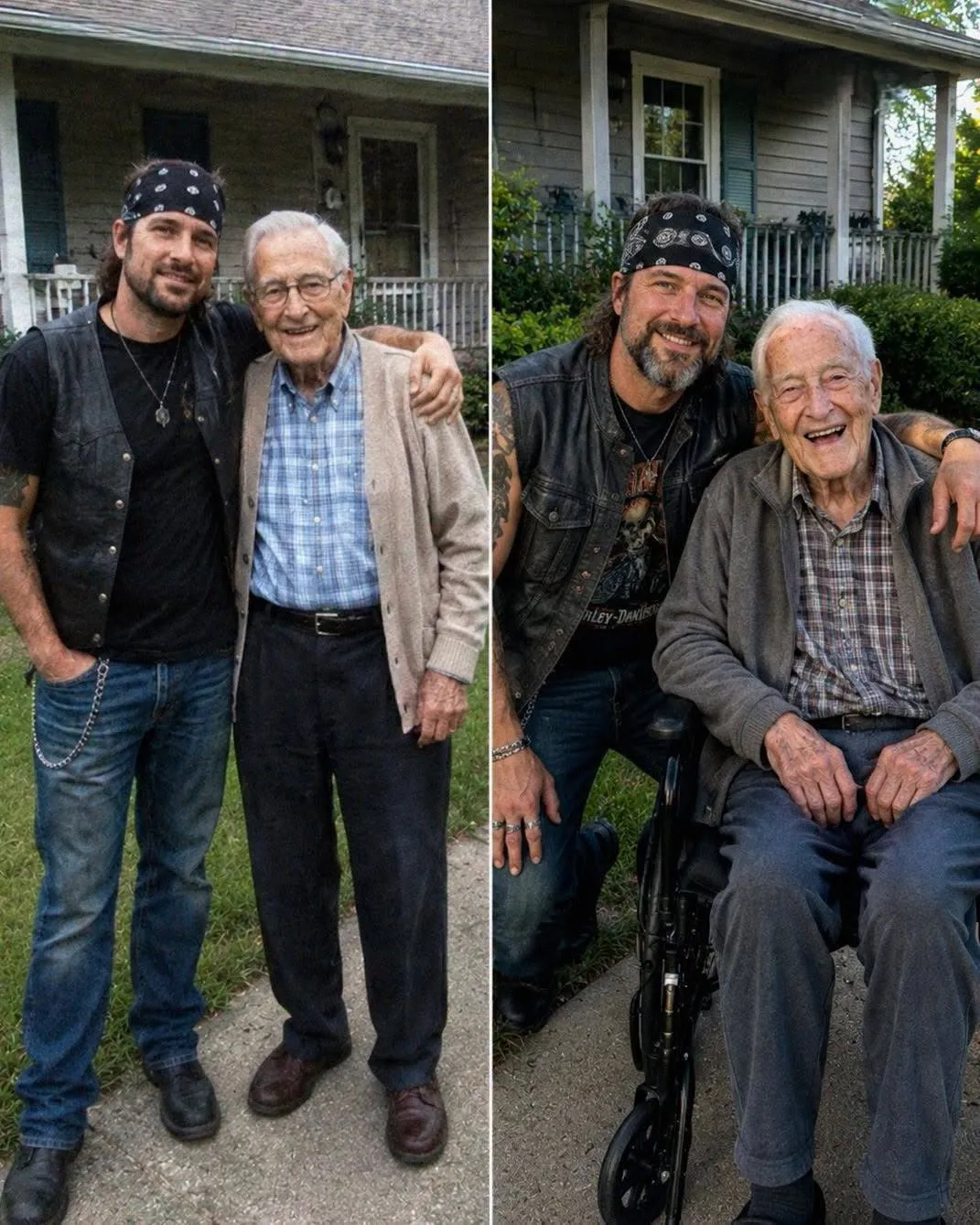
The Letter Inside the Suitcase
The first envelope had Anthony’s name written across it in handwriting he recognized immediately. It was Ezra’s.
For a moment, he could not bring himself to open it. When he finally did, the first sentence stopped him.
“If you’re reading this, then I didn’t get the chance to tell you what your Sunday visits truly meant to me.”
Ezra wrote that when Anthony first stopped to help him carry groceries twelve years earlier, he had been going through one of the loneliest times of his life. He lived in a neighborhood full of people, yet he had begun to feel invisible.
Anthony had not known any of that. He had not known Ezra’s history, his grief, or the quiet weight he was carrying. He had simply seen an older man struggling with grocery bags and decided to help.
To Anthony, it had been a small gesture. To Ezra, it changed the tone of an entire week.
But the letter was only the beginning.
Inside the suitcase was another envelope, this one written in blue ink and dated almost thirty years earlier. There were old photographs too, including one of Ezra beside another man who looked strangely familiar.
On the back, Ezra had written: “My brother Daniel and the man who gave me a second chance.”
Anthony had never heard Ezra mention a brother named Daniel.
He kept searching through the suitcase. He found more photographs, including one of Ezra with a woman he assumed had been his wife. Then he found a newspaper clipping that made his heart race.
The article described a young employee named Daniel Harrison who had prevented a serious workplace accident and helped several coworkers get out safely. Daniel had been badly injured during the incident. According to the story, he later struggled financially and could not return to his previous work.
Another name appeared in the article: a local business owner who had helped Daniel find employment and supported his family during his recovery.
That name belonged to Anthony’s father.
A Family Connection Kept Quiet
Anthony searched through the suitcase again, this time with more urgency. The next papers explained what Ezra had never said out loud.
Decades earlier, Anthony’s father had helped Ezra’s brother Daniel during one of the hardest periods of Daniel’s life. He had given him work when other employers would not.
That discovery raised a painful question. If Ezra knew about that connection, why had he never told Anthony?
The answer was in the final pages of the letter.
Ezra had learned years earlier that Anthony’s father had died without telling his son about Daniel. Ezra chose to keep the connection quiet because he did not want their friendship to feel like a debt.
He did not want Anthony to think the Sunday visits were repayment for something his father had once done.
Over time, the relationship became its own thing. Anthony was not helping Ezra because of the past. He was helping him because Ezra had become his friend.
At the bottom of the suitcase was one last envelope. It was marked: “Open only after you’ve read everything else.”
Inside, Ezra wrote one final message to Anthony.
He explained that the suitcase contained documents, photographs, and personal belongings because he wanted Anthony to understand something he had learned late in life. Many people believe the most important things they leave behind are money, houses, or possessions. Ezra had come to believe the most valuable thing a person could leave behind was proof that they had mattered to someone.
There was also one practical instruction.
Ezra had arranged for his lawyer to make a modest donation in Anthony’s name to a local community program that provided groceries and companionship to older adults living alone. The money came from part of Ezra’s savings.
Ezra did not demand that Anthony take over anything. He did not expect him to spend every Sunday shopping for strangers. He simply wanted the small kindness that had changed his own life to have a chance to reach someone else.
Why This Matters
Stories like Anthony and Ezra’s carry a quiet reminder about aging, isolation, and community care. Many older adults live alone, and practical help such as groceries, transportation, and regular visits can mean more than people realize.
Community programs that provide food assistance and companionship often depend on volunteers, donations, and local support. For the people receiving that help, the value is not only in the items delivered. It is also in being seen, remembered, and treated as part of the world outside their front door.
The following Sunday, Anthony returned to the grocery store.
He bought the things he needed, then added a few items he remembered Ezra always keeping in his kitchen. For a moment, he stood in the aisle and smiled to himself.
Then he drove to the community center named in Ezra’s instructions. A volunteer was organizing food packages for older residents.
“These are from the Harrison fund,” Anthony said.
Nearby, an elderly man sat alone by the window. For the first time since Ezra’s funeral, Anthony felt the ache in his chest ease.
Weeks later, he went back to Ezra’s old house and stood outside, looking at the porch where they had spent so many Sunday afternoons. He remembered Ezra in his chair with his coffee, always pretending he did not need help carrying anything.
The suitcase that had frightened and confused him had not contained a fortune or a dramatic secret. It held something more lasting: a record of how one act of kindness had traveled through two families without Anthony ever knowing.
Anthony still helps when he can. Sometimes he buys groceries for someone who needs them. Sometimes he sits and listens to an older person tell a familiar story. Sometimes he simply stops when he sees someone struggling.
Because Ezra left him with a lesson he never expected to learn from a battered suitcase: you may never know how much a small act means to someone else.
And sometimes, carrying a few grocery bags can become part of a story that lasts much longer than the moment itself.