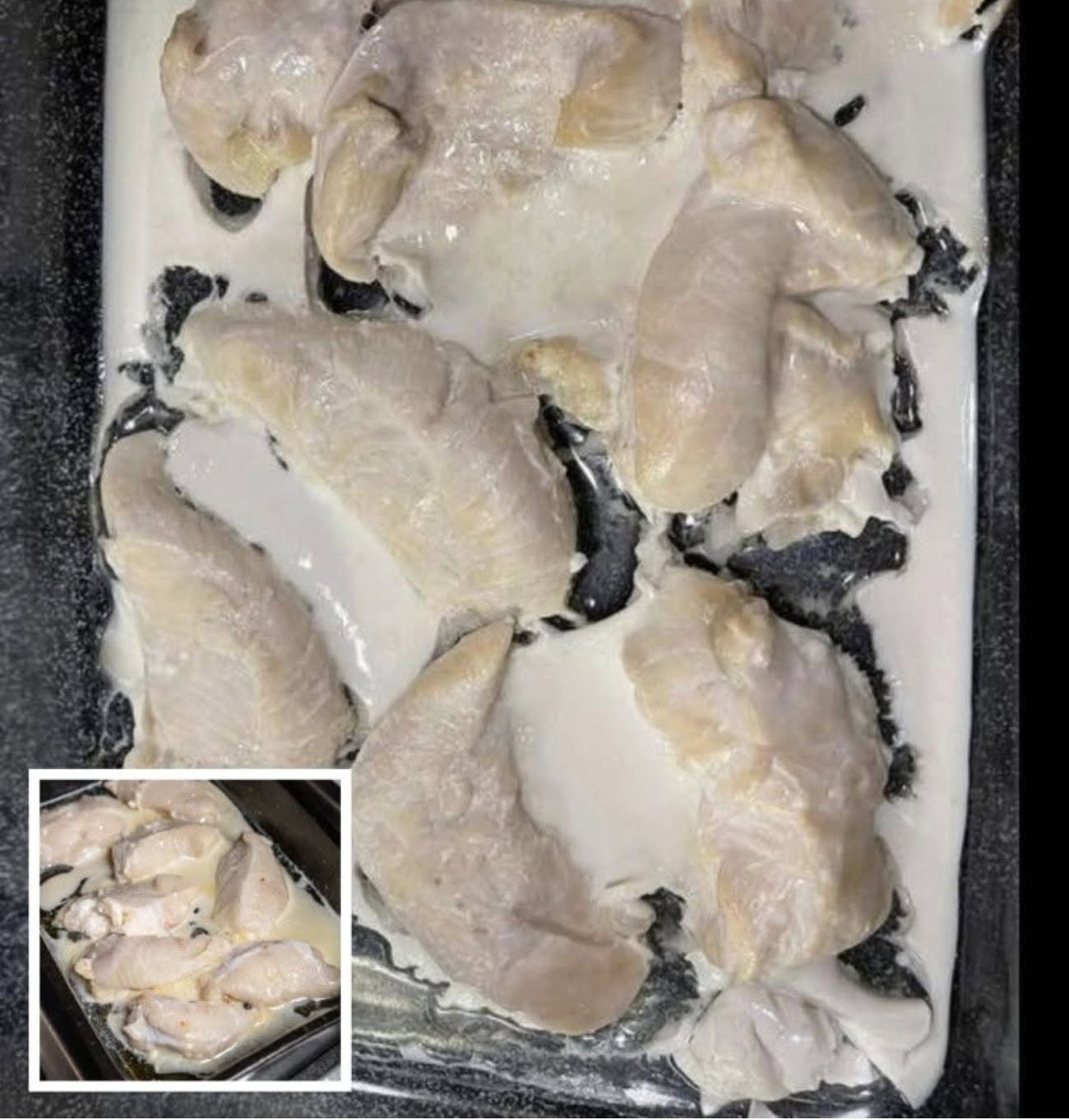
Why Chicken Breasts Show It More Often
Boneless, skinless chicken breasts are especially prone to producing visible albumin because they’re leaner than darker cuts.
With less fat to retain moisture, proteins are pushed out more easily during cooking—particularly when exposed to high temperatures.
That’s why chicken breasts often develop more noticeable white spots than thighs or drumsticks.
Does Frozen Chicken Make It Worse?
In many cases, yes.
Freezing forms tiny ice crystals inside the meat, which can damage muscle cells. Once thawed, extra moisture and proteins may escape more readily during cooking, making the white substance more visible.
This is also why previously frozen chicken often releases more liquid into the pan.
What About the Foam When Boiling Chicken?
If you’ve ever simmered chicken for soup or broth, you may have noticed white foam collecting on the surface of the water.
That foam is largely made up of the same protein—albumin—mixed with other natural compounds released during cooking.
Many cooks skim it off for appearance, but it’s not harmful and doesn’t affect food safety.
Is It Safe to Eat?
Absolutely.
The white substance is simply cooked protein that was already present inside the chicken before it reached your kitchen.
It is:
- Naturally occurring
- Safe to consume
- Common in poultry
- Found in many everyday foods
Some people remove it because of its texture or appearance, but there’s no health risk associated with eating it.
How to Reduce Its Appearance
If you’d prefer your chicken to look cleaner and more appealing, a few simple cooking techniques can help:
Cook at Moderate Temperatures
Gentler heat reduces rapid protein release and helps retain moisture.
Avoid Overcooking
Using a meat thermometer can prevent unnecessary drying and minimize protein leakage.
Let the Chicken Rest
Allowing cooked chicken to rest for several minutes helps redistribute juices throughout the meat.
Thaw Slowly
Defrosting frozen chicken in the refrigerator instead of rushing the process may reduce excess moisture loss.
It Happens With Other Foods Too
Chicken isn’t the only food where proteins become visible during cooking.
You may notice similar effects with:
- Salmon, which often releases white albumin while baking
- Shrimp, where proteins sometimes appear on the surface
- Eggs, whose whites turn opaque when heated
- Ground meats, which can release protein-rich juices during cooking
These changes are all part of normal food chemistry.
Separating Fact From Fiction
Several common myths continue to circulate about the white substance on cooked chicken:
Myth: It means the chicken has spoiled.
Fact: Albumin has nothing to do with freshness.
Myth: It indicates the chicken is undercooked.
Fact: It simply shows proteins reacting to heat.
Myth: It’s fat.
Fact: It’s primarily protein, not fat.
Myth: It’s unsafe to eat.
Fact: Food experts recognize it as a harmless and natural component of cooked poultry.
A Simple Kitchen Mystery Explained
Cooking is full of fascinating scientific reactions, and the appearance of albumin is one of the most common. While it may seem unusual at first, it’s simply a visible sign that proteins are changing as the chicken cooks.
The next time you spot that white substance on your meal, you can cook with confidence knowing it’s perfectly normal—and perfectly safe to enjoy.
Have you ever wondered about a strange cooking phenomenon in your kitchen? Share your questions or favorite cooking tips in the comments and join the conversation!