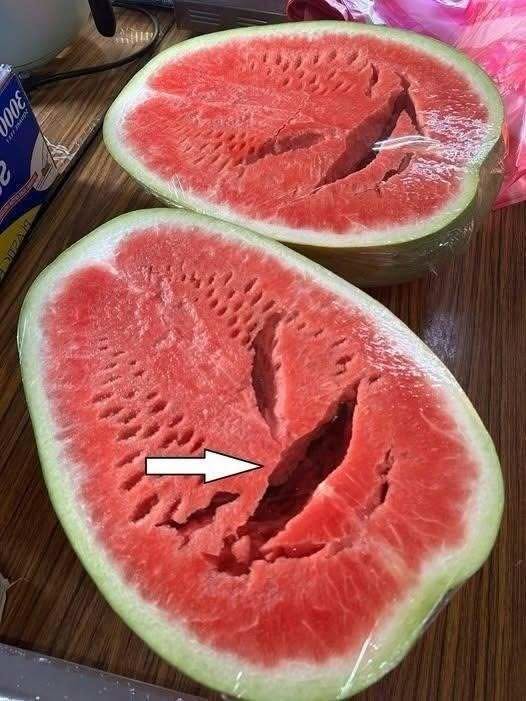
Slicing open a fresh watermelon should reveal juicy, vibrant red flesh—but sometimes the inside tells a different story. Deep cracks, hollow spaces, or unusual patterns can catch shoppers off guard, especially after seeing viral social media posts claiming these signs point to dangerous chemicals or contaminated produce.
Fortunately, food experts say the reality is often far less alarming.
In many cases, internal cracking is a natural occurrence caused by growing conditions rather than anything harmful. Understanding why it happens can help you separate internet myths from practical food safety advice.
Why Do Some Watermelons Crack on the Inside?
One of the most common explanations is uneven growing conditions. Watermelons that experience drought followed by heavy rainfall or rapid irrigation may grow too quickly, causing the flesh to split internally.
Temperature swings, natural ripening processes, and even bumps or pressure during transportation can also create hollow areas or cracks without affecting the fruit’s safety.
While these imperfections may slightly change the texture or sweetness, they don’t automatically mean the watermelon is unsafe to eat.
What About Growth Regulators Like Chlorfenuron?
Some online discussions point to chlorfenuron, a plant growth regulator used in certain agricultural settings to encourage cell division and fruit development.
Continue reading on the next page…