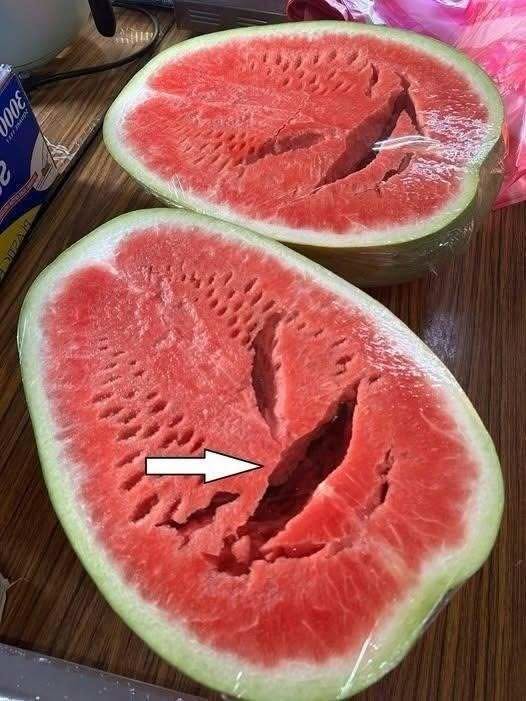
Because it can promote rapid growth, chlorfenuron has occasionally been associated with hollow centers or unusual internal structures in fruit. However, its use is regulated differently around the world. Some countries restrict or prohibit its application on certain crops, while others permit limited use under established agricultural guidelines.
Current scientific research has not conclusively shown that typical dietary exposure to approved levels poses a serious risk to human health. Regulatory agencies continue to evaluate available evidence and establish standards designed to protect consumers.
How to Pick a Good Watermelon
Choosing a quality watermelon often starts before you bring it home.
Look for these signs:
- A fruit that feels heavy for its size.
- A creamy yellow field spot where it rested on the ground.
- A firm rind without major soft spots.
- A dry, brown stem indicating natural vine ripening.
These characteristics often suggest the watermelon matured properly before harvest.
When Should You Throw It Away?
Minor internal cracks alone usually aren’t cause for concern if the fruit still looks, smells, and tastes fresh.
However, it’s best to discard the watermelon if you notice:
- A sour or fermented odor.
- Slimy or mushy flesh.
- Visible mold.
- An unusual or unpleasant taste.
- Extensive deterioration throughout the interior.
Spoilage and bacterial contamination are generally much more significant food safety concerns than cosmetic imperfections or naturally occurring hollow sections.
Trust Your Senses and Stay Informed
Watermelon remains one of summer’s most refreshing and nutritious fruits, providing hydration, vitamins, and natural sweetness. While unusual internal patterns can be surprising, they often result from environmental factors rather than harmful substances.
The best approach is to rely on observation and common sense. If the fruit appears fresh and appetizing despite a few internal cracks, it is often perfectly enjoyable. If signs of spoilage are present, it’s safer to dispose of it.
By understanding the difference between harmless imperfections and genuine warning signs, shoppers can make informed choices without unnecessary worry—and continue enjoying one of the season’s favorite treats with confidence.
Have you ever cut open a watermelon and found unexpected cracks or hollow spots? Share your experience in the comments and let us know whether it was still delicious or ended up in the trash!