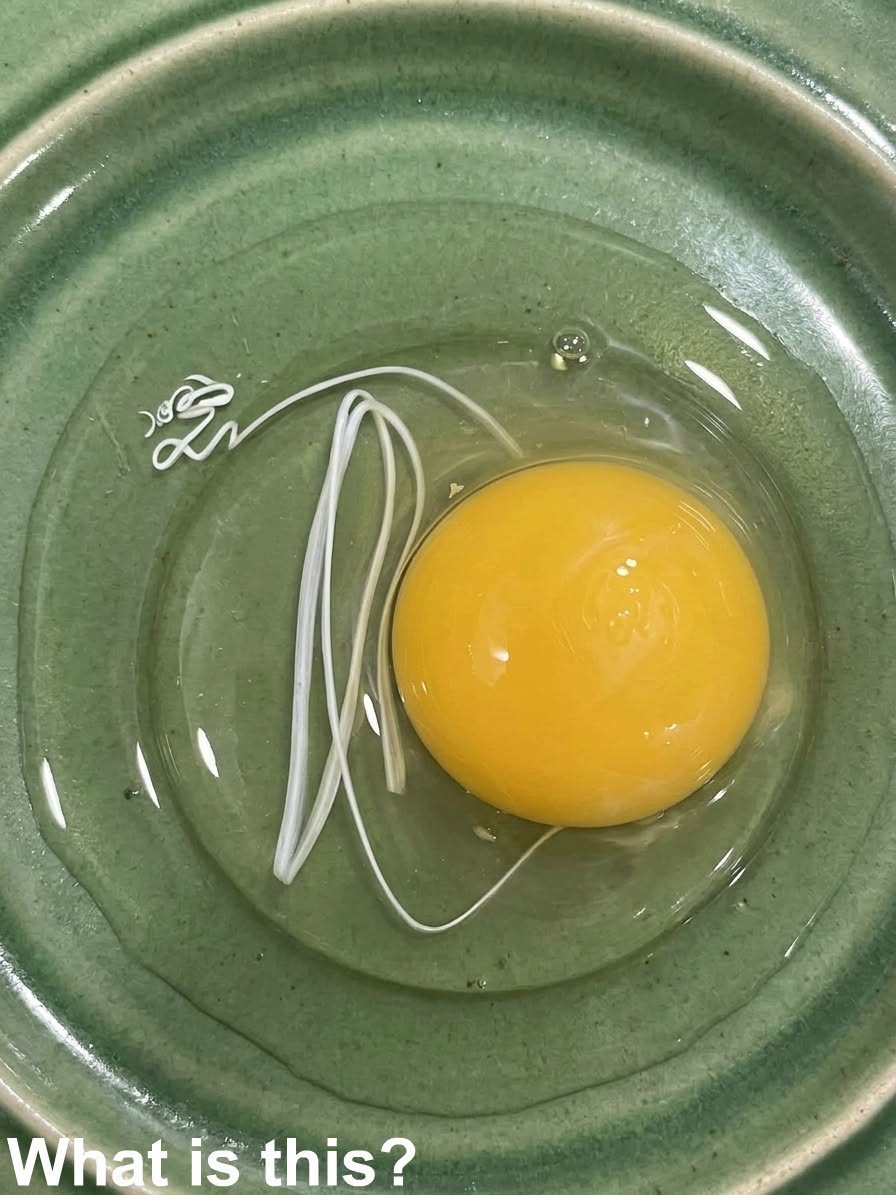
Cracking open an egg is something most people do without a second thought. But every now and then, you might notice a small white strand attached to the yolk or floating in the egg white. For many home cooks, that unexpected sight can be alarming.
Is it a sign the egg has gone bad? Could it be a parasite or some kind of contamination?
Fortunately, the answer is much simpler—and far less concerning.
Meet the Chalaza: A Natural Part of Every Egg
The mysterious white strand is called the chalaza, and it’s a completely normal part of an egg’s structure. Rather than signaling spoilage or contamination, the chalaza acts like a tiny anchor that helps keep the yolk centered within the egg white.
Think of it as nature’s built-in support system. By holding the yolk in place, the chalaza helps protect the developing contents of the egg and maintains its internal stability.
Its appearance can vary from egg to egg. Sometimes it looks like a thin string, while other times it resembles a cloudy ribbon or twisted cord near the yolk.
A Visible Chalaza Can Actually Be a Good Sign
Many people are surprised to learn that a prominent chalaza is often associated with a fresh egg.
Continue reading on the next page…