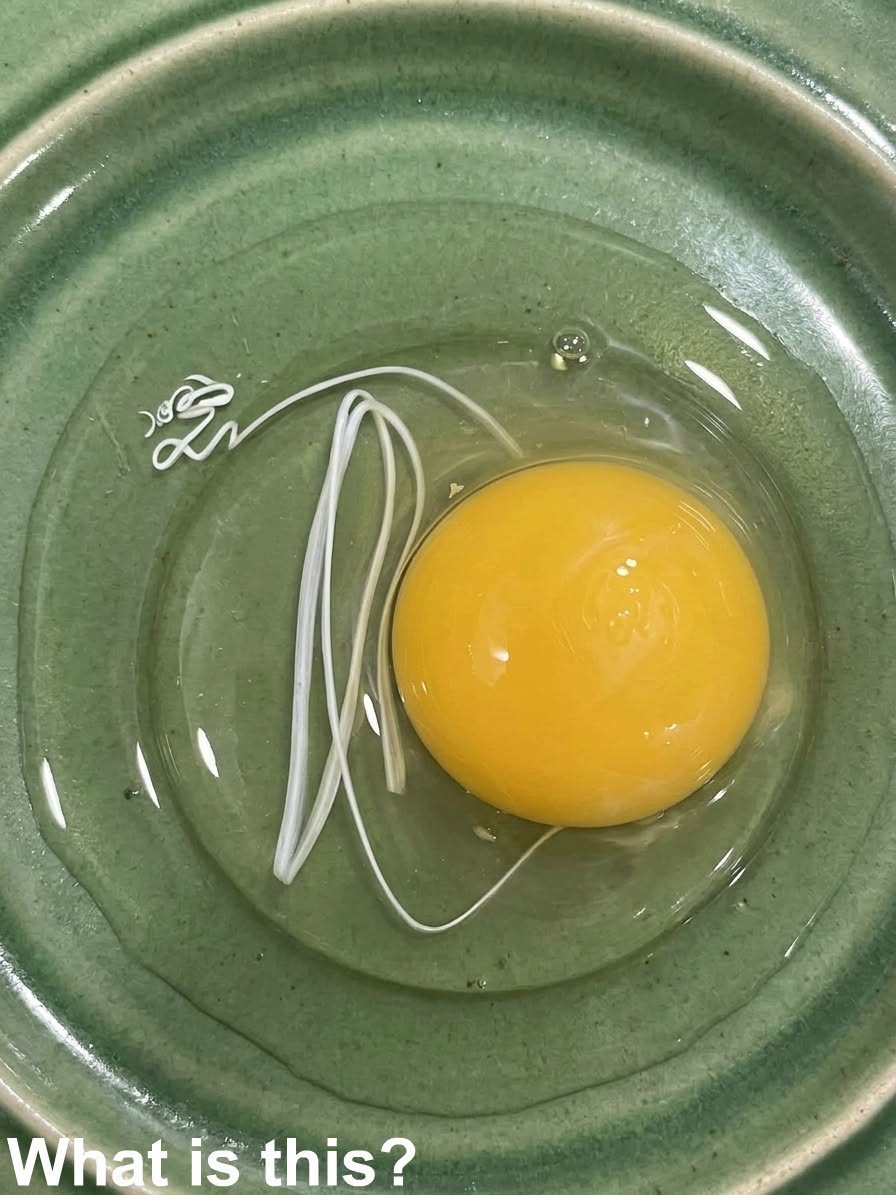
As eggs age, the proteins inside gradually weaken and the internal structure becomes looser. Over time, the chalaza may become less noticeable or break down, making it harder to see when the egg is cracked open.
In other words, spotting this white strand is usually no cause for concern—and may even suggest your egg hasn’t been sitting around for very long.
When Should You Worry About an Egg?
The chalaza itself is perfectly safe to eat and does not need to be removed before cooking.
Instead, pay attention to signs that actually indicate spoilage, such as:
- A foul or sulfur-like odor after cracking the egg.
- Unusual colors, including pink, green, or iridescent patches.
- Mold or obvious contamination on the shell or inside the egg.
- An abnormal texture that appears slimy or significantly altered.
If an egg smells fresh and looks normal aside from the chalaza, it is generally safe to prepare and enjoy.
Good Kitchen Habits Still Matter
Even healthy-looking eggs should be handled properly to reduce food safety risks.
For best results:
- Keep eggs refrigerated until use.
- Check expiration or best-by dates when purchasing.
- Discard eggs with cracked shells that may allow bacteria to enter.
- Cook eggs thoroughly when recommended for vulnerable individuals, including young children, older adults, and people with weakened immune systems.
Simple storage and handling practices go a long way in keeping meals safe.
Sometimes Nature Looks Stranger Than It Is
Many foods contain perfectly natural features that can seem unusual at first glance. The chalaza is one of those details that often surprises people simply because they’ve never noticed it before.
Rather than being a warning sign, it’s actually an ingenious part of the egg’s design—quietly doing its job every time you make breakfast.
So the next time you crack an egg and spot that odd little white string, there’s no need to panic or throw it away. In most cases, it’s simply a reminder that nature often includes fascinating details hidden in everyday foods.
Have you ever noticed a chalaza in an egg and wondered what it was? Share your experience in the comments and let us know if you learned something new today!