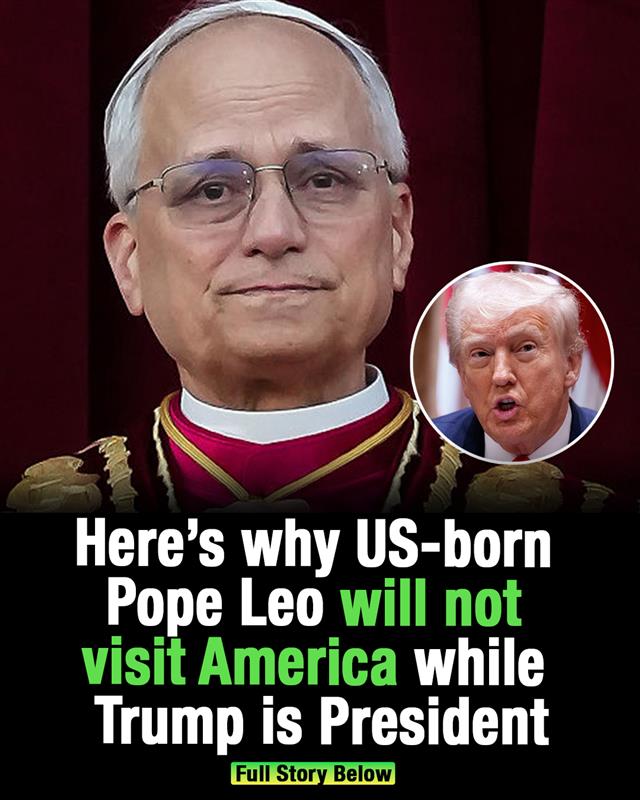
First U.S.-Born Pope Keeps Distance From Washington as Vatican–White House Tensions Intensify
Global attention has locked onto an unexpected storyline: the first American-born pontiff, Pope Leo XIV, is showing little interest in the kind of warm, headline-friendly relationship many predicted between the Vatican and the White House. Instead of a celebrated “homecoming” tour across the United States, the Pope’s public schedule has leaned elsewhere—fueling fresh debate about whether a serious Vatican–U.S. political divide is widening behind the scenes.
While official statements still emphasize respect, dialogue, and diplomatic cooperation, the optics tell a more complicated story. Observers see a growing mismatch between two powerful platforms: one shaped by national security, border enforcement, and a strong projection of state power, and another rooted in the Church’s emphasis on humanitarian aid, migrant protection, and calls for de-escalation in international conflicts.
A Clash of Priorities: Security Politics vs. Humanitarian Leadership
At the center of the speculation is not a single policy dispute, but a broader conflict of priorities. The White House message, as framed in recent months, has leaned into tougher language on immigration policy and a more forceful posture on global security. Meanwhile, Pope Leo XIV has consistently elevated themes that resonate with Catholic social teaching—care for the vulnerable, compassion for displaced families, and a moral push for restraint where violence threatens civilian lives.
For many analysts, this isn’t about personal dislike or dramatic insults. It’s about values-based leadership colliding with political strategy—two approaches that rarely blend smoothly when cameras are rolling and every gesture becomes a message.