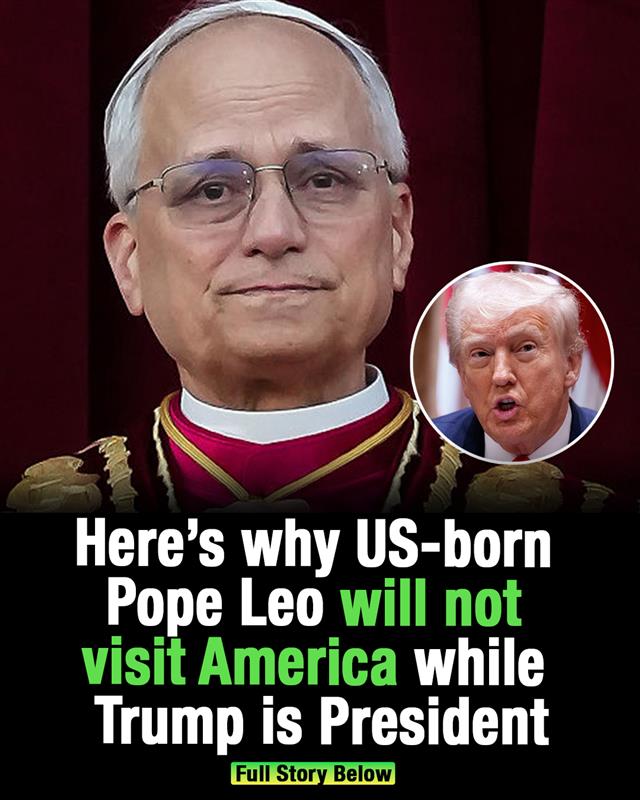
Why the Pope’s Travel Plans Are Making Headlines
In global diplomacy, where a leader travels can speak louder than what they say. Pope Leo XIV’s apparent preference for visiting areas tied to humanitarian crises—such as regions impacted by displacement, poverty, or conflict—has been widely interpreted as intentional. It signals that the Vatican wants the papacy’s spotlight to fall on human suffering rather than political celebration.
That choice also carries an unavoidable political consequence: avoiding high-profile appearances in the United States reduces the risk of any moment being framed as a symbolic endorsement of controversial domestic policies. In today’s media environment, a photo-op can quickly become a campaign talking point—something the Holy See has historically worked hard to avoid.
Behind Closed Doors: Diplomacy Without the Warmth
Reports from diplomatic circles suggest outreach has occurred to keep communication channels open. But even with careful language and quiet engagement, the relationship appears tense—more “managed” than friendly. Both sides seem aware that an open confrontation would be damaging, yet neither appears eager to soften positions that define their public identity.
That creates a high-stakes balancing act: maintain formal ties, avoid a public rupture, and still hold firm to deeply different visions of what leadership should look like on the world stage.
A Strategic Absence, Not a Simple Snub
Media commentators increasingly frame the lack of a confirmed U.S. visit as strategic rather than accidental. For Pope Leo XIV, returning to his birth country during a period of intense political polarization could instantly pull the papacy into America’s internal battles—undercutting the Vatican’s role as a global moral voice.
By keeping distance, the Pope preserves the Church’s independence and avoids becoming a prop in partisan narratives. In practical terms, it also prevents the Vatican from being forced to answer “yes or no” questions about policies it may view through a moral lens rather than a political one.
What Happens Next?
As the 2026 calendar continues without an announced papal trip to the United States, the silence is doing its own work. The situation is a reminder that shared nationality doesn’t guarantee shared priorities—and that the gap between moral authority and political power can become the story all by itself.
For now, the first American Pope appears more focused on the world’s margins than Washington’s corridors—leaving the long-anticipated homecoming uncertain, and the Vatican–White House dynamic under intense global scrutiny.
What do you think is really driving the distance—principle, politics, or optics? Share your take in the comments, and if you want more updates on global leadership, faith, and geopolitics, follow along for the next story.