The Phone Call That Changed Everything
Trying to stay calm, Emma’s mother searched desperately for reasonable explanations.
Maybe Emma had fallen at school.
Maybe she’d been injured and was too embarrassed to talk about it.
But the bathroom routine suddenly felt far more disturbing than simple cleanliness.
Without waiting for Emma to get home, her mother called the school directly.
She explained the strange behavior and asked if there had been any accidents involving her daughter.
Then silence filled the phone line.
A long silence.
Finally, the school secretary spoke softly.
“Mrs. Miller… can you come to the school immediately?”
Fear hit instantly.
“Why?” she asked.
The answer made her blood run cold.
“Because you’re not the first parent who’s called about this.”
The Secret Challenge Happening at School
When Emma’s mother arrived, she was escorted into a meeting with the principal and school psychologist.
Both looked deeply concerned.
The principal explained that older students had secretly created a private online challenge group involving younger children at the school.
At first, the assignments seemed harmless.
Students were dared to wear mismatched socks or stay silent for an entire day.
But over time, the challenges became stranger.
Children were instructed to hide stained clothing.
Spend specific amounts of time locked in bathrooms.
Keep secrets from parents.
Provide proof they completed tasks.
Each challenge earned points inside the group.
The ultimate goal was gaining access to something called “The Chosen” — an exclusive inner circle that many younger students desperately wanted to join.
Suddenly, Emma’s strange routine made horrifying sense.
Why Emma Was Hiding in the Bathroom
The school psychologist quickly reassured Emma’s mother that her daughter had not been physically harmed.
But Emma had become emotionally trapped inside the challenge system.
The bathroom had become her private hiding place to secretly complete assignments without being questioned.
Sometimes she was instructed to stay inside for exact amounts of time.
Other times she had to destroy or hide parts of her clothing as proof she completed tasks.
The pressure to belong had quietly taken over her daily behavior.
And like many children her age, Emma feared exclusion more than punishment.
The Emotional Moment Between Mother and Daughter
When Emma was finally brought into the office, she refused to make eye contact at first.
She looked embarrassed.
Ashamed.
Nervous.
Then quietly, she whispered:
“Mom… it’s just a game. Everyone wanted in. If you say no, they leave you out.”
Those words shattered her mother.
Because suddenly, the situation became painfully clear.
A ten-year-old child had become so desperate for acceptance that she was hiding secrets, damaging clothing, and isolating herself every single day just to avoid feeling excluded.
The Hidden Pressure Many Children Face
What frightened school officials most was how normal the behavior initially appeared.
To most parents, Emma’s bathroom routine would seem harmless.
But underneath it was something much deeper: emotional pressure, secrecy, and the overwhelming fear many children feel about fitting in socially.
Experts say kids often struggle to recognize when “games” become emotionally unhealthy, especially when popularity and belonging are attached to participation.
The need for acceptance can become incredibly powerful at young ages.
And social challenges spread online can quickly escalate beyond what adults realize is happening.
A Wake-Up Call for Families Everywhere
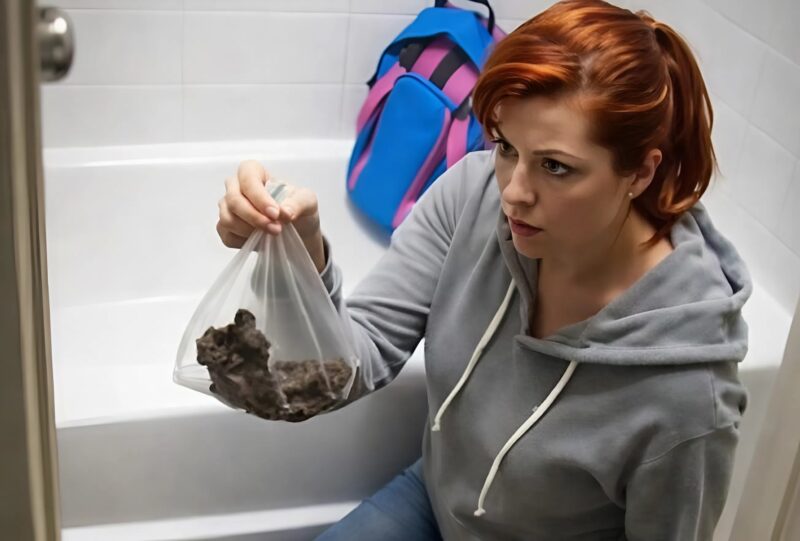
For Emma’s mother, everything changed the moment she pulled that piece of fabric from the bathtub drain.
What first looked like a plumbing problem uncovered an entire hidden world of pressure and secret behavior happening among students.
Thankfully, the truth was not as terrifying as she initially feared.
But the experience served as a powerful reminder that sudden changes in a child’s routine should never be ignored completely.
Sometimes the smallest habits reveal the biggest emotional struggles.
And in today’s world, many children are facing pressures adults may never even realize exist.
Join the Conversation
Do you think online trends and social pressure are becoming harder for parents to monitor? Share your thoughts in the comments and follow for more powerful real-life stories, parenting insights, and emotional moments that spark important conversations.