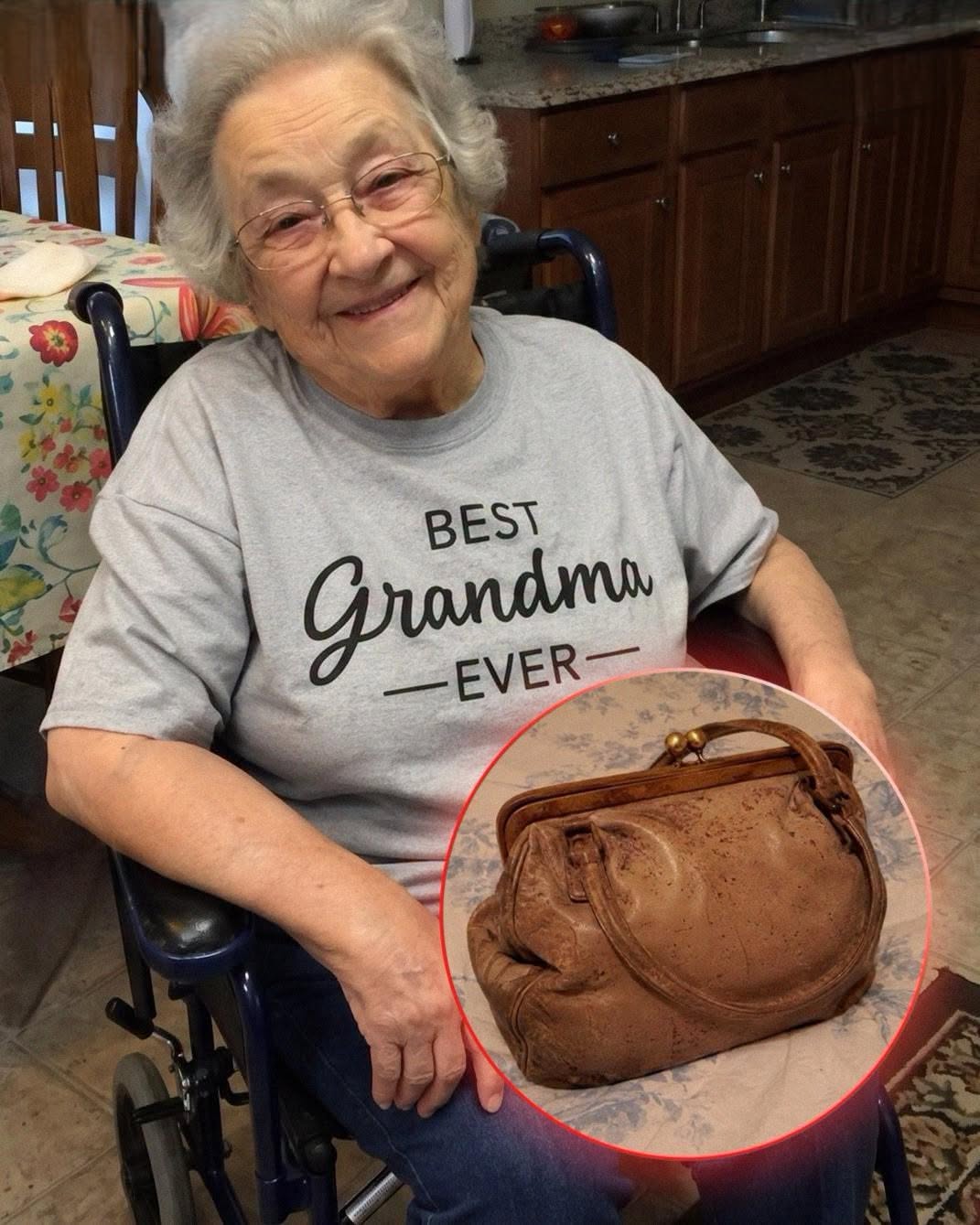
One of them was mine.
The Letters Were Only the Beginning
Before opening my envelope, I noticed something beneath the stack. It was an old photograph of my grandmother as a young woman, standing beside a man I did not recognize.
On the back, she had written only four words.
Those words raised more questions than they answered.
Then I found another photograph. This one was older and worn at the edges. My grandmother stood beside the same man, and in their arms was a baby.
I knew enough about our family to understand that the baby was not one of my cousins. It did not fit any story I had ever been told.
Under the photographs was a small notebook with a damaged cover. Several pages had been taped back together, as if my grandmother had returned to it again and again over the years. On the first page, she had written a sentence that made the room feel suddenly colder.
“If you’re reading this, I am no longer here to explain.”
I looked toward the bedroom doorway almost instinctively, as though she might appear and tell me to put everything back.
But the next line made it impossible to stop reading.
“There is something about our family that I have protected for more than fifty years.”
A Life She Had Never Spoken About
In the notebook, my grandmother wrote about a man named Thomas. When she was young, they had been engaged and had planned to marry. Then, shortly before the wedding, he disappeared from her life.
The family version of the story had always been simple: Thomas had left her.
My grandmother’s version was different.
According to what she wrote, Thomas had been carrying serious financial and family problems. He intended to leave town for a short time and return once things were settled. But before he could come back, his younger sister became seriously ill and needed help.
Thomas stayed away longer than he had planned. He believed he was doing what he had to do for his family.
By the time he contacted my grandmother years later, both of them had built separate lives. They did not restart their relationship. But they had shared a secret that stayed buried for decades.
There was a daughter.
The story our family had always known was that Margaret was a distant relative who became close to my grandmother after losing her parents. My grandmother’s notebook said something else entirely.
Margaret was Thomas’s daughter.
And my grandmother had helped care for her from a distance, without ever letting the full truth become public.
I sat on the edge of the bed, holding the notebook in my lap, trying to connect the woman I had known with the young woman in those photographs. My grandmother had always seemed steady, practical, and private. Now I was seeing another part of her: someone who had loved deeply, lost quietly, and chosen silence to protect other people.
Why She Wanted the Handbag Buried
The answer came several pages later.
My grandmother wrote that she never wanted the family to learn the truth while she was alive. She feared it would reopen old wounds, raise painful questions, and turn private history into arguments.
She had spent decades protecting people’s privacy. The handbag was not just a container for old papers. It was a boundary.
Then I opened my letter.
“My dear Emily, if you’re reading this, you are probably wondering why I kept so many things from you.”
She wrote that I had always reminded her of herself when she was young. Not because we looked alike, but because I asked too many questions, refused easy answers, and noticed things other people missed.
Then she gave me the lesson she seemed to have saved for the end.
Families aren’t defined only by blood or secrets. They’re built by the people who choose to love one another.
Near the bottom of the page, she added a line that made me laugh even as I cried.
“And please tell your mother that I knew she would eventually open this bag. She was never as patient as she thought.”
There was one more sheet inside the handbag. On it, my grandmother asked that the family not fight over what she had left behind. She did not want arguments about inheritance, old relationships, or who had known which parts of the story.
She wanted the letters and photographs shared with honesty, but also with compassion.
Then came the instruction that finally explained everything.
“If you have opened this before my funeral, please don’t bury the bag with me. My memories belong with the people who loved me.”
That was when I understood. She had not truly wanted the handbag buried because it was meant to disappear. She wanted us to wait until she was gone.
Her repeated request had protected the secret during her lifetime. After that, she wanted the truth to belong to us.
I gathered the letters, the notebook, and the photographs and returned to the church.
When I found my family, I said, “I think Grandma left something for all of us.”
For the next several hours, we read. There were stories none of us had heard and memories she had never spoken aloud. We did not discover a scandal so much as a fuller version of a woman we had loved all our lives.
My mother eventually held up her own letter and smiled through tears.
“She really did plan everything, didn’t she?”
At the funeral, we did not place the handbag in the casket. Instead, we set my grandmother’s favorite photograph beside her.
The handbag came home with us. For years afterward, it sat on a shelf in the family room, no longer forbidden or mysterious.
It became a reminder that even the people closest to us may carry chapters we have never read. And sometimes, the deepest family secrets are not about betrayal at all. They are about love, regret, forgiveness, and the quiet promises people keep for a lifetime.
Some family stories are hidden for a reason, but when they finally surface, they can change how we remember the people we thought we already knew.