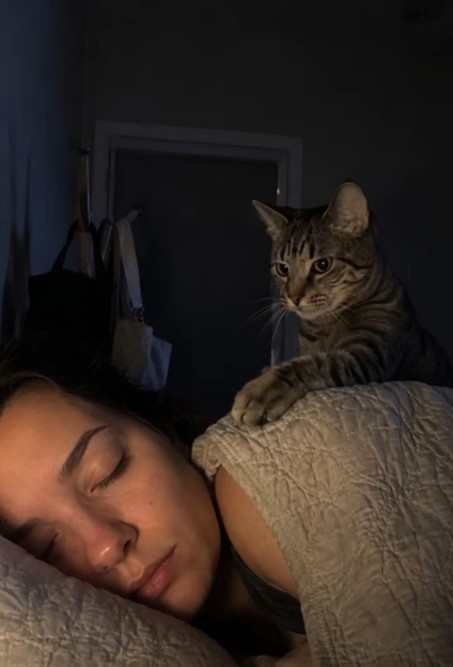
After nearly three months of broken sleep, Anna made a veterinary appointment, convinced that something was wrong with her cat or with the bedroom itself.
The Vet Did Not Find a Typical Cat Problem
At the clinic, Luna did not act like an aggressive or distressed animal. She sat quietly in her carrier, alert but calm. The veterinarian checked her breathing, heart rate, general condition, and other basic signs of health.
Nothing obvious explained the behavior. There were no clear signs of injury, infection, pain, or a standard behavioral issue that would account for such a specific nighttime routine.
But the veterinarian noticed one detail that did not fit. Luna kept watching Anna closely. Even when Anna was not speaking to her or touching the carrier, the cat’s attention stayed fixed on her owner.
That observation led the vet to shift the conversation. Instead of asking only about Luna’s habits, the veterinarian began asking Anna about her own nights.
Anna admitted that she often woke feeling anxious and unwell. She described a racing heartbeat, dry mouth, and moments of breathlessness. She had assumed stress or insomnia was to blame and had already tried mild sedatives, but the problem had not gone away.
Then Anna mentioned something a neighbor had noticed: at times, her nighttime breathing sounded irregular, including brief pauses followed by gasping.
A Possible Clue Hidden in Luna’s Behavior
The veterinarian explained that some animals are unusually sensitive to changes in a person’s body during sleep. A pet may notice shifts in breathing, movement, scent, or distress before the person is fully aware of what is happening.
The vet did not diagnose Anna. Instead, the recommendation was simple and important: she should speak with medical professionals and consider testing, including blood work, heart evaluation, and a sleep study.
Anna followed that advice. Her medical evaluation found significantly elevated blood sugar levels, leading doctors to recommend further assessment for possible metabolic issues and lifestyle changes. Cardiac tests also showed irregularities that needed monitoring.
Most importantly, a sleep study confirmed episodes of interrupted breathing during the night. That finding helped explain why Anna had been waking with breathlessness and fatigue.
In that context, Luna’s behavior looked very different. The cat may not have been trying to annoy her owner at all. She may have been reacting to changes in Anna’s breathing or physical state while she slept.
Once Anna woke up, sat upright, or moved to another room, her breathing may have improved enough for Luna to stop reacting. That could explain why the cat settled only after Anna left the bed.
What Readers Should Know
This story is not a reason to rely on pets as medical monitors. Cats and dogs can behave strangely for many reasons, including stress, boredom, pain, age-related changes, or changes in the household environment. A veterinarian is still the right starting point when a pet suddenly develops unusual behavior.
But the situation also shows why persistent sleep problems should not be dismissed. Ongoing exhaustion, gasping during sleep, irregular breathing, racing heartbeat, or repeated nighttime distress are all reasons to speak with a healthcare professional.
Sleep studies, heart checks, and basic lab work can help doctors identify problems that are not obvious during the day. For many people, early evaluation can make a major difference in safety, treatment options, and long-term wellness.
As Anna began treatment and medical monitoring, her health gradually improved. Luna’s nighttime behavior also changed. The pawing, scratching, and urgent wake-ups stopped, and the cat returned to sleeping calmly beside her.
What once felt like a baffling pet problem became a reminder that animals sometimes notice more than we expect. And when a familiar routine suddenly changes, it may be worth paying attention to both sides of the story.