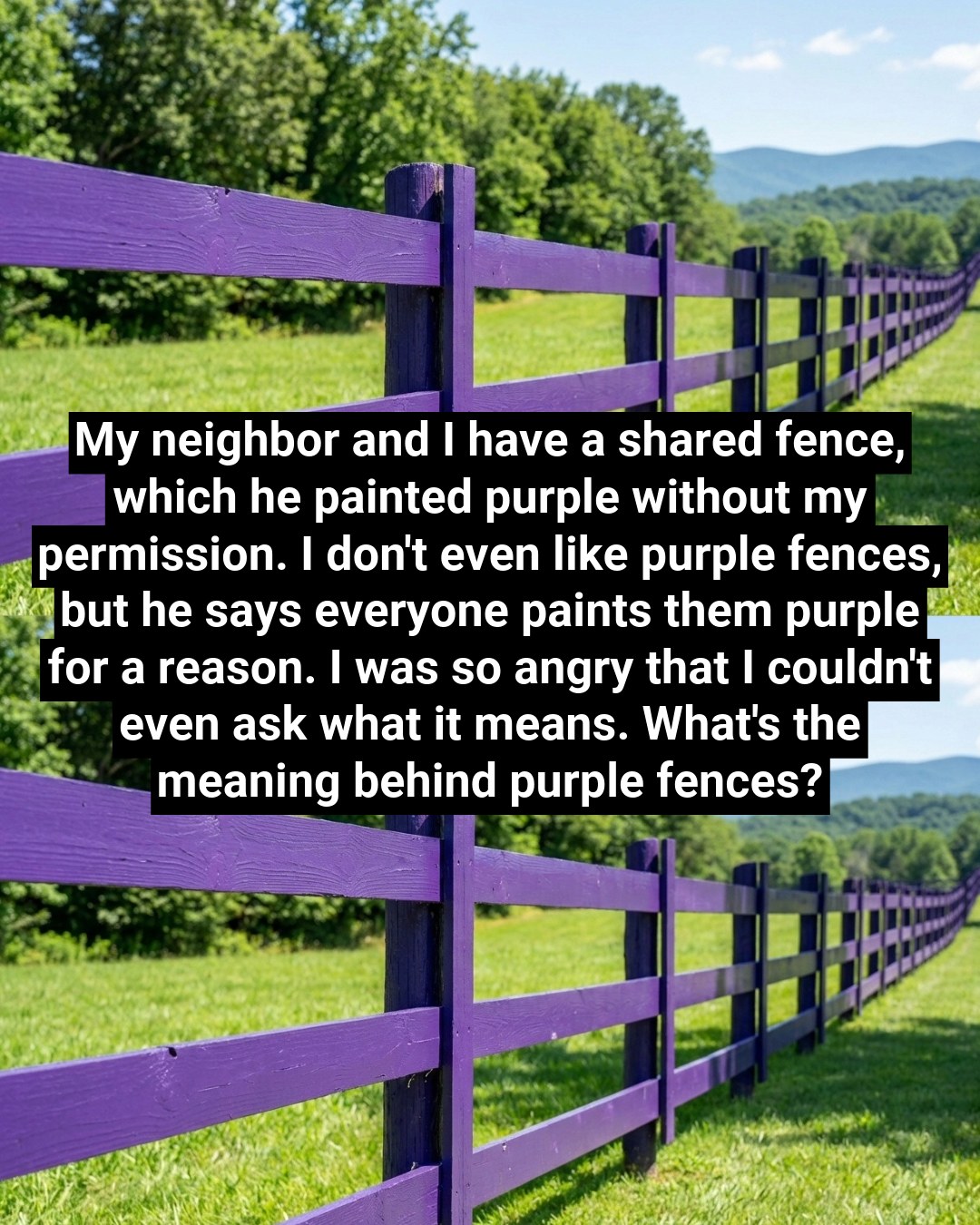
Purple Paint on Trees and Fence Posts: The Legal “No Trespassing” Warning Many Hikers Miss
The outdoors can feel like open country—endless backroads, quiet timber, and trails that seem to belong to whoever shows up first. But across the U.S., a simple detail is changing how landowners protect their property and how hikers, hunters, and outdoor photographers should plan every trip.
If you’ve ever noticed bright purple paint on a fence post or a vertical stripe on a tree, it isn’t decoration. In many states, it’s the legal equivalent of a “No Trespassing” sign. And treating it like a random marking can lead to fines, criminal charges, and a record that follows you long after the hike is over.
What the “Purple Paint Law” Really Means
The Purple Paint Law (sometimes called “purple posting”) allows property owners to mark boundaries with purple paint instead of traditional signs. States that recognize this method treat those markings as official notice that the land is private and entry is not allowed without permission.
Why does that matter? Because in court, “I didn’t see a sign” is much harder to argue when the boundary is clearly marked with repeated paint stripes designed to be visible from a distance.