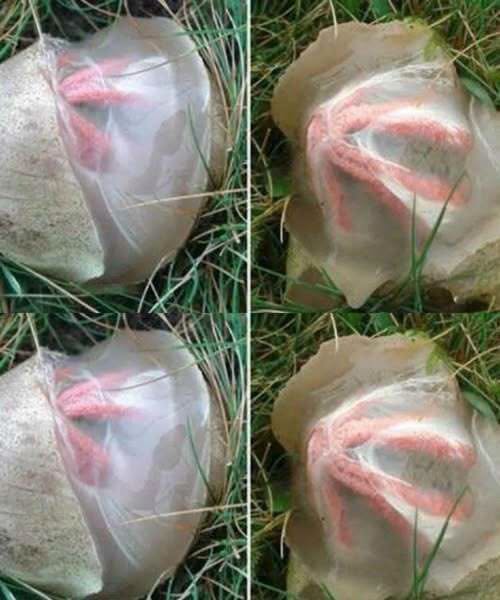
A Strange Find That Looked More Alarming Than It Was
Nothing about it appeared to be moving. There were no insects swarming around it, and it did not seem to be spreading across the bed. Still, unfamiliar things in a garden can be difficult to judge at a glance.
Instead of poking it or pulling it out, I took a better look and searched for possible explanations. The most likely answer was far less dramatic than my imagination had suggested: it appeared to be a type of fungus.
That small bit of information changed the entire moment.
A few minutes earlier, the red object had felt like a warning sign. Once I had a more reasonable idea of what it might be, it became something else entirely: a reminder of how varied and surprising the natural world can be, even in a familiar backyard.
The object itself had not changed. My understanding of it had.
What Readers Should Know
Finding an unfamiliar growth in a garden is not unusual. Mushrooms, molds, and other fungi can appear when conditions are right, especially around moisture, mulch, soil, or decaying organic matter.
That does not mean every strange growth should be handled casually. Some plants and fungi can be irritating, toxic, or unsafe if touched or eaten. A good rule is simple: do not touch, taste, or remove anything you cannot identify with confidence.
If you are concerned about something growing in your yard, it is sensible to compare it with reliable gardening resources or ask a local extension office, nursery, or qualified plant expert. Clear photos, the location, and details about the surrounding soil or mulch can make identification easier.
For homeowners, this kind of discovery can also be a useful reminder to pay attention to moisture, drainage, and garden maintenance. Not every fungus is a problem, but repeated unusual growths may point to damp conditions or decomposing material that needs a closer look.
The Bigger Picture
What stayed with me most was not the fungus itself, but my reaction to it.
Before I knew what I was seeing, my mind filled in the blanks with possibilities that sounded far more concerning than the likely reality. Once I slowed down, observed it carefully, and looked for dependable information, the fear faded into curiosity.
Gardens have a way of doing that. They remind us that unfamiliar does not always mean dangerous, and ordinary nature can look mysterious when we meet it for the first time.
The next strange thing in the flower bed may still deserve caution, but it also deserves a closer look before imagination takes over.