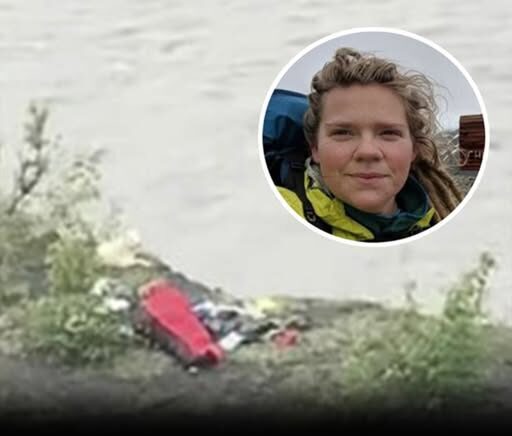
A dangerous fall far from help
Remote hiking carries risks that are easy to underestimate from a map. Snow can cover familiar markers. Distances can feel misleading. A person who is injured may burn energy quickly while trying to make decisions in the cold.
Amelia had a GPS beacon with her, an important piece of safety equipment for backcountry travel. But activating it is a serious step, and even after a signal is sent, rescue in mountain terrain is not instant. Weather, location, and access all matter.
For a time, she was stranded in the Alaskan wilderness with pain, uncertainty, and freezing conditions closing in around her.
Then she noticed movement in the snow.
At first, the white animal in the distance looked like a wolf. For someone alone and injured in the mountains, that sight could have added another layer of fear. But as it came closer, Amelia saw something that changed everything.
The animal was wearing a collar. On it was one word: “guide.”
It was not a wolf. It was Nanook, a local husky known for finding lost hikers.
The husky who would not leave
Nanook did not simply pass by. He stayed with Amelia.
The husky helped guide her back toward the trail after the fall had left her confused about where to go. In a place where she had no human companion and no easy path to safety, his presence became practical as well as comforting.
As night came, the situation remained dangerous. Amelia was still hurt, still exposed to the cold, and still far from rescue. Nanook stayed beside her through the night, sleeping close and giving her warmth and reassurance during the long hours outside.
In a survival situation, staying calm can matter almost as much as staying warm. Nanook gave Amelia something steady to focus on when fear and exhaustion could have made everything worse.
The next danger came when Amelia was pulled into a river. Already injured and tired, she was dragged under by the current. Nanook jumped in and pulled her out by the strap of her backpack.
After that, Amelia activated her GPS beacon.
The signal brought rescuers toward her location, but she still had to wait in remote terrain until they could reach her. Nanook remained close during that final stretch.
When the rescue helicopter arrived, troopers found Amelia alive. Beside her was the white husky who had guided her, stayed with her overnight, and helped pull her from the river.
What readers should know
Amelia’s story is extraordinary, but it also points to a practical truth about wilderness travel: preparation matters. A GPS beacon, careful route planning, weather awareness, and emergency gear can make a major difference when a hike goes wrong.
For travelers planning remote outdoor trips, safety costs are worth considering alongside flights, lodging, permits, and transportation. Satellite communication devices, proper cold-weather gear, and travel insurance that covers outdoor activities may not feel exciting when booking a trip, but they can become essential in an emergency.
In Amelia’s case, technology helped bring rescuers to her. But before the helicopter arrived, Nanook filled the gap that no device could fill. He stayed near her when she was lost, guided her when she needed direction, and acted when the river put her in immediate danger.
Amelia credits Nanook as the hero who helped keep her alive long enough to be rescued.
She entered the mountains looking for solitude and challenge. She came out with a survival story shaped by instinct, loyalty, and a dog with a collar that said exactly what he proved to be.
Sometimes, help in the wilderness arrives on four legs and refuses to walk away.