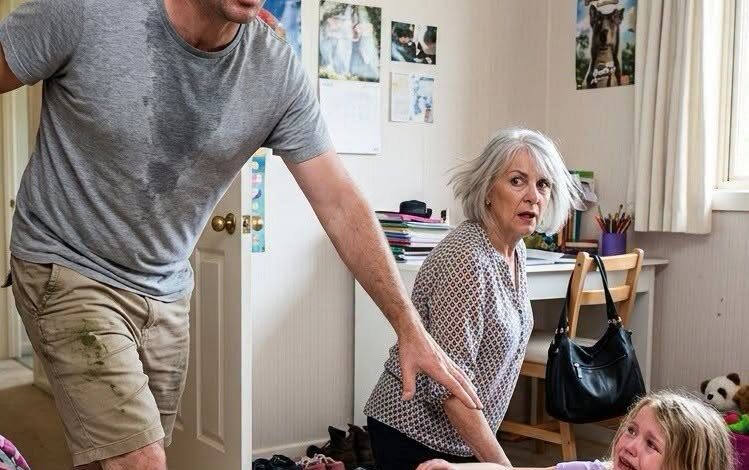
When my daughter Lily quietly asked me to look inside her grandmother’s purse, my first instinct was to reassure her that everything was fine.
Lily looked genuinely frightened, but children sometimes misunderstand adult conversations or situations they weren’t meant to be part of.
Then I walked into the room and found my mother-in-law, Marlene, leaning toward her.
“You didn’t see anything,” Marlene said.
She stopped the moment she noticed me.
That was when I knew I needed to listen to my daughter.
And when I eventually discovered a folded hospital document inside Marlene’s purse, the situation became far more serious than I’d imagined.
The Paper Had My Wife’s Information on It
I unfolded the document.
There was a hospital stamp near the top.
Below it was something I immediately recognized: my wife Anna’s medication schedule.
The times and dosages had been carefully written down by hand.
I recognized the handwriting too.
It was Marlene’s.
I’d seen it countless times on birthday cards, grocery lists, and little notes she’d left around our kitchen.
“Give me that,” Marlene said.
I folded the paper.
“No.”
Her eyes moved toward Lily.
I immediately stepped between them.
Whatever was happening, my daughter wasn’t going to be blamed for telling me.
I Asked Lily to Tell Me Exactly What Happened
I didn’t want assumptions.
I didn’t want exaggerations.
I simply asked Lily to describe what she’d seen.
According to her, Marlene had arrived while Anna was resting.
My wife had recently been receiving medical treatment, and some of her prescribed medication could leave her tired. Her care was being managed by medical professionals, and we had adjusted our routines accordingly.
Lily said Marlene entered the bedroom and began looking at Anna’s medication.
She photographed some of the prescription information and copied details onto the hospital paper.
Then Lily saw her put several tablets into a small plastic envelope.
When Lily asked what she was doing, Marlene became upset and told her not to say anything.
That explained why my daughter had come looking for me.
I Asked Marlene to Show Me What Was in the Purse
Marlene refused at first.
She insisted that the document involved a private family issue.
But whatever privacy she thought she was protecting didn’t explain why my daughter had been frightened or why medication appeared to have been removed from our home.
Eventually, Marlene opened the bag herself.
Inside was the small envelope Lily had described.
It contained tablets that appeared consistent with Anna’s prescription.
I felt my anger rising, but I wanted an explanation before saying something I would regret.
“What are you doing with these?”
For the first time since I’d entered the room, Marlene didn’t seem to have an answer ready.
Then She Told Me About Her Plan
Marlene had apparently become increasingly worried about Anna.
She believed the medication was making her daughter too tired and had convinced herself that this meant Lily wasn’t receiving appropriate care.
That concern had grown quietly for weeks.
But instead of coming to me, speaking openly with Anna, or encouraging her daughter to discuss the issue with her healthcare team, Marlene had started collecting what she considered evidence.
She had photographed medication information.
She had written down schedules.
And now she’d taken some of the medication.
She admitted that she wanted documentation she could potentially use if she ever decided she needed to challenge our ability to care for Lily.
I could barely believe what I was hearing.
Concern Had Turned Into Control
There was something important Marlene was overlooking.
Anna was already receiving professional medical care.
Her treatment and medication were being supervised, and tiredness during recovery didn’t automatically mean our daughter was being neglected.
If Marlene genuinely believed Lily was in danger, there were responsible ways to raise that concern.
Secretly documenting Anna and interfering with prescribed medication wasn’t one of them.
And involving Lily made everything worse.
“You frightened an eight-year-old because you didn’t want her telling us what you were doing,” I said.
Marlene started crying.
Then she finally explained what had been driving her behavior.
She Was Terrified of Losing Her Daughter
Years earlier, Marlene had experienced a devastating loss in her family.
Now, with Anna going through treatment, that old fear had returned.
She told me she’d become terrified that something would happen to Anna and that she might also lose her relationship with Lily.
For the first time, I could understand where some of her fear was coming from.
But understanding someone’s motivation isn’t the same as excusing their actions.
Fear can explain why someone behaves irrationally.
It doesn’t automatically make that behavior acceptable.
“You could have talked to us,” I told her.
She said she didn’t think we’d listen.
“Then you could have encouraged Anna to speak with her doctor. You could have asked questions. You could have told us exactly what you were worried about.”
Instead, she’d created a secret investigation inside our own family.
My Priority Was Lily
At that point, arguing about Marlene’s intentions wasn’t going to accomplish anything.
My first responsibility was making sure Lily felt safe.
I documented what we’d found and secured the medication so it couldn’t be removed again.
We also contacted Anna’s medical team to explain what had happened and to make sure the interruption involving her medication was handled appropriately.
Then I turned my attention to Lily.
She had marks on her wrist from the earlier confrontation.
Marlene insisted she hadn’t intended to hurt her.
Maybe she hadn’t.
But Lily was clearly frightened.
And that mattered.
I told Marlene she needed to leave our home.
Grandma Wasn’t Going to Be Alone With Lily
This wasn’t about revenge.
It was about establishing a boundary after trust had been seriously damaged.
I told Marlene that, for the time being, she wouldn’t have unsupervised contact with Lily.
Before anything changed, Anna and I needed time to decide what was appropriate and how we could rebuild trust safely.
Marlene eventually handed me the key to our house.
She left without another argument.
When the door closed, Lily remained silent for several seconds.
Then she asked me a question I wasn’t expecting.
“Did I make Grandma leave?”
My heart sank.
Lily Thought It Was Her Fault
I knelt beside her.
“No.”
“But I told you to look.”
“You told me something happened that made you uncomfortable. That’s exactly what you’re supposed to do.”
I explained that adults are responsible for their own decisions.
Lily hadn’t taken the medication.
She hadn’t hidden documents.
She hadn’t frightened anyone into keeping a secret.
All she’d done was tell her parent when something didn’t feel right.
She needed to hear that clearly.
Later, when Anna was feeling well enough, we talked about the situation together.
We kept the explanation appropriate for Lily’s age and avoided making her responsible for the conflict between the adults.
Most importantly, we thanked her for speaking up.
Our Family Didn’t Return to Normal Overnight
There wasn’t a dramatic reconciliation the following morning.
Trust doesn’t work that way.
Marlene had genuine fears about her daughter, and eventually we would have to address those fears.
But she also needed to acknowledge the damage caused by the way she’d acted on them.
Concern for someone doesn’t provide permission to secretly interfere with their medical care.
And no family disagreement should place a child in the position of keeping frightening secrets from their parents or caregivers.
Anna and I eventually agreed that any future relationship with Marlene would require clear boundaries and accountability.
One Rule Became Permanent in Our House
The piece of paper I found that afternoon didn’t prove what Marlene apparently hoped it would prove.
Instead, it showed how easily genuine concern can become unhealthy when fear replaces honest communication.
Marlene loved her daughter.
She loved her granddaughter.
I never doubted that.
But love doesn’t automatically make every decision made in its name appropriate.
The experience left our family with one rule that Anna and I intend to keep:
If an adult ever tells our daughter to hide something that frightens or confuses her, she can always come to us.
She won’t be blamed for speaking.
She won’t be responsible for protecting an adult’s feelings.
And she won’t be punished simply because the truth creates an uncomfortable situation.
Because children shouldn’t have to decide which adult deserves their loyalty.
They should know that when something feels wrong, they are allowed to speak.
Note: This is a fictional story created for storytelling and entertainment purposes. Names, characters, dialogue, medical circumstances, and events are fictionalized. Any medical or medication-related situation should be handled with guidance from qualified healthcare professionals.