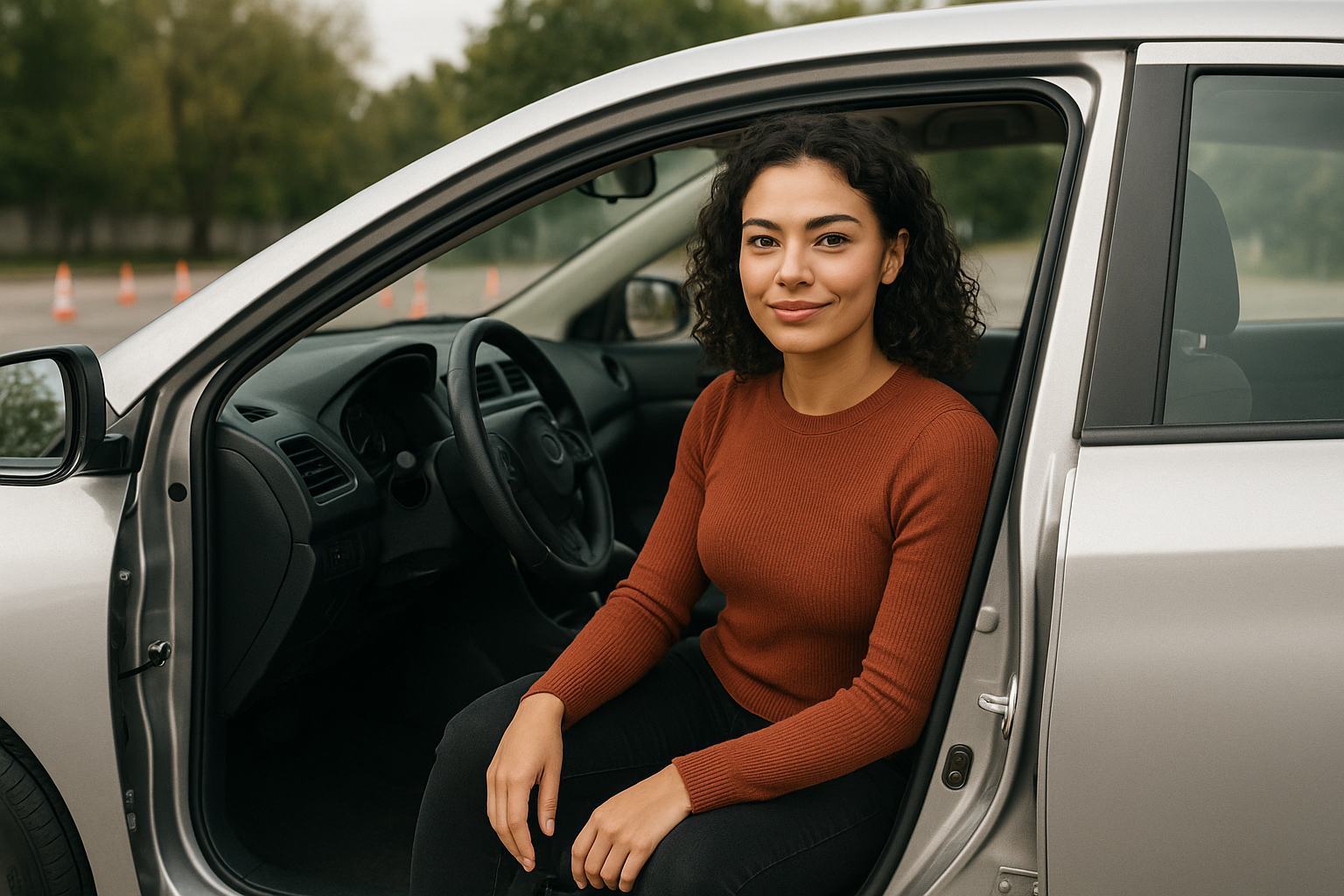
But Emma was absolutely there for the test—and she wanted to pass more than anyone realized.
She Had Failed Before—Twice
Emma’s story hit home for a simple reason: she wasn’t new to disappointment.
According to the account, she had already failed her driving test two times.
And it wasn’t because she didn’t know how to drive.
Her issue was what happens to a lot of good drivers during a high-pressure exam: the moment the examiner started watching closely, her nerves took over. Moves she could do perfectly during practice suddenly felt impossible.
And one part of the test was always the worst: parallel parking.
It wasn’t just a skill challenge—it was the moment her confidence usually collapsed.
This Time, She Changed One Thing First
On her third attempt, Emma made a different decision before she even turned the key.
Instead of arriving braced for failure, she focused on staying calm and treating the test like a normal drive. Not a performance. Not a judgment. Just a task.
That shift in mindset ended up changing everything that came after.
A Road Test That Didn’t Feel Like a Battle
When the examiner called her name, Emma walked over without rushing, greeted him politely, and got settled in.
As the test started, something surprising happened: the tension that usually fills the car during a driving license test just wasn’t as heavy.
Emma kept her focus, but she didn’t freeze up. When small awkward moments happened—as they always do—she didn’t spiral. She stayed relaxed, even making a light comment here and there to keep herself grounded.
Even the examiner, according to the story, seemed more at ease than usual.
And as the atmosphere softened, Emma drove more naturally—like she did during practice.
It’s a good reminder of something psychologists often point out: anxiety can sabotage performance, especially when coordination, timing, and decision-making matter. When stress drops, people often perform closer to their true ability.
For Emma, calm didn’t replace skill—it finally allowed her skill to show.
Then Came the Part She Dreaded
Eventually, the test reached the moment Emma feared most: parallel parking.
“This is usually where everything falls apart,” she joked, trying to keep it light.
But this time, she didn’t panic.
She slowed down, checked her mirrors, positioned the car carefully, and stayed patient through the maneuver. No rushing. No mental meltdown. Just step-by-step control.
And for the first time during a test, she nailed it.
The Result She’d Been Waiting For
Back at the test center, Emma waited while the examiner wrote his notes. Those few minutes can feel longer than the entire drive.
Finally, he looked up and gave her the result she’d been hoping for.
After two failures, she had passed.
When she stepped out of the car smiling, the other applicants immediately tried to read her face, guessing what happened.
Later, some people online made jokes about how she “charmed” her way through.
But the real takeaway wasn’t about charm, appearance, or luck.
Why Emma Really Passed
Emma didn’t pass because the test got easier.
She passed because she stopped letting fear drive for her.
Driving tests don’t only measure technical ability—they also reveal how someone performs under pressure. Staying emotionally steady can be the difference between failing a maneuver and executing it smoothly.
That’s why Emma’s story resonated with so many people: it reflects a truth that applies far beyond the road.
Sometimes the biggest obstacle isn’t a lack of skill. It’s the anxiety convincing you you’re going to fail before you even begin.
And once that fear loosens its grip, everything can suddenly feel more manageable.
Have you ever felt nerves ruin something you actually knew how to do? Share your experience in the comments—and if you found this helpful, pass it along to someone preparing for their driving test.