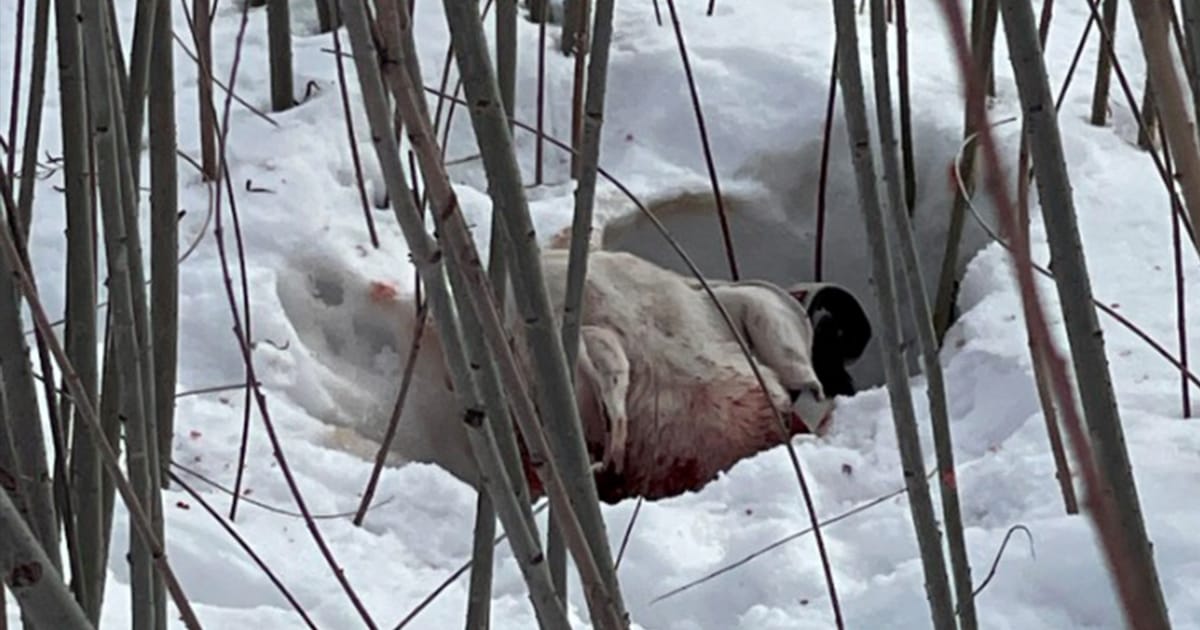
Later, dashcam footage helped reveal what had happened. A puppy had been thrown from the moving truck.
After the suspects were arrested, deputies went back to search the area. At first, they could not find the dog. With freezing overnight temperatures and the force of the impact, there was real fear that he had not survived.
But the next morning, Taho was discovered curled up on a snowbank. He was injured, cold, and shaken, yet still alive.
Sgt. Dan Young later told WCCO that Taho was “happy-go-lucky” when deputies found him. He said the dog licked rescuers after being helped into the van, and officers even gave him a piece of pizza.
Taho was taken for veterinary care, where he was treated for a broken leg, including a broken femur, along with multiple cuts. His early recovery brought hope to everyone following his case.
A Rescue Effort Filled With Hope
After his rescue, Taho entered the care of Pet Haven. A fundraiser was launched to help with his medical expenses, a common challenge for animal rescues handling emergency veterinary treatment, surgery, rehabilitation, and long-term foster support.
At first, there was reason to believe Taho might one day be placed in a permanent home. He had survived the highway. He had responded with affection to the people who helped him. His injuries were serious, but treatable.
But as time passed, another part of Taho’s condition became harder to manage. According to the original reports, he moved through multiple foster homes and began showing unpredictable and aggressive behavior. Several caregivers were bitten, sometimes without an obvious trigger.
Those involved in his care believed his behavior reflected severe psychological trauma. Physical wounds can be visible on X-rays and skin, but fear and instability caused by abuse can be far more difficult to treat.
Even then, Taho was not quickly given up on. Pet Haven, the Ramsey County Sheriff’s Office, and the Humane Society of the United States worked to place him in a behavioral rehabilitation program. He was handled with precautions, including supervision, crating, and a muzzle, while experienced caregivers tried to help him stabilize.
An MRI was also performed and did not identify a neurological cause for his behavior, according to the account shared about his case. That meant his aggression was not linked to a treatable brain injury, but to trauma that continued to control his daily life.
The Bigger Picture
Taho’s ending was devastating. After repeated attempts to help him, the rescue team determined that he could not safely interact with people and could not live free from constant fear and anxiety. The decision was made to humanely euthanize him.
For people who love animals, that outcome is hard to accept. But cases like Taho’s show how complicated rescue work can be. Saving an animal from immediate danger is only the first step. Veterinary bills, behavior support, foster placement, safety planning, and long-term rehabilitation can all become part of the effort.
They also show why animal cruelty cases matter beyond a single moment of abuse. The damage can follow an animal long after the visible injuries begin to heal.
In his final moments, Taho was surrounded by people who had tried to give him the safety and kindness he had been denied. His story is painful, but it also honors the rescuers, caregivers, and officers who refused to look away.
If Taho’s story stays with you, let it be a reminder to support responsible pet ownership, report suspected abuse, and recognize the difficult work animal rescue groups do every day.