The Real-Life Moment That Inspired “He’ll Have to Go”
The song’s origin is rooted in everyday heartbreak. Songwriter Joe Allison reportedly drew inspiration after witnessing a man in a bar talking into a telephone, trying to hold onto a relationship that was slipping away. Out of that scene came a line that still lands with a sting of truth:
“Put your sweet lips a little closer to the phone.”
It’s simple, but it carries the weight of distance, jealousy, and love that’s turning into loss—exactly the kind of human moment that great songwriting captures best.
Chet Atkins, Studio Restraint, and a Million-Dollar Vocal
When Reeves recorded the track, he didn’t overplay the drama. Under the refined guidance of producer Chet Atkins, the arrangement stayed elegant and uncluttered. The instruments didn’t fight for attention—they supported the mood. That decision mattered. It gave Reeves space to do what he did better than almost anyone: make silence feel like part of the melody.
In an era when many singers leaned on force, Reeves leaned on control. The result was a recording that felt expensive in the best way—smooth, intentional, and emotionally direct.
A Crossover Hit That Changed Country Music Business Forever
“He’ll Have to Go” didn’t just top the country charts—it crossed over to the pop audience and climbed to No. 2 on the mainstream charts. That kind of crossover success was a major milestone at the time, proving that country music could reach a wider market without losing its identity.
In many ways, this moment helped cement what later became known as the Nashville Sound—a more sophisticated, radio-friendly style built on smooth vocals, high production value, and broad appeal. That shift didn’t erase traditional country; it expanded what country could become.
Why the Song Still Influences Modern Country Stars
Plenty of major artists have recorded their own versions—Elvis Presley and Ry Cooder among them—but Reeves’ original remains the benchmark. Not because it’s flashy, but because it’s fearless in its restraint. He lets the listener sit inside the emotion instead of being pushed through it.
You can hear echoes of that approach in today’s biggest crossover country careers. The path that allows modern artists to balance personal storytelling with global reach—think Shania Twain, Taylor Swift, Keith Urban, and others—was cleared in part by records like this one.
The Tragedy That Froze a Career at Its Peak
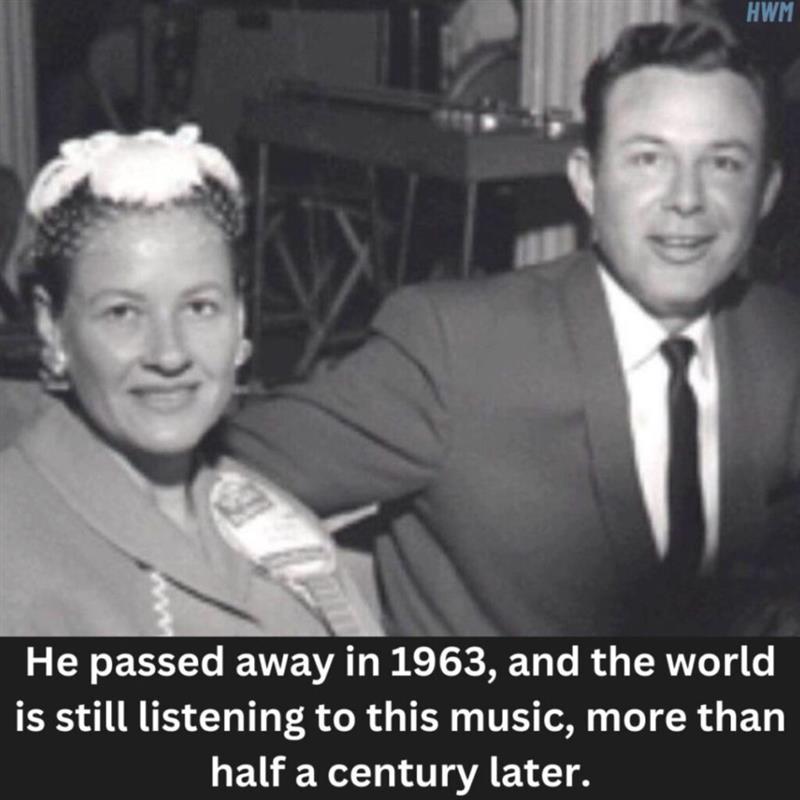
Reeves’ story carries a painful twist. In 1964, at just 40 years old, he died in a private plane crash. The loss shook the industry, not only because he was beloved, but because it felt like an artist mid-evolution—someone still finding new ways to blend tradition with innovation.
And yet, his work never disappeared. If anything, it became more powerful with time. Modern listeners don’t experience “He’ll Have to Go” as an “old song.” They hear it as something emotionally current—proof that longing, distance, and late-night doubt don’t belong to any single decade.
A Lesson Modern Music Still Needs
In today’s world of loud masters, fast hooks, and nonstop content, Reeves’ performance feels even rarer. It reminds artists and listeners alike that emotional impact doesn’t require excess. Sometimes the most unforgettable vocal choice is a pause. Sometimes the strongest line is delivered like a whisper.
Jim Reeves didn’t become a legend by shouting. He became one by telling the truth quietly—and trusting the listener to feel it.
Final Thoughts: A Blueprint for Emotional Storytelling
“He’ll Have to Go” is more than a classic country hit. It’s a blueprint for songwriting, production, and vocal performance that prioritizes connection over spectacle. One man, one phone call, one love slipping away—turned into a recording that still makes people feel understood in their most private moments.
Enjoy stories like this? Share this article with a fellow country music fan, and drop a comment with the Jim Reeves song that hits you the hardest—let’s keep his legacy alive together.