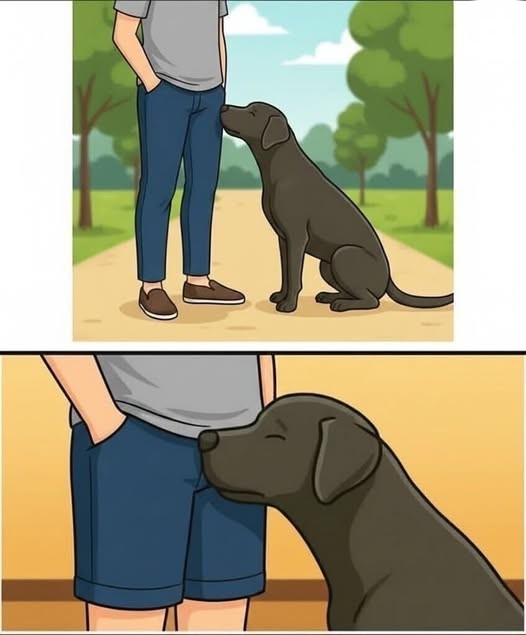
- Identity cues (your unique scent signature)
- Sex and approximate age signals
- Hormonal changes (which can shift with stress, cycles, or life stages)
- General health markers (subtle changes in body chemistry)
Think of it as your dog’s version of checking an ID card—quick, direct, and completely normal in their world.
Why It Feels So Awkward to Humans
People have strong boundaries around privacy and personal space. Dogs don’t. Canines are social animals that gather information up close, and scent is their primary tool. So what feels like a “breach of etiquette” to us is, to them, a respectful way to learn who you are and how you’re doing.
If your dog gets a little too enthusiastic, it doesn’t mean they’re “dominant” or trying to embarrass you. It usually means they’re curious, overstimulated, or undertrained on greeting manners.
How to Stop the Sniffing Without Punishment
You can set boundaries while still respecting your dog’s instincts. The goal is redirection, not harsh correction.
- Teach a default greeting: “Sit” when meeting people
- Use a cue: “Leave it” or “Off” paired with a reward
- Manage the moment: Leash control when guests arrive
- Reward calm behavior: Treats and praise when they greet appropriately
With consistency, most dogs learn quickly that polite greetings earn attention faster than intense sniffing.
Your Dog’s Nose Can Detect Stress, Fear, and Mood Changes
Here’s where it gets fascinating: a dog’s sense of smell isn’t only about recognizing people—it can also pick up emotional and physiological changes.
When you’re anxious or stressed, your body releases chemicals like cortisol and adrenaline. Dogs can often detect these shifts before you’ve even said a word. That’s one reason many dogs seem to “know” when you’ve had a bad day—leaning against you, following you closely, or becoming unusually gentle.
They aren’t reading your mind. They’re reading your chemistry.
The Same Superpower Behind Medical Alert and Service Dogs
This scent sensitivity is also the foundation of high-impact service work. Properly trained dogs can learn to recognize early chemical changes tied to certain medical events, such as:
- Low blood sugar in diabetes
- Oncoming seizures for some individuals
- Stress responses associated with PTSD and panic episodes
In other words, the instinct that leads to an awkward sniff can be closely related to the same sensory ability that helps a trained dog provide life-changing support.
What Your Dog Is Really “Saying” When They Sniff
When your dog checks your scent, they’re doing more than gathering facts—they’re reinforcing connection. Your smell is familiar, grounding, and safe to them. It’s part of how they recognize you, track changes in your routine, and feel secure in their environment.
So even if the moment is uncomfortable in public, the motivation is usually simple: curiosity, social bonding, and a desire to understand what’s going on with their favorite human.
Final Takeaway
Dogs sniff private areas because those regions carry strong chemical signals—essential information in the canine world. And beyond identification, your dog’s nose can pick up emotional stress and subtle body changes that humans often miss. It’s not about being inappropriate; it’s about how dogs communicate, connect, and care.
Enjoyed this explanation? Share your funniest (or most awkward) dog-sniffing story in the comments, and tell us what topic you want next—dog behavior, training tips, or pet health clues.