Old family photographs can feel strangely intimate. A stiff pose, a careful arrangement of chairs, a mother holding still with her children nearby — and suddenly a private moment from more than 150 years ago is in front of us.
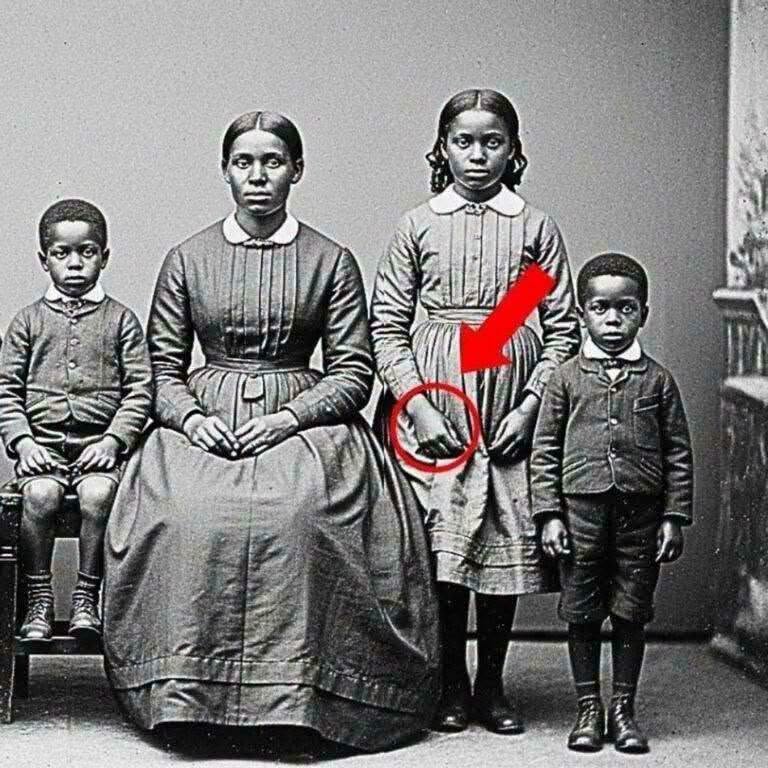
One family portrait from 1872 has drawn attention for exactly that reason. At first, it looks like a typical Victorian-era photograph. But when people examine the image more closely, one detail near the older daughter’s hand appears unusual enough to invite questions.
Some viewers believe the area looks like an extra hand. Others see a blur, a fold of fabric, or a trick created by the photographic process of the time. The answer is not certain, but the possibilities tell us a lot about how early photographs were made — and why old images can be so easy to misread.
Why the Detail Looks So Unusual
The point of interest is near the older daughter’s hand. In enlarged versions of the portrait, a nearby shape appears hand-like to some viewers, creating the impression that something does not quite belong in the scene.