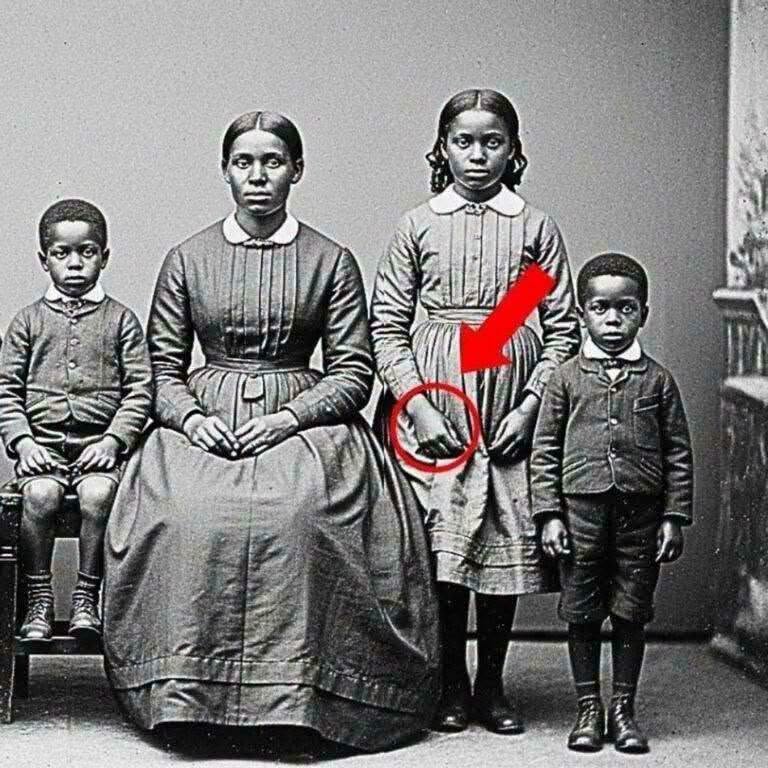
That kind of detail stands out because hands are instantly recognizable to the human eye. Even when a shape is incomplete, blurred, or partly hidden, the brain often tries to match it to something familiar.
In a tightly arranged family portrait, that can happen easily. Victorian clothing often included long sleeves, layered fabric, and heavy folds. When several people sat close together, sleeves, shadows, furniture, and hands could visually overlap in ways that look confusing later.
Early Photography Was Easy to Distort
Photography in 1872 was far less forgiving than the quick snapshots people take today. Subjects often had to remain still long enough for the exposure to work properly. A small movement could soften an outline, create a blur, or leave part of a hand or arm looking strangely duplicated.
Photographers also used posing aids and supports to help people stay in position. These tools were practical, especially when children were included in a portrait. Depending on where a support was placed, it could be hidden by clothing or furniture — or only partly hidden, leaving a shape that later viewers might struggle to identify.
Exposure issues are another possible explanation. If a photograph was exposed more than once, or if someone moved during the exposure, overlapping forms could appear in the final image. What looks mysterious now may have been a simple technical artifact of the camera process.
The condition of the image matters too. Fading, scratches, shadows, and the quality of later reproductions can all change how an old photograph appears. A detail that looked ordinary on the original plate may become much harder to read after generations of copying, scanning, or online sharing.
The Bigger Picture
This kind of visual puzzle is connected to pareidolia, a psychological effect in which the brain identifies familiar patterns in unclear information. It is the same reason people may see faces in clouds or recognizable shapes in dark corners and shadows.
Once someone points out that a mark resembles an “extra hand,” it can become difficult not to see it. That does not mean the interpretation is correct. It simply shows how strongly perception can shape the way people view historical images.
For historians, collectors, and anyone interested in photo restoration or family archives, the portrait is a useful reminder: old photographs are not always straightforward records. They are physical objects shaped by equipment, lighting, exposure times, clothing, preservation, and later reproduction.
Without the original photographic plate, notes from the photographer, or other images from the same sitting, the exact cause of the strange shape may never be confirmed. It could be fabric and shadow, a slight movement, a hidden support, an exposure issue, or a mix of several ordinary factors.
That uncertainty is what keeps the image interesting. A simple family keepsake from 1872 has become a small historical mystery — and a reminder that sometimes the most puzzling details in old photographs may have very human explanations.