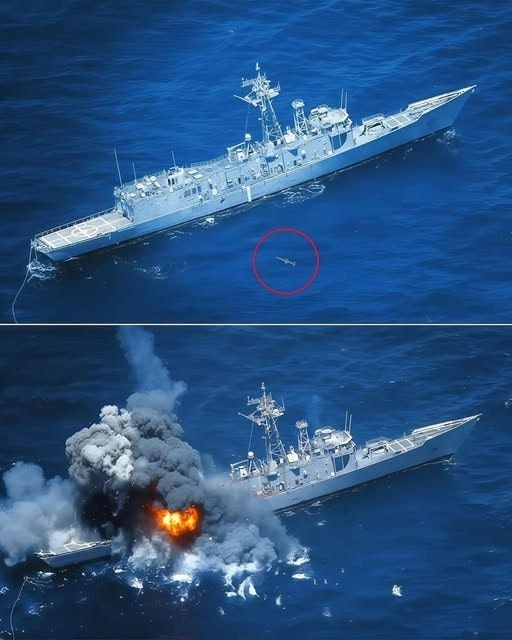
U.S. Navy Retires Historic Guided-Missile Frigate in Live-Fire Missile Test in the Pacific
The Pacific Ocean recently became the final destination for a storied U.S. Navy warship—though not through combat, and not by accident. In a carefully managed live-fire event designed to strengthen future naval defense and improve maritime security, the former USS Rodney M. Davis (FFG-60) was intentionally sunk during a training and evaluation exercise. The operation marked a symbolic close to the era of the Oliver Hazard Perry-class guided-missile frigates while delivering real-world insights that help shape the next generation of American surface combatants.
A Cold War-Era Warship with a Lasting Legacy
Commissioned in 1982, the USS Rodney M. Davis was built for a demanding strategic environment. During the late Cold War, the Navy needed flexible, fast-moving ships that could escort high-value assets and counter undersea threats—especially the growing risk posed by rival submarine fleets. The Perry-class frigates became known for their versatility, serving as dependable workhorses across global deployments.
The ship’s name carried special meaning. It honored Marine Corps Sergeant Rodney Maxwell Davis, a Vietnam War hero awarded the Medal of Honor for extraordinary courage. Over decades of service, the frigate that bore his name supported missions that ranged from presence operations to coalition training, contributing to stability in key waterways and strengthening cooperation with allied navies.
Why the Navy Sinks Retired Ships: More Than a Farewell
The USS Rodney M. Davis didn’t meet its end in battle. Instead, it became part of a SINKEX (sinking exercise)—a structured, closely monitored event where decommissioned vessels are used as targets to test weapons performance and train forces under realistic conditions.