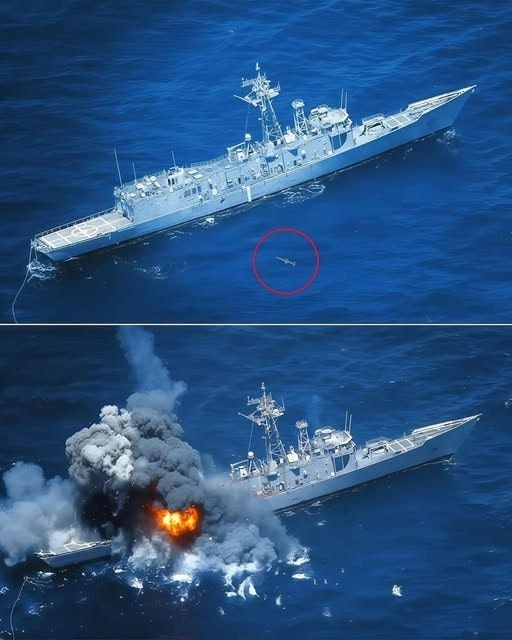
These exercises are not conducted casually. Before any live-fire activity begins, the ship undergoes extensive preparation to meet environmental and safety requirements. Crews remove hazardous fluids, oils, and materials, and strip sensitive equipment. This process supports compliance with ecological standards and helps ensure the vessel can eventually serve as an artificial reef, creating habitat for marine life over time.
The Missile Strike: Real-World Data That Simulations Can’t Replace
The final phase involved a modern anti-ship weapon: the AGM-84 Harpoon. Known for its sea-skimming flight profile and precision targeting, the Harpoon is engineered to approach low over the water to reduce detection and deliver a powerful impact.
When the missile hit the former frigate, analysts were able to study factors that matter to both engineers and operational planners—how the hull responded, where structural failure occurred, and how quickly the ship lost buoyancy. That kind of combat-realistic data supports improvements in:
- Warship survivability and damage-control design
- Next-generation destroyer and frigate development
- Weapons effectiveness and targeting performance
- Naval training readiness for crews preparing for high-threat environments
In short, this wasn’t destruction for spectacle—it was a high-value test that helps the Navy refine tactics and build more resilient ships for future missions.
An Emotional Goodbye for Former Crew—And a Final Act of Service
For sailors who once lived and worked aboard the Rodney M. Davis, watching the ship disappear beneath the waves can be deeply personal. A warship is more than metal and machinery; it’s a workplace, a home, and a shared chapter of life defined by long deployments, tough conditions, and close-knit teamwork.
Yet many also view the ship’s final mission with pride. By serving as a live-fire target, the vessel continued to contribute to national defense—helping today’s forces sharpen skills and validate capabilities in ways that even advanced computer modeling can’t fully replicate.
Where the USS Rodney M. Davis Legacy Lives On
The story of FFG-60 now continues in two places: in the ocean depths, where the ship can support marine ecosystems as it becomes part of the seafloor environment, and in the lessons learned from its final mission—lessons that may influence future shipbuilding, force protection, and operational planning.
As global waters grow more contested and technology evolves, the insights gained from exercises like this help ensure tomorrow’s sailors are better prepared, better equipped, and better protected.
Want more updates on U.S. Navy ships, modern missile systems, and defense technology? Share your thoughts in the comments and subscribe/bookmark for the next deep dive.