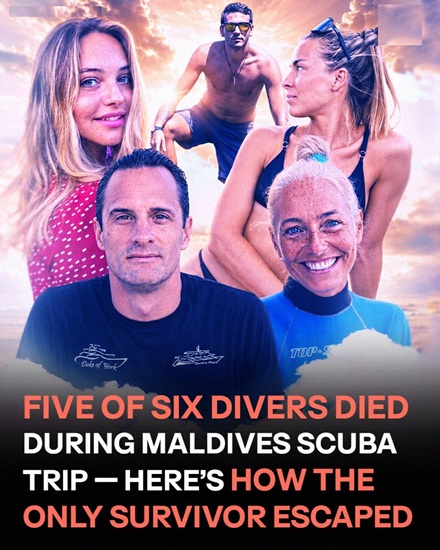
Early findings suggest the cave entrance may have been around 47–50 meters. Investigators are now trying to determine whether:
- the group knowingly exceeded legal depth restrictions,
- the dive plan was misunderstood or poorly communicated, or
- the dive expanded beyond what had been declared and approved.
A Second Tragedy: Military Diver Dies During Recovery
The incident worsened when a Maldivian military diver involved in the recovery operation died after experiencing symptoms consistent with decompression sickness. His death highlighted the harsh reality of deep recovery work—especially in tight cave environments where low visibility, narrow passages, and depth-related physiological stress can turn a mission into a life-threatening emergency.
Other divers reportedly required urgent medical attention for decompression-related complications, underscoring how dangerous these conditions can be even for trained personnel.
Was the Dive Properly Authorized as a Scientific Expedition?
Another major line of inquiry centers on whether the dive was conducted under a fully approved research framework or whether parts of the expedition fell outside official authorization channels.
While some participants were reportedly connected to academic or marine research work, authorities later flagged inconsistencies in submitted documentation. Investigators are examining whether:
- all participants were properly listed under the research permit,
- the cave system was included as an intended dive target, and
- the operational plan matched what was approved on paper.
Experienced Divers, Extreme Conditions
Reports indicate the group included highly experienced individuals with backgrounds in marine ecology, conservation research, engineering studies, and professional diving operations—people believed to have logged extensive dive histories worldwide.
However, experts note that experience does not eliminate risk when a dive involves deep depth exposure and overhead environments like caves. At nearly 50 meters, divers face heightened danger from:
- nitrogen narcosis, which can impair judgment and reaction time,
- oxygen toxicity, depending on gas mix and exposure, and
- rapidly escalating stress if anything goes wrong in a confined space.
The “Silt-Out” Risk: When Visibility Drops to Zero
Hyperbaric and cave-diving specialists often warn that caves can become lethal when fine sediment is disturbed. Even a small fin kick or contact with the floor can create a silt-out, turning clear water into near-total darkness within seconds.
In such conditions, divers can lose the guideline, become separated, or misread direction—especially if currents, tight passages, or equipment issues add pressure. International cave-diving experts point out that disorientation and loss of navigation are among the most common contributors to fatalities in overhead environments.
Recovery Efforts: Slow, Dangerous, and Costly
The search operation expanded to include multiple agencies and specialized diving support, including international teams. Still, the cave’s depth and complexity reportedly slowed progress dramatically.
After several days, recovery teams located the five divers deep inside the cave system. Reports suggest they were found together in a deeper section, which may indicate they attempted to stay as a group while dealing with the emergency.
Liveaboard License Suspended as Authorities Review Responsibility
Following the recovery, authorities suspended the operating license of the Duke of York pending the outcome of the investigation.
The operator has reportedly stated it was not informed the dive would go beyond recreational depth limits and has denied responsibility for any unauthorized descent. Meanwhile, Maldivian and Italian officials are reviewing communications, dive planning records, and permit filings to determine where breakdowns occurred.
Why This Case Is Resonating Worldwide
Beyond the immediate tragedy, the incident has reignited global discussion about technical diving safety, the line between recreational and scientific diving, and how high-risk underwater activities should be regulated—especially in remote, environmentally sensitive locations.
Italian officials have confirmed coordination with Maldivian authorities to support families and repatriate the victims, while both countries have emphasized a shared commitment to uncovering the full sequence of events.
What Happens Next
Investigators are still working to confirm the exact chain of decisions and conditions that led to the deaths. What’s already evident is that a combination of extreme depth, an overhead cave environment, and potential procedural or documentation gaps may have created a situation that spiraled beyond control.
Closing CTA: If you follow diving safety news or travel updates in the Maldives, share your thoughts below—should deep technical dives near tourist routes face stricter oversight, or is better transparency and enforcement the real issue?