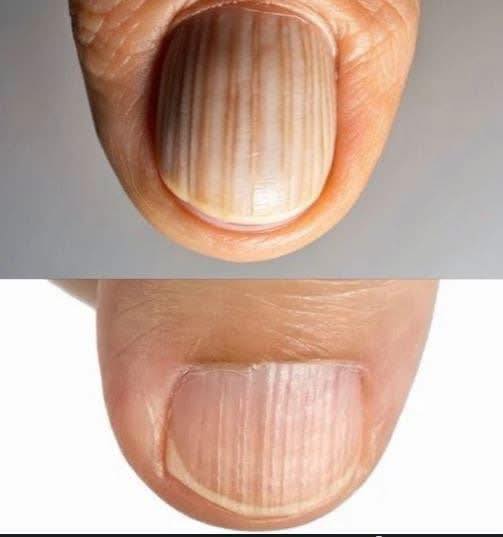
Possible contributors include:
- Iron deficiency (can affect nail strength and growth)
- Low magnesium (important for many cellular functions)
- Not enough protein (nails are largely made of keratin, a protein structure)
- Dehydration (dryness can make ridges look deeper and nails more fragile)
Vertical ridges aren’t automatically a red flag—but they are a reason to check in on your diet, hydration, and overall wellness.
2) Horizontal grooves (lines that run across the nail)
Horizontal lines are often more significant. Deep horizontal indentations are commonly called Beau’s lines. These grooves may appear when nail growth temporarily slows or stops—often after the body goes through a major stressor.
Common triggers can include:
- High fever or a serious infection
- Major physical stress (surgery, injury, hospitalization)
- Severe emotional stress that impacts the body
In some cases, recurring or worsening horizontal grooves may be associated with ongoing health concerns that should be evaluated, such as uncontrolled blood sugar, circulation problems, or certain medication effects. It’s not about panic—it’s about being proactive.
What You Can Do to Support Healthier Nail Growth
If your nail lines are mild and you’re otherwise feeling well, improving nail health often starts with simple, consistent habits.
Upgrade your nutrition (your nails are built from what you eat)
Strong nails depend on steady nutrients over time. Consider focusing on:
- B vitamins (including biotin) to support keratin structure
- Zinc for healthy tissue repair and growth
- Iron-rich foods if you’re prone to low iron (especially common in some adults)
- Healthy fats to support moisture and flexibility
- Quality protein to help maintain nail strength
If you suspect a deficiency, a clinician can confirm it with lab work rather than guesswork.
Hydrate consistently
Dry nails tend to show ridges more clearly and break more easily. Drinking enough water and using a cuticle-friendly moisturizer can make a visible difference over time.
Protect nails from daily damage
Many nail issues aren’t internal—they’re environmental. Repeated exposure to water, harsh soaps, and cleaning products can weaken the nail plate.
Simple nail-care upgrades:
- Wear gloves when cleaning or washing dishes
- Use cuticle oil or a rich hand cream daily
- Choose a gentle file (glass files are often less damaging)
- Limit acetone-based removers if your nails are dry or peeling
When Nail Lines Shouldn’t Be Ignored
Some nail changes deserve a professional opinion—especially if they’re new, worsening, or paired with other symptoms.
Consider scheduling a medical or dermatology visit if you notice:
- A dark brown or black vertical stripe that wasn’t there before
- Ridges plus a major change in nail shape (such as clubbing or spoon-like nails)
- Multiple nails developing deep horizontal grooves repeatedly
- Nail changes along with fatigue, dizziness, unexplained weight changes, or ongoing illness
A healthcare professional may recommend blood tests to check for iron levels, vitamin/mineral deficiencies, thyroid function, inflammation markers, or other clues based on your symptoms and history.
The Bottom Line
Nail ridges can be harmless, but they’re not meaningless. Your nails often reflect what’s happening beneath the surface—nutrition, hydration, stress levels, and sometimes bigger health concerns. Paying attention early gives you the best chance to correct small issues before they become larger ones.
CTA: Have you noticed new lines or changes in your nails lately? Share what you’re seeing (and any habits you think might be contributing) in the comments—and if you found this helpful, pass it along to someone who might be ignoring the same signs.