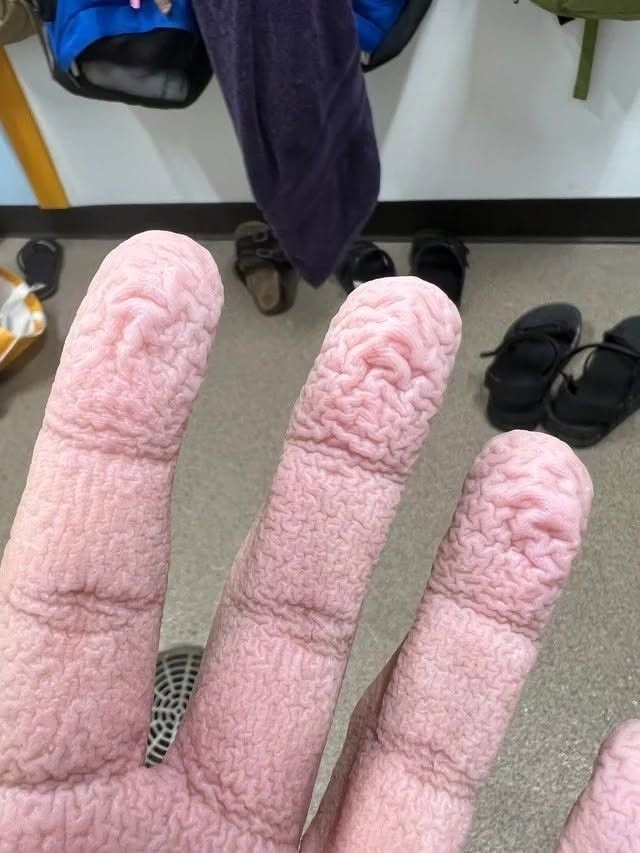
In other words, the wrinkling is not simply water soaking into the skin. It is an active physical response controlled in part by nerve function.
Why the Body May Do This
One leading explanation is that wrinkled fingertips may improve grip in wet conditions. The grooves can act somewhat like tire tread, helping move water away from the contact surface so fingers can handle slippery objects more effectively.
That may have offered an advantage in earlier human environments, especially when gathering food near water, moving through wet terrain, or handling damp tools and materials. Smooth skin may feel better when dry, but ridged skin can be useful when water makes surfaces slick.
For most people, this process is temporary and harmless. Wrinkling often appears after several minutes in water and fades after the hands dry and blood vessels return to their usual state.
What Readers Should Know
Occasional wrinkling after a bath, shower, swim, or dishwashing is usually normal. However, unusually fast, painful, or persistent wrinkling can be worth discussing with a healthcare professional, especially if it happens after only brief contact with moisture.
A rare condition called aquagenic wrinkling of the palms can cause rapid or excessive wrinkling. It has sometimes been associated with cystic fibrosis or CF-related gene mutations, and in other cases it may be connected with medications, skin barrier problems, or issues involving the autonomic nervous system.
It is also worth paying attention if wrinkling comes with pain, intense itching, discoloration, numbness, peeling, or open sores. Those symptoms may point to a skin, circulation, or nerve-related concern that needs medical evaluation.
The absence of normal wrinkling can also matter in some medical contexts. Because the response depends on nerve function, clinicians have historically used the lack of wrinkling after soaking as one clue when assessing certain nerve injuries. It is not a stand-alone diagnosis, but it shows how closely the skin and nervous system are connected.
Everyday skin care matters too. Frequent handwashing, alcohol-based sanitizers, detergents, and strong cleaning products can strip away protective oils and weaken the skin barrier. People who wash their hands often for work, including healthcare workers, chefs, cleaners, and hairdressers, may be more likely to notice dryness, cracking, or irritation.
Using protective gloves around harsh chemicals and applying a fragrance-free moisturizer can help support the skin barrier. If irritation is persistent or worsening, professional guidance is the safer route.
The next time your fingers wrinkle in water, it may be less of a mystery and more of a reminder: even small changes on the skin can reveal how much the body is quietly doing beneath the surface.