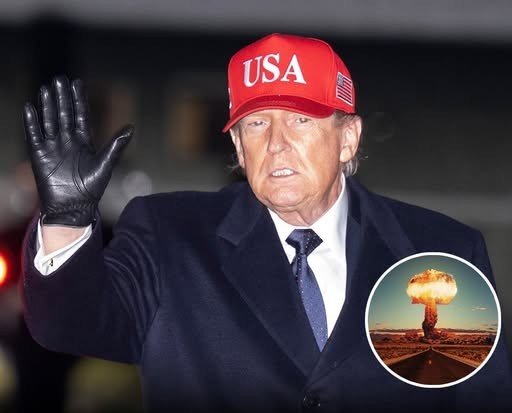
The statement was stark enough to stop conversations across households, offices, and newsrooms: “Some people will die.” When words like these come from a national leader during a moment of global tension, they carry a weight that extends far beyond politics. They tap directly into public anxiety, especially when international conflicts are already dominating headlines and shaping daily fears.
Across different regions of the world, rising geopolitical friction—from Eastern Europe to the Middle East—has intensified public concern about what a wider conflict could mean in practical terms. In the United States, that anxiety often takes a more personal form: questions about safety, preparedness, and whether distance alone is enough protection in an interconnected world.
As discussions of potential global escalation circulate, people naturally begin to ask difficult questions. Where would someone go in a worst-case scenario? What cities would be less affected? How would communication systems, infrastructure, and emergency response hold up under extreme pressure?
While these fears can feel overwhelming, experts consistently emphasize that large-scale conflict scenarios are highly complex and not easily reduced to simple predictions. Modern safety planning involves layers of defense, emergency coordination, and federal and state-level preparedness systems designed to protect civilian populations as much as possible.
Keep reading…