Most people use coins without ever looking closely at them. They drop them into vending machines, leave them in car cup holders, collect them in jars, or hand them over at stores without thinking twice.
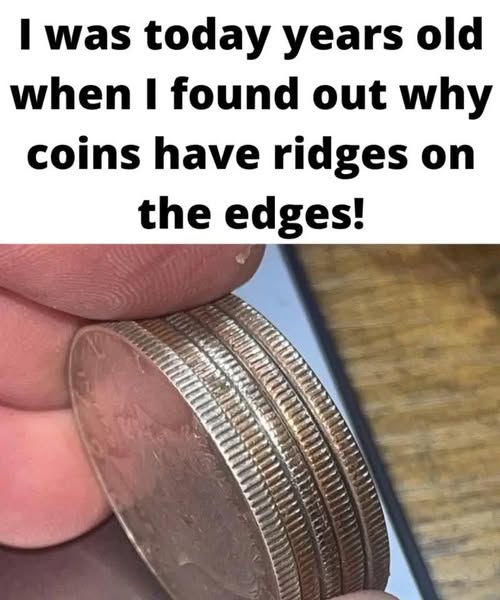
But if you take a closer look at certain coins, especially dimes and quarters, you will notice a small detail that has been there for centuries: tiny ridges around the edge.
At first, those grooves may look like a simple design choice. They may seem decorative, traditional, or just part of how coins are made. But the truth is much more interesting.
Those tiny ridges were originally created to protect money from fraud.
Long before credit cards, mobile payments, and online banking, coins were much more than simple pieces of metal. Many coins were made from valuable materials such as silver and gold. That meant the coin itself had real value because of the precious metal inside it.
And whenever something has value, people find ways to exploit it.
The Old Problem Coins Were Designed to Stop
Centuries ago, criminals discovered a quiet way to steal from the money system without making it obvious.
They would shave tiny amounts of silver or gold from the edges of coins. The coin would still look mostly normal, and it could still be used in everyday trade. But it now contained slightly less precious metal than it was supposed to.
Continue reading on the next page…