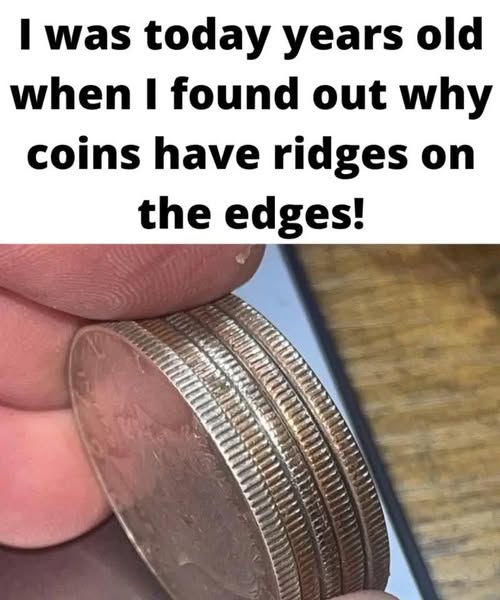
This practice was known as coin clipping.
One clipped coin may not sound like a big problem. But when thousands of coins were altered, the stolen metal added up quickly. Criminals could collect those small shavings, melt them down, and sell or reuse the precious metal for profit.
The bigger issue was trust.
If merchants, banks, and everyday people could no longer be sure that a coin contained its proper amount of metal, confidence in currency started to weaken. People began inspecting coins more carefully. Some became suspicious of the money they received. Governments also lost value because clipped coins continued circulating as if they were still worth their full amount.
In simple terms, coin clipping slowly damaged the reliability of money itself.
Why Smooth-Edged Coins Were Easy to Abuse
The reason coin clipping worked so well was simple: older coins often had smooth edges.
If a coin had a plain edge, someone could carefully remove a thin layer of metal without making the damage immediately obvious. After enough wear and handling, a clipped coin could still pass through the economy without raising much suspicion.
That made smooth-edged coins vulnerable.
There needed to be a way to make tampering visible at a glance. The solution was surprisingly simple but highly effective: add a pattern to the edge.
That is where ridged, or reeded, edges came in.
How Coin Ridges Helped Fight Fraud
Reeded edges changed everything.
Once coins had evenly spaced grooves around the outside, shaving the edge became much easier to detect. If someone removed metal from the side of the coin, the ridge pattern would be broken, uneven, or missing.
A proper coin had a clean and continuous edge pattern. A tampered coin did not.
That tiny design feature worked like an early anti-counterfeiting tool. It made fraud more visible and made coin clipping much riskier.
Instead of needing advanced technology, people could simply look at the edge of the coin and notice if something seemed wrong.
It was a small change, but it helped protect the value of money and restore trust in coins.
Isaac Newton’s Unexpected Connection to Coin Security
One of the most interesting parts of this story is the role of Isaac Newton.
Most people remember Newton for gravity, mathematics, and physics. But he also played an important role in England’s currency system. In 1696, Newton became Warden of the Royal Mint, where he helped fight counterfeiters and coin fraud.
He took the position seriously and became involved in efforts to make coins harder to fake, clip, or manipulate.
During this period, improvements in coin production helped make currency more secure. Reeded edges became one of the most effective ways to show whether a coin had been altered.
So the ridges on coins are not just a random leftover from the past. They are connected to a much bigger story about economics, crime, and public trust.
Why Some Coins Have Ridges and Others Do Not
Not every coin has ridges, and that is not an accident.
Coins like pennies and nickels usually have smooth edges because they were not historically worth enough for clipping to be a major problem. The amount of valuable metal someone could steal from them was not worth the effort.
Dimes and quarters, on the other hand, kept their ridged edges because they were historically connected to higher-value metals and stronger anti-fraud protections.
Even after modern coins stopped being made from large amounts of silver or gold, the ridges stayed.
Part of the reason is tradition. Another reason is practicality.
Coin Ridges Still Have Uses Today
Modern coins are no longer protected in the same way they once were. Most everyday coins are not made from large amounts of precious metal anymore, so coin clipping is not the threat it used to be.
But the ridges still serve useful purposes.
They help people recognize coins by touch. This is especially helpful for people with visual impairments, because different edge textures make it easier to tell coins apart without needing to see them clearly.
Ridges also help machines identify coins. Vending machines, coin counters, and other automated systems can use physical features such as size, weight, and edge design to help recognize legitimate coins.
So while the original purpose was fraud prevention, the design still has practical value today.
A Small Detail With a Big History
The ridges on coins are easy to ignore because they are so familiar. Most people have seen them their entire lives without ever asking why they exist.
But those tiny grooves tell a surprisingly important story.
They were created because people once shaved valuable metal from coins and used those altered coins as if nothing had happened. That damaged trust, weakened currency, and forced governments to find a better way to protect money.
The ridged edge became a simple but powerful solution.
It made tampering easier to spot, helped prevent fraud, and gave people more confidence in the coins they used every day.
So the next time you hold a quarter or dime, take a second to look at the edge. Those tiny grooves are more than decoration. They are a piece of financial history still hiding in plain sight.
What do you think — did you already know the real reason coins have ridges, or was this one of those everyday details you never noticed before? Share your thoughts and pass this along to someone who loves hidden history.