You have probably seen it while scrolling through social media.
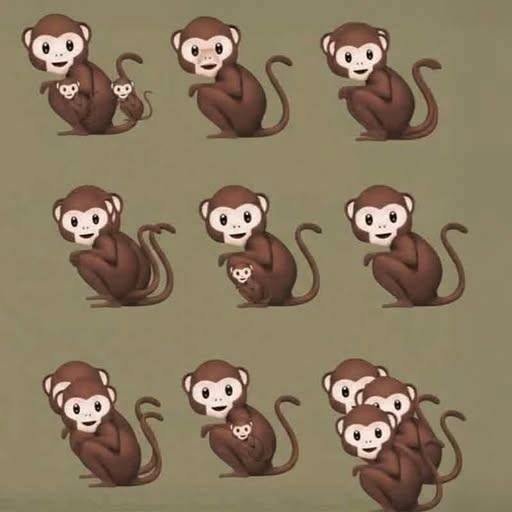
A simple cartoon shows several smiling monkeys arranged in a row. Above or below the image, a dramatic caption claims that the number of monkeys you see can reveal something hidden about your personality.
Some versions go even further.
They suggest the puzzle can identify whether someone is narcissistic, unusually intelligent, highly observant, or emotionally different from everyone else.
The claim is difficult to ignore.
Almost immediately, you begin counting.
You look once, then again. You examine the obvious figures, search for hidden shapes, and wonder whether you missed something important.
But the real meaning of the puzzle has very little to do with narcissism.
What it actually reveals is something far more fascinating: the way the human brain builds its own version of reality.
Why You Feel Compelled to Count
The moment a puzzle promises to reveal a hidden personality trait, curiosity takes over.
Most people want to understand themselves. We are naturally drawn to anything that offers a quick explanation of who we are, how we think, or what makes us different.
That is why online personality quizzes, optical illusions, astrological posts, and visual tests attract so much attention.
The monkey puzzle uses the same formula.
First, it presents a simple challenge.
Then it suggests there is a correct answer.
Finally, it attaches an emotional label to the result.
You are no longer merely counting cartoon figures. You are trying to discover what your answer supposedly says about you.
That combination of curiosity and self-reflection makes the post difficult to scroll past.
The Image Is Simple, but Perception Is Not
At first glance, the puzzle may appear straightforward.
Some people immediately see a fixed number of monkeys and feel confident that they have found the answer.
Others continue looking.
They notice overlapping outlines, smaller shapes hidden inside larger figures, or details that can be interpreted in more than one way.
The image does not necessarily change.
Your attention does.
This is an important distinction.
Human vision is not a perfect recording system. The brain does not absorb every visible detail with equal accuracy and then present a complete, objective picture.
Instead, it selects, organizes, and interprets information.
It decides which shapes appear important, which patterns seem familiar, and which details can safely be ignored.
What you see is therefore influenced not only by what is in front of you, but also by how your brain chooses to process it.
Why Two People Can See Different Answers
Imagine two people looking at the same puzzle.
The first person identifies the most obvious figures immediately. They focus on the overall image, accept their first impression, and move on.
The second person studies the picture more carefully. They examine the spaces between the figures, look for repeated patterns, and question whether the obvious answer is complete.
Neither person is necessarily more intelligent.
They may simply be using different attentional styles.
Some people naturally focus on the broad structure of an image. They quickly recognize the main subject and understand the general idea.
Others instinctively search for details, inconsistencies, and hidden layers.
Keep reading…