These Common Air-Conditioner Mistakes Could Be Raising Your Summer Electricity Bill
When summer temperatures rise, many households expect their electricity bills to increase. What often comes as a surprise is just how large that increase can be.
A bill that was manageable during spring may suddenly climb sharply during the hottest weeks of the year. Although prolonged heat naturally increases the need for cooling, the weather may not be the only reason behind the higher cost.
Several everyday air-conditioning habits can quietly make a system work harder than necessary.
Some people lower the thermostat as far as possible because they believe it will cool the room faster. Others repeatedly switch the unit on and off, use the wrong operating mode, or overlook basic filter maintenance.
These choices may appear harmless, but together they can affect comfort, efficiency, and potentially the lifespan of the appliance.
The encouraging news is that households do not need to choose between staying comfortable and controlling electricity use. A few practical adjustments may help an air conditioner cool more effectively without unnecessary strain.
Why Summer Cooling Costs Rise So Quickly
During very hot weather, an air conditioner may become one of the most frequently used appliances in the home.
It may operate for long periods during the afternoon, continue into the evening, and remain active overnight to maintain comfortable sleeping conditions.
Naturally, longer operating times mean greater electricity consumption.
However, the total cost also depends on several other factors, including:
- The efficiency and size of the unit
- The temperature selected
- The insulation of the room
- The amount of direct sunlight entering the home
- The condition of the filters and internal components
- How frequently doors and windows are opened
A well-maintained system operating at a reasonable setting may perform more efficiently than a neglected unit forced to reach an extremely low temperature.
That is why changing a few daily habits can sometimes make a noticeable difference.
Mistake 1: Setting the Temperature Extremely Low
One of the most common reactions to entering a hot room is lowering the thermostat to its minimum setting.
The reasoning seems logical: the lower the number, the faster the room should become comfortable.
But most air conditioners do not release dramatically colder air simply because the thermostat has been lowered several additional degrees. The selected temperature mainly tells the system how long it should continue operating.
If the room is warm and the thermostat is set unusually low, the unit may continue running for an extended period while attempting to reach a temperature that may be difficult to maintain.
That can increase electricity use without making the initial cooling process significantly faster.
A moderate setting is usually more practical. Many households find a temperature of approximately 23°C to 25°C comfortable during the day, although the ideal setting depends on humidity, clothing, activity level, and personal preference.
At night, some people can comfortably raise the thermostat slightly, particularly when using a fan or sleep mode.
The goal should be to create a pleasant environment—not to make the room as cold as possible.
Mistake 2: Constantly Switching the Unit On and Off
Another habit that may affect efficiency is turning the air conditioner off as soon as the room feels cool and restarting it once the heat returns.
Whether this saves energy depends partly on the type of system.
Modern inverter air conditioners are designed to adjust their output once the desired temperature has been reached. Instead of repeatedly operating at full power, they may reduce their workload and maintain the room more steadily.
Frequently switching such a unit off can allow the room, walls, and furniture to warm again. When the system is restarted, it must remove that accumulated heat.
However, this does not mean an air conditioner should be left running continuously in an empty home. Turning it off or using an energy-saving schedule when no one needs cooling can still reduce consumption.
The more useful approach is to avoid unnecessary manual switching while the room is occupied. A stable setting, timer, eco mode, or programmable thermostat may provide more consistent comfort.
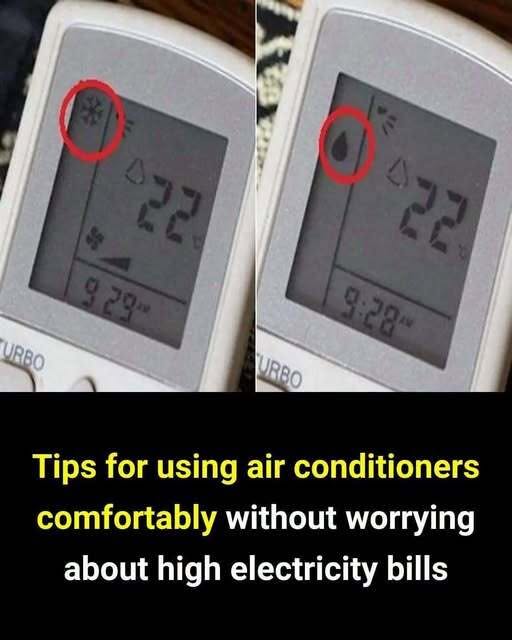
Mistake 3: Using Dry Mode When Strong Cooling Is Needed
Many air conditioners include several operating modes, and selecting the wrong one can leave the room uncomfortable.
Dry mode is designed primarily to reduce humidity.
It can be useful on warm, damp days when the air feels sticky but the temperature is not extremely high. Removing excess moisture may make the room feel more comfortable even without major temperature reduction.
However, Dry mode is not always a substitute for Cool mode.
When outdoor temperatures are very high, the main cooling function is generally more appropriate because its primary purpose is to lower the indoor temperature.
Using Dry mode during intense heat may remove some humidity while failing to provide the level of cooling expected.
Choosing the mode that matches the conditions helps the system perform the correct task.
Mistake 4: Directing All the Air Toward One Person
Pointing the vents directly at a sofa, bed, or desk can provide immediate relief, but it may not cool the room evenly.
One part of the space may feel cold while corners and nearby areas remain warm.
Uneven cooling can encourage people to lower the thermostat further, even though the real problem is poor circulation.
Using the automatic swing function can help distribute air more widely. It allows the moving vents to direct cool air across different parts of the room instead of concentrating it in one location.
A ceiling fan or standing fan can also improve circulation.
Fans do not lower the actual room temperature, but moving air can help people feel cooler. This may make it possible to remain comfortable with the thermostat set slightly higher.
Because fans usually consume far less electricity than an air conditioner, using both appliances strategically can be more efficient than forcing the cooling system to do all the work.
Mistake 5: Leaving Doors or Windows Open
Keep reading…