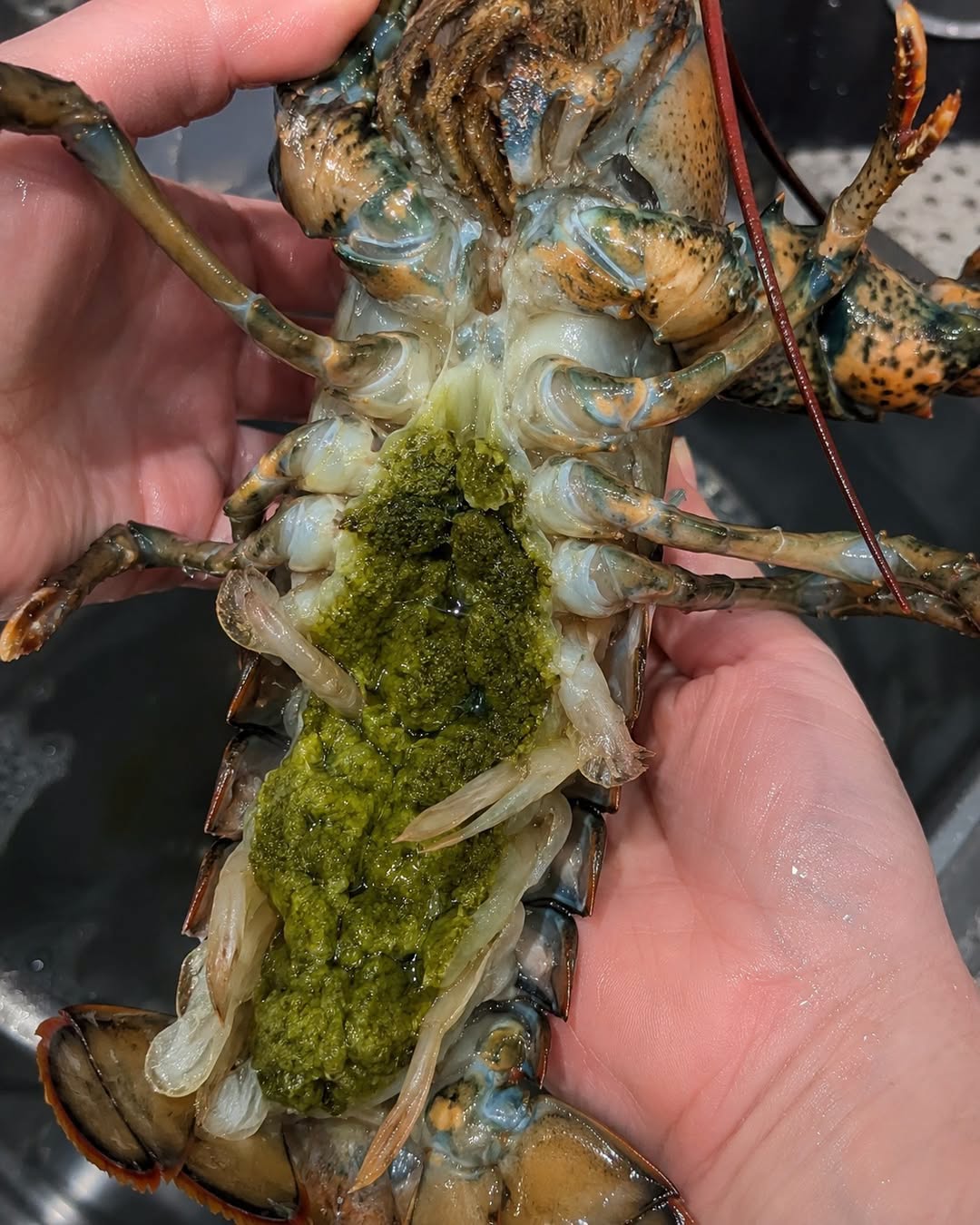
The moment you crack open a freshly cooked lobster, you expect tender white meat, melted butter, and perhaps a little roe. Then you notice it: a soft green substance tucked inside the body cavity.
For many first-time lobster eaters, the reaction is immediate. Is it spoiled? Is it dangerous? Should it be removed before the lobster is served?
That unusual green material is called tomalley, and it has a surprisingly important role.
Tomalley functions as part of the lobster’s digestive system, performing jobs similar to the liver and pancreas in humans. It helps process food and filter substances from the lobster’s body. Its color can range from olive green to dark green, and its creamy texture makes it very different from the firm lobster meat most people expect.
Some seafood enthusiasts consider tomalley a delicacy. They describe its flavor as rich, salty, and intensely ocean-like. In certain dishes, chefs may mix small amounts into sauces, seafood spreads, bisques, or flavored butter. Others enjoy it directly from the shell or spread lightly on bread.
Keep reading…