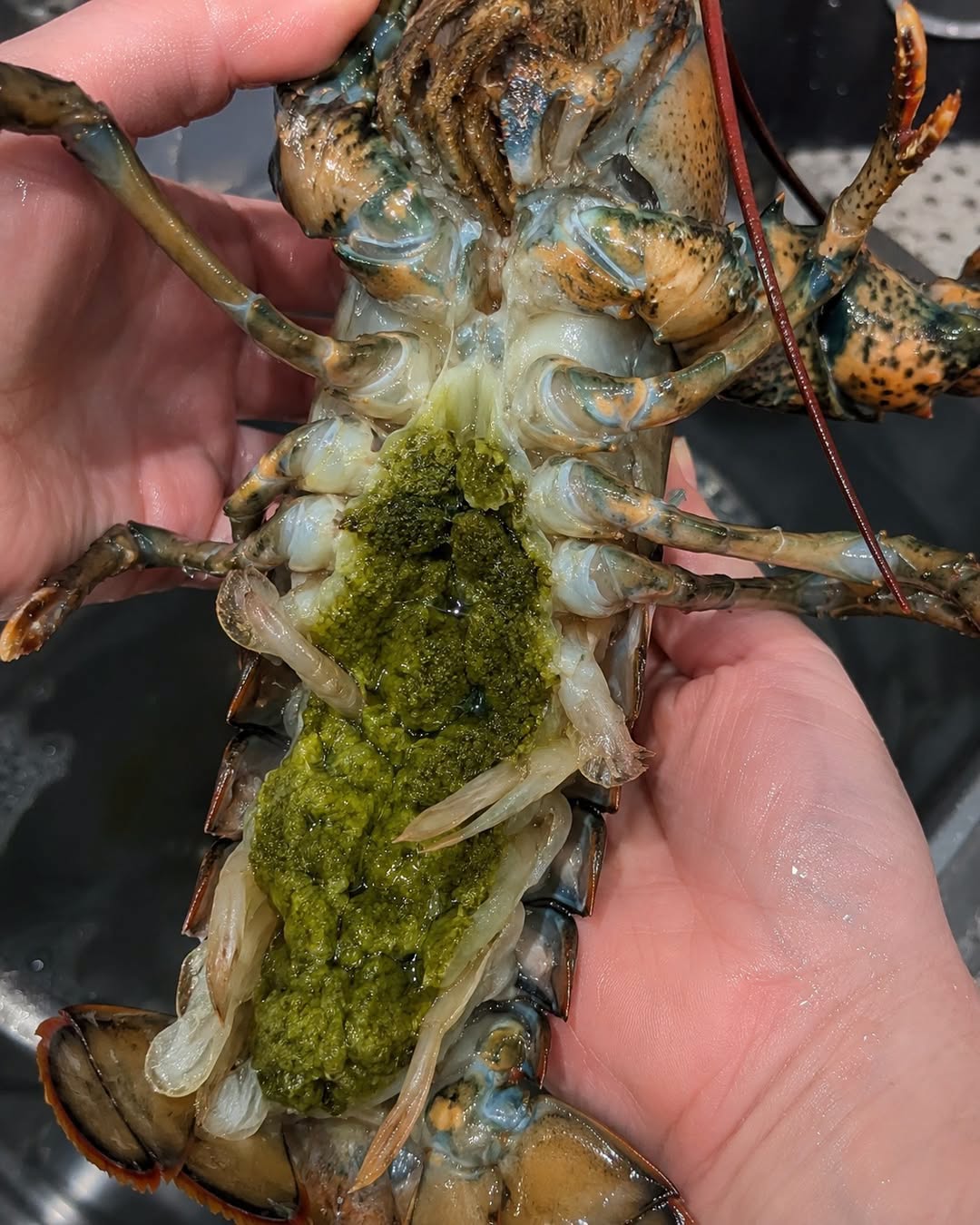
However, not everyone finds it appealing. Its strong taste, soft consistency, and vivid color can be surprising, especially for diners who are unfamiliar with lobster anatomy. There is nothing unusual about choosing to remove it and enjoy only the tail, claw, and leg meat.
The main concern surrounding tomalley is that, because it helps filter the lobster’s food and environment, it may also contain substances the animal has absorbed from the water. These can include naturally occurring marine toxins or environmental contaminants. The level of risk may depend on where the lobster was caught, local water conditions, and current seafood advisories.
For that reason, many health authorities recommend limiting or avoiding lobster tomalley, particularly when there are warnings related to harmful algal blooms or contaminated harvesting areas. Children, pregnant individuals, older adults, and people with certain health conditions may wish to be especially cautious and follow local public health guidance.
It is also important to remember that cooking does not necessarily remove every marine toxin that could be present. A lobster may appear fully cooked and fresh while still containing substances that cannot be detected by sight, smell, or taste.
So, should you eat the green part of a lobster?
The answer often comes down to personal preference, moderation, and reliable information about where the lobster was sourced. Some diners enjoy a small taste, while others avoid it completely.
Either choice is reasonable. The most important thing is understanding what tomalley actually is before deciding whether it belongs on your plate. Sometimes the most surprising part of a meal is not the flavor, but the story hidden inside the shell.