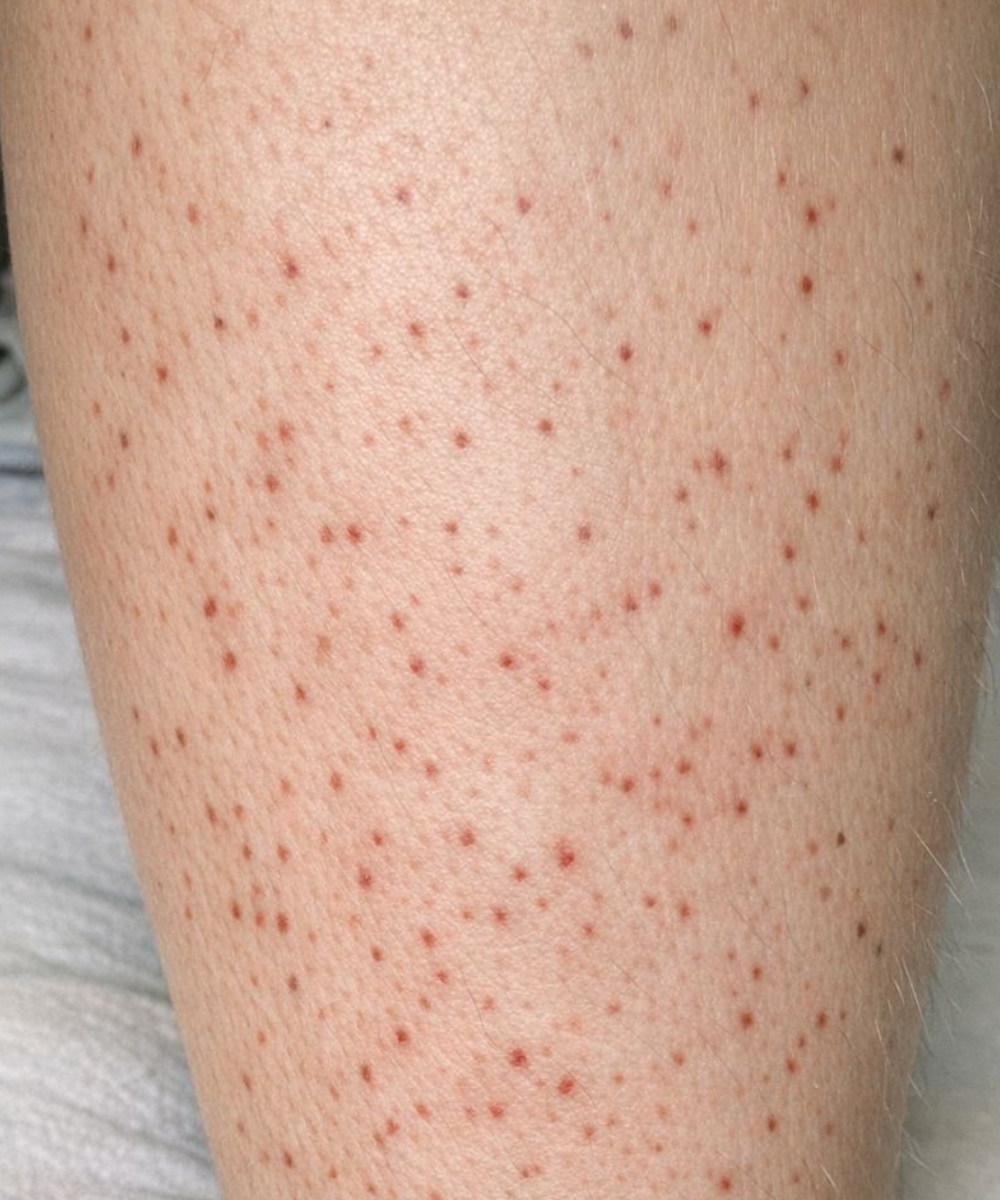
Noticing tiny red spots on your lower legs can be unsettling—especially if you can’t get to a doctor right away. These marks can be harmless—or signal something more serious. Understanding what they might mean and how to monitor them at home can help protect both your health and your peace of mind.
1. Rule Out Emergencies First
If the spots appear suddenly, in large clusters, after an injury, or come with pain, swelling, fever, or unexplained bleeding, seek medical help immediately. Rapidly spreading bruises or bleeding elsewhere could indicate a serious condition.
If the spots are mild, painless, and stable, short-term home monitoring is usually fine until you can see a professional.
2. Possible Causes, Including Schamberg Disease
These red dots may be petechiae—tiny marks from broken capillaries. One common but generally harmless cause is Schamberg disease, a mild capillaritis affecting the lower legs, which can create reddish-brown patches. Other causes include allergies, infections, or minor skin inflammation.
3. Quick Home Checks
Gently press on a spot with a finger or clear glass. If it fades, it’s likely vascular rather than bleeding-related. Track size, number, and distribution over time. Photos in good light can be invaluable for later doctor visits.
4. Common Triggers
Long periods of standing or sitting, tight clothing, heat, humidity, and new soaps or detergents can worsen spots. Stay cool, wear breathable clothing, and note any products that irritate your skin.
Some red dots fade… others signal trouble. Find out what to watch for next…