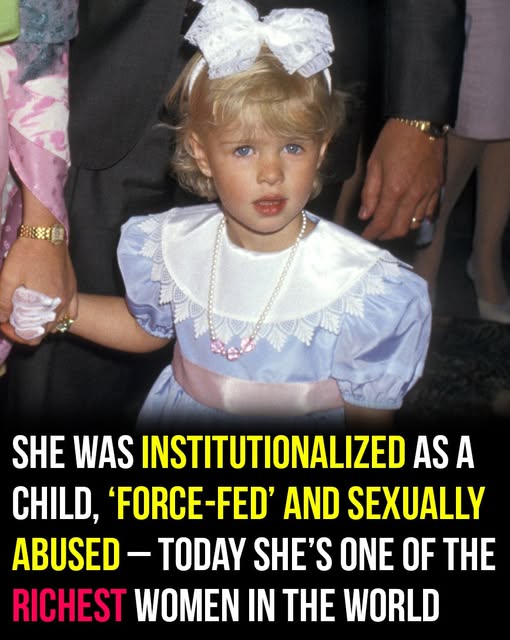
There was a time when Paris Hilton was one of the most instantly recognizable figures in the world. Her name became shorthand for luxury, excess, and celebrity culture, perfectly capturing the spirit of early-2000s reality television.
She was often labeled as someone who was “famous for being famous.” Yet behind the glossy image, the designer outfits, and relentless paparazzi attention existed a reality few people truly understood—one shaped by childhood trauma, abuse, and remarkable endurance.
Paris Hilton’s evolution from tabloid fixture to vocal advocate for at-risk children is striking. It reflects not only resilience, but also intelligence and a determination to transform deeply personal pain into meaningful reform.
A Childhood of Privilege and Control
Paris Whitney Hilton was born on February 17, 1981, in New York City, into one of America’s most well-known families. As heirs to the Hilton hotel empire, her upbringing was steeped in wealth and access few could imagine.
She split her time between Beverly Hills, the Hamptons, and even a long-term stay at Manhattan’s iconic Waldorf-Astoria Hotel.
Despite the lavish surroundings, her childhood was anything but carefree. Her parents, Kathy and Richard Hilton, ran a highly structured and conservative household. Paris has spoken openly about the strict limitations placed on her teenage life—no dating, no makeup, no school dances, and rigid rules around clothing and behavior.
Her mother enrolled her in etiquette lessons, hoping to shape her into a traditional debutante, an experience Paris later described as stifling and artificial.
Still, her curiosity and independent spirit surfaced early. She was known for her love of animals and her unconventional interests. Family stories recall her saving money to buy exotic pets, including snakes and monkeys. On one occasion, a pet snake escaped its enclosure at the Waldorf-Astoria, causing a brief but memorable uproar.
Her upbringing combined extreme privilege with intense restriction, leaving her feeling confined and restless for freedom.
The Boarding School Trauma
As Paris entered her early teens, her rebellious behavior escalated. She began skipping school, sneaking out, and pushing against the boundaries of her sheltered life.
At 14, she experienced a deeply troubling event: she was groomed by a teacher. Her parents discovered the situation after finding her with an older man in a car.
In response, she was sent to several boarding schools for so-called “troubled youth,” eventually ending up at a facility in Utah that she would later describe as the most traumatic experience of her life.
Years later, Paris publicly detailed the abuse she endured there. Students were subjected to humiliation, verbal attacks, physical punishment, and invasive control. She recalled being stripped, screamed at, and forced to take unidentified medications that left her emotionally numb and physically exhausted.
“You’re forced to sit in silence, staring at a wall all day, getting yelled at or hit,” she said. Staff warned her that if she spoke out, her parents would be told she was lying—a threat that kept her silent for years.
The psychological impact lingered long after she left, resurfacing as nightmares and chronic sleep issues well into adulthood.
Lingering Trauma and Nightmares
Even after achieving fame and financial success, the trauma from her teenage years followed her. For more than two decades, Paris experienced recurring nightmares involving abduction, forced confinement, and humiliation—clear echoes of her time in institutional care.
She has also spoken about how her undiagnosed ADHD contributed to misunderstandings in her youth. Before awareness around the condition became widespread, her creativity and energy were often misinterpreted as defiance.
“Our minds move incredibly fast,” she explained in a 2023 interview. “If I’d been diagnosed back then, my childhood would have been completely different. I wouldn’t have been sent away.”
Her experience highlights how untreated mental health issues and trauma can intersect—regardless of wealth or status.
Creating the “Party Girl” Persona
As a coping mechanism, Paris crafted a public image that leaned into what the media expected: the carefree, glamorous party girl. That persona became both protection and performance.
“I created this Barbie-like character with a perfect life,” she once said. “People wanted that version, so I kept playing it until it almost became part of me.”
Behind the scenes, that image allowed her to shield her pain while experimenting with identity, independence, and self-expression. To the public, she was walking red carpets and starring in reality TV. Privately, she was managing unresolved trauma.
From Silence to Advocacy
Eventually, Paris reached a point where silence was no longer an option. Speaking publicly about her experiences at boarding schools became a turning point. She described sharing her story as one of the most healing decisions of her life.
But her focus quickly expanded beyond personal recovery. Realizing that similar abuses were still occurring, she began advocating for oversight, reform, and accountability within the troubled teen industry.
“I can’t sleep knowing kids are still going through what I did,” she told lawmakers. “I’m being the hero I needed when I was a little girl.”
Her activism has helped bring national attention to institutional abuse, inspiring legislative discussions and empowering other survivors to come forward.
Building a Business Empire
Alongside her advocacy, Paris Hilton built a formidable business career. Once dismissed as a reality TV figure, she quietly developed a global brand spanning fragrances, fashion, licensing, and technology investments. Forbes estimates her ventures have generated more than $4 billion in revenue.
She also expanded into DJing, brand partnerships, and continued television work, proving herself a savvy entrepreneur. “I’ve always loved being an innovator,” she said, reflecting on her career. “I enjoy setting trends instead of following them.”
Family and Personal Life
Her personal life has also been deeply influenced by her past. Paris married entrepreneur Carter Reum on November 11, 2021, in Los Angeles.
Due to fertility challenges linked to trauma, the couple turned to surrogacy, welcoming a son in January 2023 and a daughter in November 2023.
Motherhood has given her new insight into her parents’ protectiveness. She has spoken about understanding their fear and strictness through the lens of raising her own children, acknowledging the emotional complexity of her upbringing.
A Survivor’s Legacy
Paris Hilton’s life story is one of reinvention and resolve. From a childhood marked by fear and control, she became a global celebrity—yet refused to let fame be her final definition.
Today, she is recognized not only as an entrepreneur and media figure, but as a survivor and advocate. Her journey exposes how trauma can exist behind even the most glamorous façades—and how courage can transform pain into purpose.
Her voice has helped shine light on hidden abuse, giving strength to those still trapped in systems meant to protect them.
Conclusion
Paris Hilton’s path is both inspiring and sobering. Emerging from a restrictive upbringing and institutional trauma, she has become a cultural icon, business leader, and outspoken champion for vulnerable youth.
Her story reinforces the power of speaking out, using influence responsibly, and turning personal hardship into meaningful change.
Paris Hilton is no longer defined by headlines or stereotypes. She is a survivor, a mother, an entrepreneur, and an advocate—proof that the most meaningful victories are often internal, and that real strength lies in confronting the past and reshaping the future.