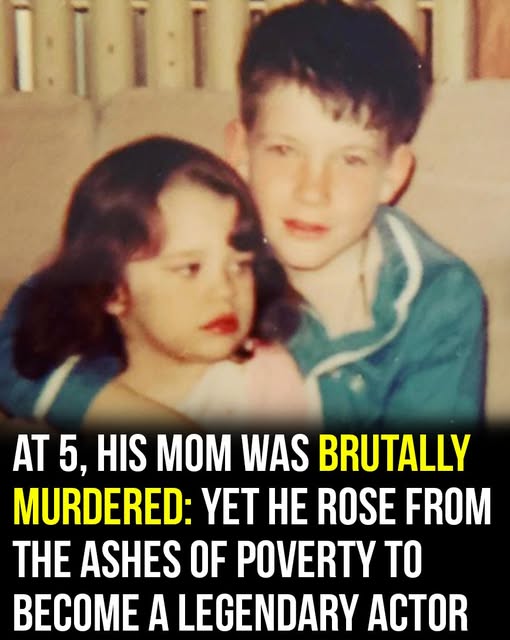
Dylan McDermott is now regarded as one of Hollywood’s most respected and enduring actors. From his Emmy-winning role on The Practice to memorable performances in American Horror Story, Olympus Has Fallen, and Steel Magnolias, his career has stretched across decades. Along the way, he has earned critical praise and even landed on People magazine’s list of television’s “Ten Sexiest Men.”
Yet beneath the accolades and composed public image lies a life shaped by deep personal tragedy, childhood trauma, and a relentless determination to rise above circumstances that could have broken him.
Dylan McDermott’s path to success cannot be separated from the devastating loss he suffered as a child—most notably the murder of his mother, Diane, an event that cast a long shadow over his life and profoundly influenced the man and actor he became.
A Childhood Defined by Loss
Born Mark Anthony McDermott on October 26, 1961, in Waterbury, Connecticut, Dylan entered the world to parents who were barely more than teenagers themselves. His mother, Diane, was just 15, and his father, Richard, was 17. Their youth and lack of support made family life difficult from the start.
Their relationship ended before Dylan was two years old, leaving him primarily in his mother’s care. Then, when Dylan was only five, tragedy struck. In February 1967, Diane was fatally shot in circumstances that would remain unclear for decades.
Although Dylan was not in the room at the moment of the shooting, he witnessed the aftermath. Diane’s boyfriend at the time, John Sponza—a small-time mob associate with a criminal background—was present that day. Dylan later recalled being forced out of the house shortly before the incident. When authorities arrived, Diane was discovered with a gunshot wound to the head, despite already being heavily bandaged from earlier injuries.
For years, the case was labeled an accident. Much later, renewed investigation revealed the truth: Diane had been murdered.
Reflecting on the ordeal years later, Dylan acknowledged the painful lessons it taught him. “I wouldn’t wish it on anyone,” he said, “but it shaped who I am.”
Growing Up With His Grandmother
After Diane’s death, Dylan and his infant sister, Robin Herrera, were sent to live with their maternal grandmother, Avis. Life in Waterbury was far removed from glamour, marked instead by financial strain and emotional hardship.
Dylan has described the neighborhood as rough and isolating, often recalling how out of place he felt growing up. As a teenager, he struggled with self-consciousness and social awkwardness, sometimes poking fun at himself for his appearance.
During this time, he found solace in movies and performances, studying legendary actors like Marlon Brando and Humphrey Bogart. Mimicking their styles became both an escape and an early form of training—one that hinted at his future path.
Meanwhile, his father was living in New York City, running the West Fourth Street Saloon in Greenwich Village. Dylan eventually joined him there, working his way from busboy to bartender. The environment was intense and unpredictable. “I got knocked around more than once,” Dylan later admitted, recalling the bar’s rough atmosphere.
Despite the chaos, his relationship with his father was close and unconventional. With only a 17-year age gap, they often related more like siblings than parent and child. Those late nights exposed Dylan to unfiltered human behavior—experiences that later informed his acting with authenticity and emotional depth.
A Stepmother’s Influence
When Dylan was 15, his father married playwright Eve Ensler, best known for The Vagina Monologues. Her presence proved transformative.
Eve recognized Dylan’s talent early and encouraged him to pursue acting seriously. With her support—and his father’s unwavering belief—Dylan stepped away from bar work and focused on performance. “My dad never questioned it,” Dylan said. “He always told me to go for it.”
Eve cast him in one of her Off-Broadway productions, giving him his first professional stage experience. His father later supported him through acting studies at Fordham University, followed by training at the Neighborhood Playhouse, where Dylan worked alongside established performers.
A role in Biloxi Blues drew attention from casting agents and ultimately led to his breakout film role in Hamburger Hill.
Becoming Dylan McDermott
Born Mark McDermott, he was required to adopt a stage name due to union rules. He chose “Dylan” in honor of poet Dylan Thomas—and for deeply personal reasons. His father and stepmother had once planned to name a child Dylan, but a miscarriage changed those plans.
“The name kind of came to me,” he later explained, carrying both loss and connection within it.
Career Breakthrough and Stardom
Dylan McDermott steadily built a career across film and television. Early roles included Hamburger Hill and Steel Magnolias, but it was The Practice that propelled him into the spotlight, earning him a Golden Globe in 1999.
He continued to demonstrate range through performances in American Horror Story, Olympus Has Fallen, and Law & Order: Organized Crime. His work combined intensity with vulnerability, earning respect from critics and audiences alike.
In 2000, his appeal extended beyond acting when People magazine named him one of TV’s “Ten Sexiest Men,” cementing his status as both a dramatic force and cultural figure.
Relationships and Personal Life
Dylan married actress Shiva Rose in 1995 after meeting her at a coffee shop. Despite initial disinterest on her part, his charm won her over. They had two daughters, Colette and Charlotte, before divorcing in 2008 after a year of separation.
Sober since 1984, Dylan has been open about overcoming alcoholism early in his life. He later became engaged to actress Maggie Q, though the couple ended their relationship in 2019 after four years.
Revisiting His Mother’s Death
Despite professional success, the unanswered questions surrounding Diane’s death continued to weigh on him. In 2011, Dylan returned to Waterbury and raised concerns with local officials about the case. Investigators soon discovered that key evidence files were missing.
Details raised troubling questions: Diane was right-handed, yet the fatal wound was on the left side of her head. Evidence of abuse by Sponza also came to light, including threats Dylan vividly remembered from childhood.
Authorities eventually reclassified Diane’s death as a homicide, concluding that Sponza should have been charged. Sponza himself was killed in 1972, found shot multiple times in the trunk of a car.
The Lasting Impact
While his sister was too young to remember their mother, Dylan carried the trauma throughout his life. He later admitted that burying the memory was necessary for survival. Losing his mother so young shaped his emotional world, leaving him with only fragments of memory to hold onto.
Those experiences hardened him, but they also gave him rare insight into human suffering—an asset he channeled into his work.
Legacy
Today, Dylan McDermott’s life reflects perseverance and transformation. From a childhood marked by violence and loss, he built a lasting Hollywood career defined by depth and credibility.
Rather than allowing tragedy to define him, he used it as fuel—turning pain into purpose and experience into artistry.
“There are parts of my childhood I wouldn’t wish on anyone,” he once said. “But if I can use them to create something meaningful, then they matter.”
Conclusion
Dylan McDermott’s journey from a troubled childhood in Waterbury to sustained success in Hollywood is as powerful as it is inspiring. The loss of his mother, the instability of his early years, and the guidance of mentors shaped a man capable of empathy, resilience, and artistic excellence.
His story stands as proof that even profound loss does not have to dictate one’s future—and that determination, support, and courage can turn hardship into lasting achievement.