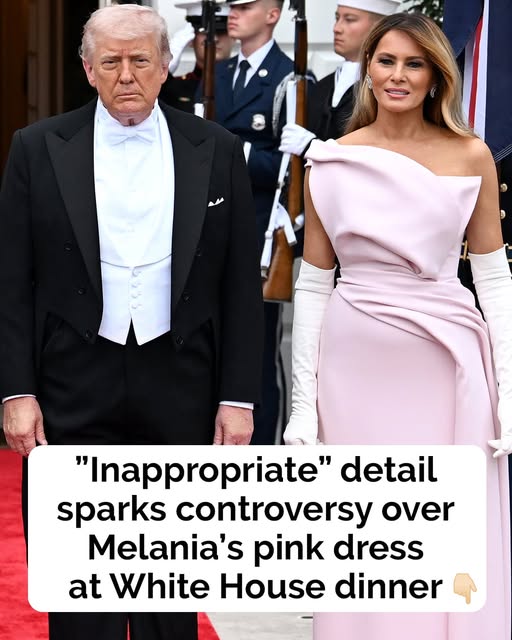
As images circulated online, public reaction fragmented further. Social media platforms filled with contrasting opinions—some focusing on perceived breaches of protocol, others celebrating the craftsmanship and presence of the look, and many simply engaging with the spectacle of high-profile diplomacy intersecting with high fashion.
Yet beyond the debate over style and symbolism, the event itself continued without disruption. The formal proceedings unfolded as planned, speeches were delivered, and diplomatic courtesies were observed. Still, like many moments involving public figures, it was the visual memory that endured after the details of the evening faded.
The conversation that followed highlighted a broader cultural dynamic: the increasing scrutiny placed on appearances in public life, especially when politics and royalty intersect. In such environments, clothing is rarely just clothing—it becomes a form of communication, open to interpretation and debate.
For some observers, the question raised by the moment goes beyond fashion altogether. It touches on how modern public figures navigate tradition while maintaining individuality, and whether adherence to protocol should outweigh personal expression in highly symbolic settings.
In the end, the gown became more than an outfit—it became a talking point about identity, diplomacy, and perception in the public eye.
What do you think—should state occasions prioritize strict traditional dress codes, or is there room for modern personal expression even in the most formal diplomatic settings?