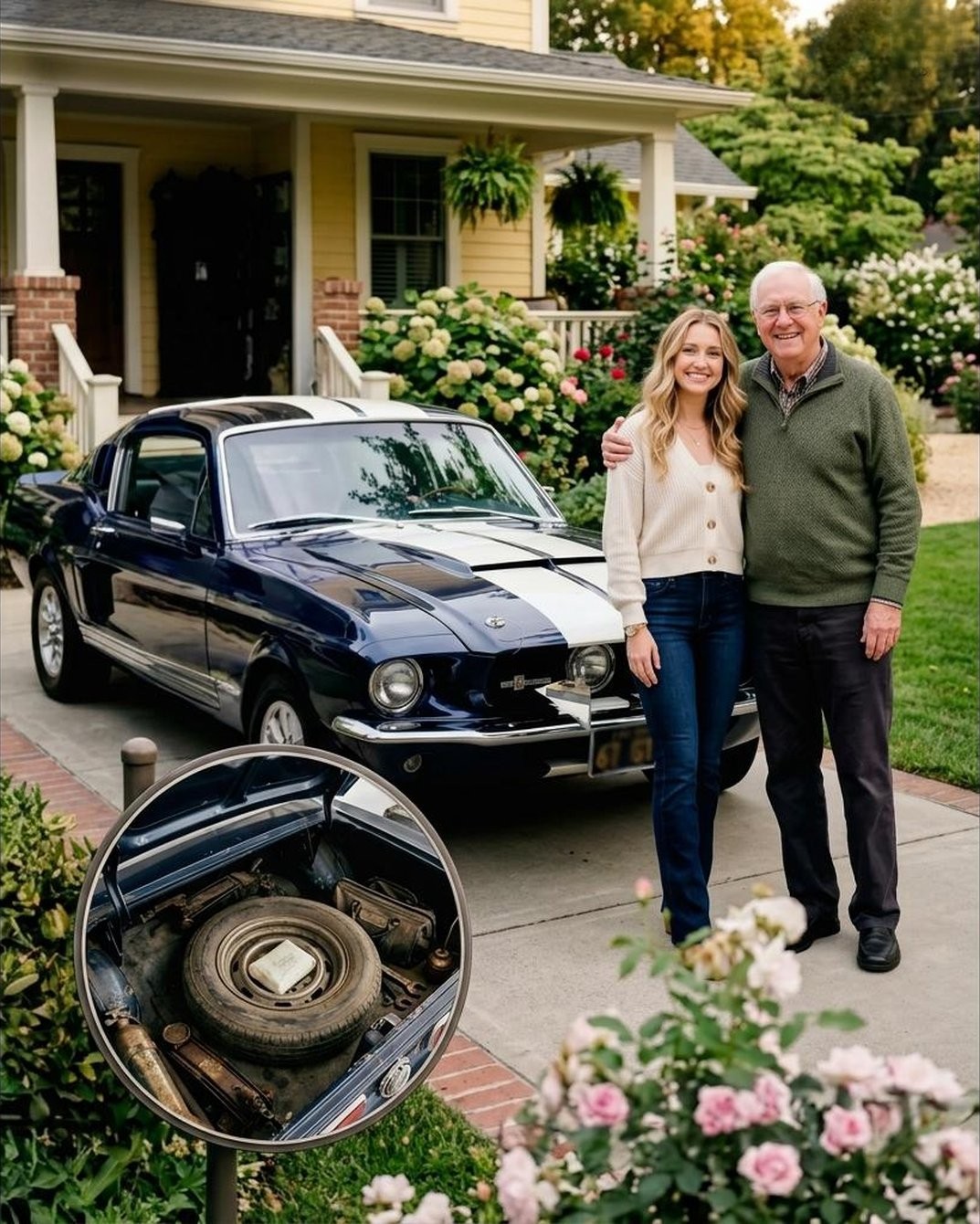
Inside was her father’s handwriting.
The parking lot fell into silence as Hazel opened it.
The letter wasn’t about money or possessions. It was about meaning.
Her father wrote about the Shelby not as a car, but as a bridge—something he had hoped would bring his family together on one final shared journey. He spoke of distance growing between people who once understood each other, and his hope that time and presence might repair what had been strained.
Then came the legal truth.
The car had been placed in a protected trust for Hazel. It could not be sold, transferred, or removed without her consent. The attempt to sell it had no legal standing.
Everything stopped.
The tow truck driver stepped back. Elias quietly unhooked the vehicle. And for the first time that day, Karen had nothing left to say.
What Was Almost Lost
In the days that followed, the anger slowly gave way to reflection. The car remained, but it was no longer the center of the story. The letter became something more important than any possession—an emotional anchor, reminding Hazel of what her father valued most: connection, memory, and integrity.
The relationship with her stepmother remained fractured, but something else had changed. Hazel no longer saw the situation only through loss. She saw intention. Planning. Care that extended even beyond a final goodbye.
A Legacy That Still Runs
Today, the Shelby still sits in Hazel’s care. It is not a display piece or a symbol of wealth. It is something quieter and more meaningful—a living reminder of who her father was and what he believed mattered most.
On rare, clear days, she drives it. And when the engine comes to life, it doesn’t feel like the past is gone. It feels like it’s still speaking.
Because in the end, her father didn’t just leave her a car. He left her a message: that the things worth holding onto aren’t the ones that can be taken away—but the ones that continue to live inside us.
If this story moved you, share your thoughts below—and follow for more powerful, emotional stories that stay with you long after you finish reading.