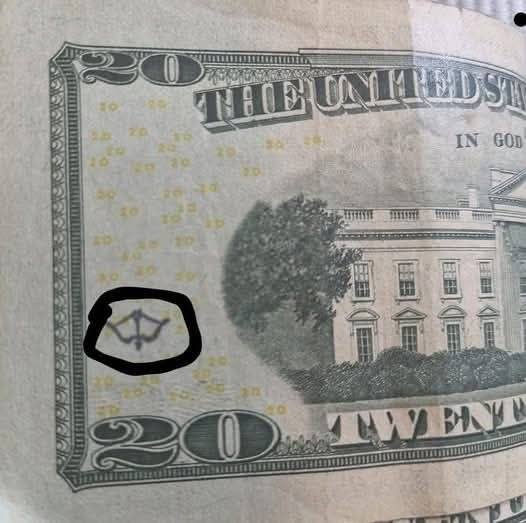
If you’ve ever taken a close look at a U.S. dollar bill, you might have noticed something unusual—tiny symbols, stamps, or odd markings that don’t seem to belong to the official design.
At first glance, they can look mysterious: small stars, numbers, geometric shapes, or ink stamps that appear randomly placed. It’s easy to assume they’re errors or hidden codes. But in reality, most of these marks have a surprisingly practical origin tied to how money moves around the world.
What Those Strange Marks Actually Are
These markings are commonly known as “chop marks.” They are not printed by the U.S. Treasury and do not come from the original production of the bill.
Instead, they are added later—often by people who handle currency in everyday trade, especially in busy international markets.
In simple terms, a chop mark is a quick visual signal that says:
“This bill has already been checked and accepted.”
Why People Stamp Currency
In many parts of the world, cash changes hands rapidly in markets, exchange counters, and small businesses. In these environments, trust is essential—but time is limited.
Rather than thoroughly rechecking every bill from scratch, a merchant or money handler may inspect it once and then add a small stamp or mark. This helps the next person in the chain feel more confident that the note is legitimate.
It’s a fast, practical form of verification built on shared trust.
A Tradition With Deep History
Keep reading…