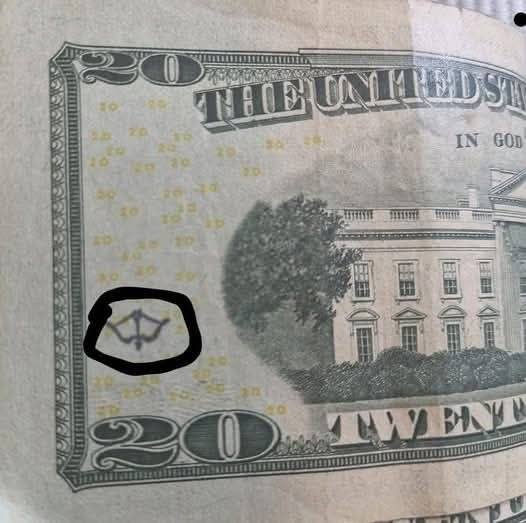
The idea of marking money is not new. It dates back centuries to the use of coins, where traders would stamp precious metals to confirm authenticity or weight.
This practice became especially common in parts of Asia, where merchants relied on physical marks to confirm that coins had been tested and approved.
When paper currency became widespread, the habit simply evolved—shifting from coins to banknotes.
Why U.S. Dollars Are Often Affected
The U.S. dollar is one of the most widely used currencies in global trade. Because it moves through so many countries and exchange systems, it is more likely to encounter these informal verification marks.
In some cases, a dollar bill may be inspected and stamped multiple times as it travels through different markets before returning to circulation elsewhere.
Each mark reflects a small stop in its journey.
Do These Marks Affect Value?
Despite how unusual they look, chop marks do not change the value of a bill.
A marked $20 bill is still worth $20. A marked $1 bill is still legal currency.
However, in some cases, heavily marked or worn bills might be treated more cautiously by vending machines or cash-handling systems simply because they appear damaged or unfamiliar.
A Bill With a Hidden Story
What makes these markings fascinating is not their impact on value—but what they represent.
Each stamp is a trace of movement. A sign that the bill has passed through different hands, countries, and moments of trust.
It turns ordinary cash into something more interesting: a small traveler with a history you can actually see.
More Than Just Money
Most of us think of currency as static—just paper used for transactions. But chop-marked bills remind us that money is constantly moving, being checked, exchanged, and re-verified across the world.
Behind every mark is a moment where someone paused, inspected, and decided: “This is real.”
That simple act connects global commerce in ways most people never notice.
If you enjoyed learning about this hidden detail in everyday money, share your thoughts below—and explore more surprising facts about the world we use every day.