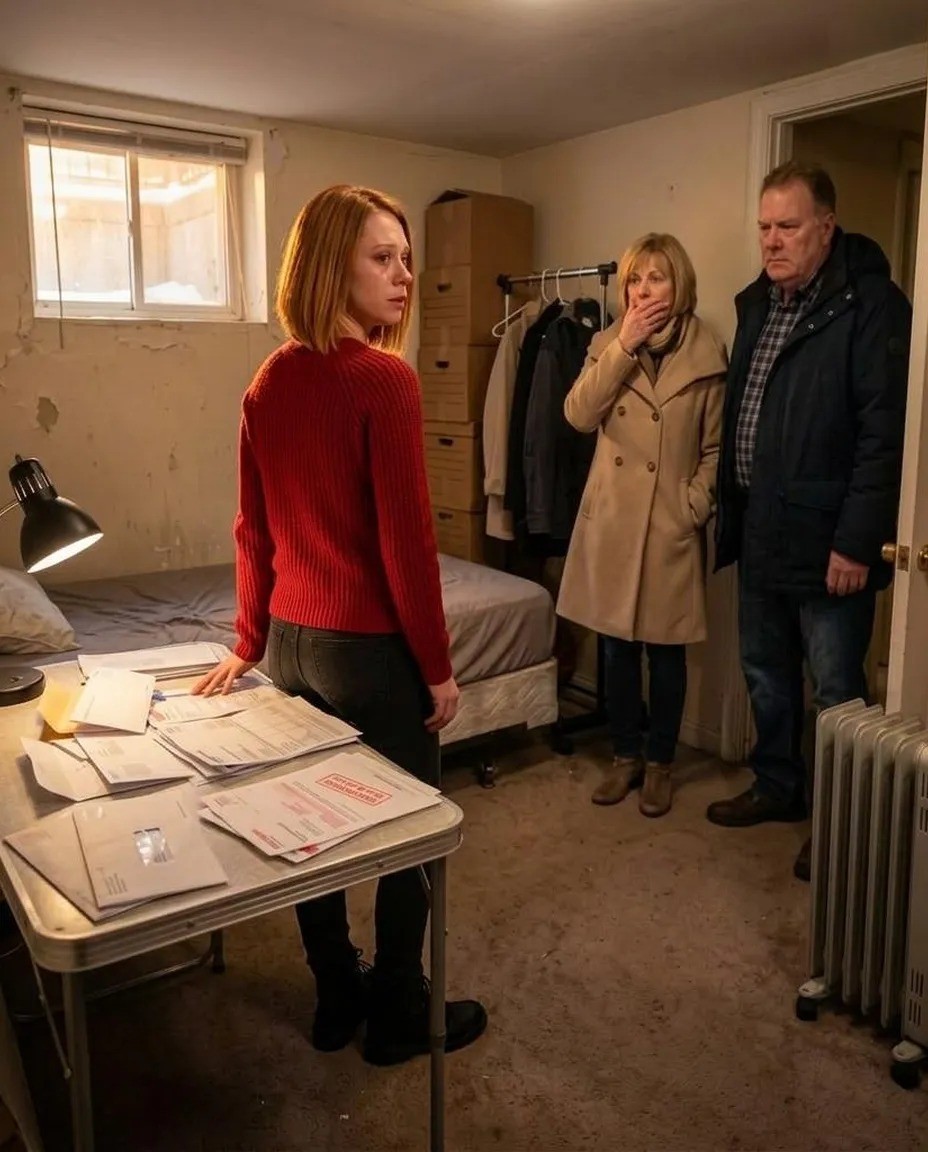
The drive back to Boston was swallowed by a whiteout, headlights dissolving into a blur of falling snow. But the storm outside was nothing compared to what was unraveling inside me.
I was thirty-eight years old, and for fifteen of those years I had been living a version of devotion that slowly stopped feeling like love and started feeling like obligation.
It didn’t collapse all at once. It ended in a single overheard sentence.
Hours earlier, I had been carrying dessert through my parents’ house when my mother’s voice cut through the room—light, amused, almost proud of herself.
“She doesn’t deserve a thank you,” she said. “She owes us. We fed her for eighteen years.”
I stopped walking.
The tray in my hands suddenly felt impossibly heavy.
In that moment, something inside me quietly shifted. Not dramatically. Not loudly. Just permanently.
Because what I had spent fifteen years believing was support had been redefined, without my knowledge, as repayment.
This didn’t begin with resentment. It began with fear.
At twenty-three, I had been told my parents were on the edge of losing their home. My father had been injured, my mother overwhelmed, and I stepped in the way adult children often do when they believe they’re temporarily needed.
But temporary slowly became permanent.
A mortgage here. A medical bill there. Emergencies that multiplied over time, until my name became a silent guarantee attached to their entire lifestyle.
Continue reading…