Luxury renovations. Vacations. Cars. Stability that didn’t belong to them alone.
And I paid for all of it.
Not because I was asked.
Because I believed I had to.
What I didn’t realize was that somewhere along the way, my help stopped being seen as generosity and started being expected as inheritance.
That night, back in my childhood guest room, I didn’t cry.
I opened my bank account instead.
And I ended it.
Every automatic transfer. Every shared financial link. Gone.
The silence afterward was not peaceful. It was unfamiliar. Like stepping out of a room I had been trapped in for years and realizing I didn’t recognize the air outside it.
When I returned to Boston, I asked my financial advisor for a full record of everything I had sent them.
The number arrived like a physical blow:
$860,000.
Fifteen years of my life, quantified in a single line.
And the cruelest part wasn’t just the amount.
It was what it cost me.
While I had been funding their comfort, I had lost my job, drained my savings, sold my car, and moved into a basement apartment I never told them about. I worked nights, freelanced constantly, and quietly kept their world intact while mine collapsed in the background.
They never asked how I was surviving.
Only whether the money had arrived.
So when the January transfer failed, I didn’t receive concern.
I received outrage.
Accusations. Demands. Shock that the system they had depended on had suddenly stopped working.
When I finally told them the truth—that I had stopped everything—they didn’t hear exhaustion.
They heard rebellion.
“You’re abandoning us,” my mother said.
I paused.
“No,” I replied quietly. “I finally stopped abandoning myself.”
I sent them everything after that. Every statement. Every record. Every number they had never bothered to see.
I told them if they wanted to understand the situation, they could come to me. Not as dependents. Not as beneficiaries. But as people finally facing reality.
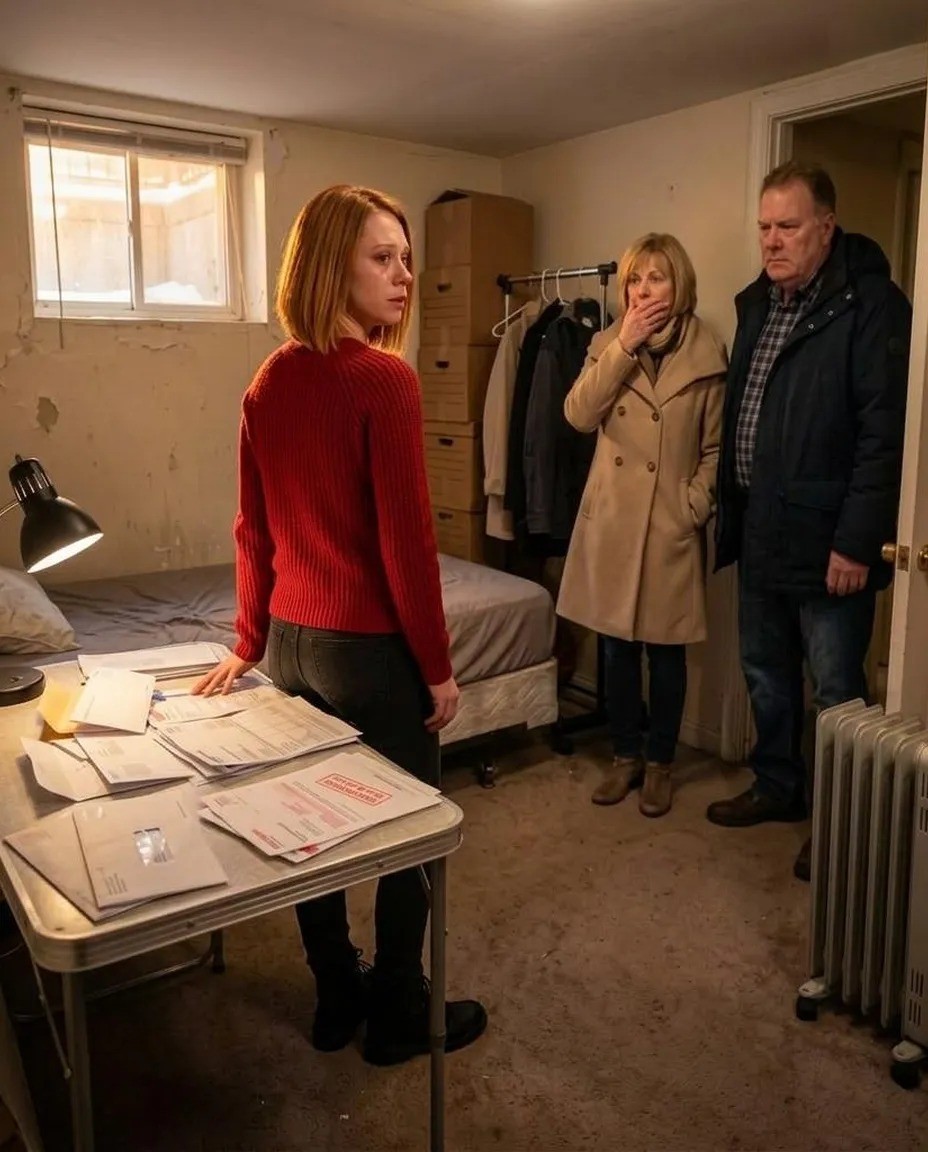
On New Year’s Eve, they came.
They expected the version of me they remembered—successful, stable, endlessly available.
Instead, they found a basement apartment, a folding table, and a daughter who had nothing left to prove.
For the first time, there was no performance on either side.
I showed them everything.
The debt I had taken on. The savings I had emptied. The life I had quietly reduced to keep theirs intact.
And for the first time, there was no argument that could survive the facts.
My father looked at the numbers for a long time before saying softly, “We didn’t realize.”
And I finally understood the truth that had taken me years to accept:
They had never seen the cost because they were never meant to carry it.
That night they left quietly.
And for the first time in years, my life didn’t feel like it was orbiting someone else’s needs.
In the weeks that followed, something unexpected happened. The pressure didn’t return. Instead, clarity did.
My father began downsizing their expenses. My mother eventually wrote a letter—no requests, no expectations—just acknowledgment. Real acknowledgment. The kind I never thought I would receive.
But the most important shift didn’t come from them.
It came from me.
Because I realized I didn’t need their understanding to be free.
I didn’t need their approval to stop drowning.
I had already paid the highest price I could afford.
My entire life.
And I was done paying interest on it.
Today, I’m still rebuilding. Still starting over. Still learning what it means to live without being someone’s safety net.
But for the first time, my life belongs to me.
And that is a kind of wealth no one can take away again.
If this story resonated with you, take a moment to reflect on where your boundaries begin—and where your obligations end.